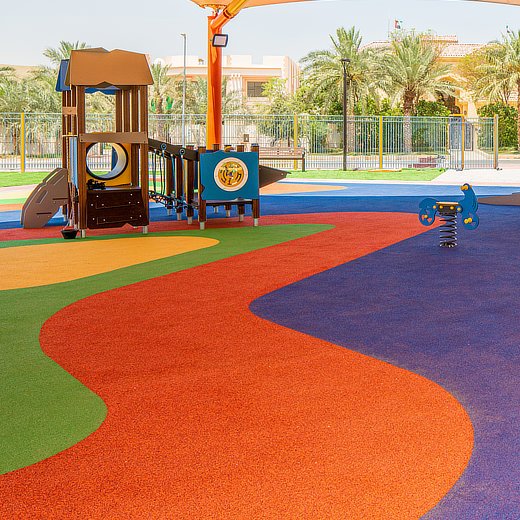
Wet pour rubber
A continuous, porous rubber surface poured on site in almost any colour. Ideal for graphics, markings and Critical Fall Heights up to 3m. Slip-resistant, wheelchair-friendly and quick-draining.
Explore wet pour rubberPlayground surfacing is the impact-absorbing ground layer that protects children when they fall and defines how a play area looks and drains. Commercial Play designs, supplies and installs every major safety surface (wet pour, rubber mulch, artificial grass and rubber safety tiles), tested to BS EN 1177 and matched to the equipment above it.
Playground surfacing is the impact-attenuating layer laid beneath and around play equipment to reduce injury from falls, and it is tested to BS EN 1177. We build it as a system: a compacted MOT Type 1 stone sub-base, then a shock-absorbing base course, then a wearing course. Get the depth right and a child who falls from height lands on a surface that cushions the impact rather than on hard ground.
The wrong surface, or the right surface laid too thin, fails the fall height it needs to cover. That is why every job starts with the equipment above it, not the surface itself. We measure the free height of fall of that equipment first, then build the surface up to match it.
Commercial Play supplies and installs the following playground surface types: wet pour rubber, rubber mulch, artificial grass over a shock pad, and rubber grass mats. Each rates to a different Critical Fall Height, drains differently and sits at a different price, so we specify by your equipment, age groups and budget rather than a house default. Rubber safety tiles and hard macadam are also options where a site calls for them.
Here is a one-line view of each, with full detail on the dedicated pages.
A continuous, porous rubber surface poured on site in almost any colour. Ideal for graphics, markings and Critical Fall Heights up to 3m. Slip-resistant, wheelchair-friendly and quick-draining.
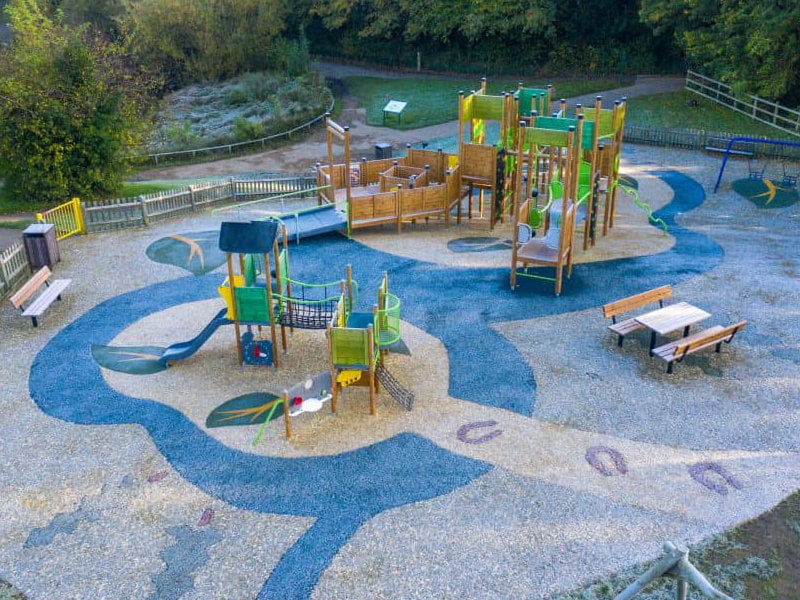
Explore wet pour rubberA natural, bark-effect bonded rubber surface that suits woodland trails and forest schools. Fully porous, low-maintenance and a cost-effective way to hit high fall-height ratings.
Explore rubber mulch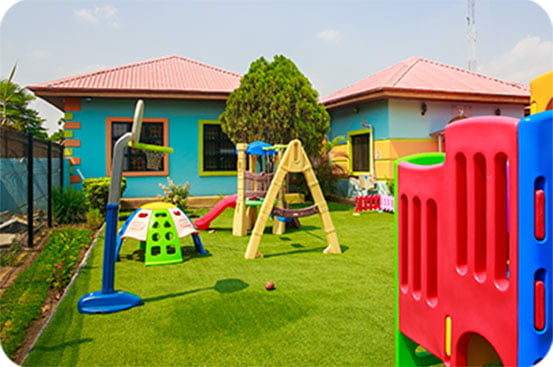
All-weather synthetic turf with a shockpad underlay for play areas, MUGAs and early-years gardens. Green all year with no mud, mowing or standing water.
Explore artificial grass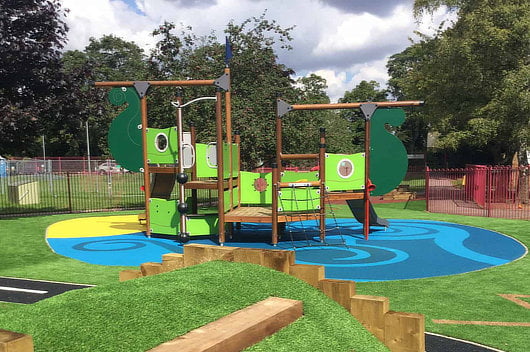
Rubber safety mats pinned into natural grass under swings, slides and gateways. Grass grows through for a natural look with firm, mud-free, fall-safe footing.
Explore grass mats & reinforced grassThe best playground surface is the one matched to your equipment's Critical Fall Height, your budget and how the space is used. Wet pour suits colourful, wheelchair-friendly play areas with markings; rubber mulch suits tall equipment and natural, woodland-style settings; artificial grass over a shock pad suits early-years gardens; rubber grass mats suit a green finish under swings and gates.
For a nursery or early-years area we usually steer towards wet pour or artificial grass for the clean, level finish. Under tall towers and trim trails, rubber mulch reaches a high fall height for less per square metre. Compare the two most-asked-about options in our wet pour vs rubber mulch comparison.
Wet pour rubber costs around 29 to 90 pounds per square metre installed, and rubber mulch costs around 40 to 100 pounds per square metre. These are indicative ranges to confirm at survey, not fixed prices: plain black wet pour sits at the lower end, multi-colour graphics reach roughly 70 to 100 pounds, and the EPDM colour, the fall-height depth and the SBR base all move the figure.
Your final cost is driven by the surface type, the thickness set by the Critical Fall Height, the area, the condition of the existing base and site access. Sub-base preparation typically adds around 18 to 30 pounds per square metre where new MOT Type 1 groundworks are needed, though laying over sound existing tarmac or macadam can save that. For a firm number, get a playground surfacing quote and we will price your exact site.
| Surface | Typical thickness | Critical Fall Height | Indicative cost / m² | Lifespan | Best for |
|---|---|---|---|---|---|
| Wet pour rubber | 15mm to 100mm+ | Up to 3m | £29 to £90 (graphics £70 to £100) | 10 years or more | Colourful, level, wheelchair-friendly areas and markings |
| Rubber mulch | 250mm to 300mm compacted | Up to 3m | £40 to £100 | 8 to 12 years+ | Tall equipment, trim trails, natural woodland settings |
| Artificial grass (shock pad) | Shock pad set to fall height | Rated by shock pad | Confirm on survey | 8 to 12 years | Early-years gardens, mud-free all-year play |
| Rubber grass mats | Tiles pinned into grass | ~1.0 to 1.3m | Confirm on survey | 8 to 12 years | Green finish under swings, slides and gateways |
Indicative UK market ranges to confirm against your own pricing at survey. Artificial grass and rubber grass mat pricing is confirmed on a site survey.
Playground surfacing is governed by BS EN 1177, the impact-attenuation standard, while the play equipment above it is governed by BS EN 1176. The surface's Critical Fall Height must equal or exceed the free height of fall of the equipment above, and safety surfacing is required wherever that free fall exceeds 0.6m, up to the 3m playground maximum.
BS EN 1177 is proven by a drop test using a headform: the surface passes only when it returns a Head Injury Criterion (HIC) below 1000 and a Gmax, the peak deceleration, below 200g. The safety zone must also extend around the equipment, typically at least 1.5m around static items and about 1.75m to the front and back of swings and beyond a slide exit. We specify and test to these, and can arrange independent RPII or RoSPA inspection where you want it signed off.
Playground surfacing thickness is set by the Critical Fall Height it must protect, so we measure the tallest equipment above it and deepen the SBR shock base to match while the EPDM wearing course stays at about 6mm. Wet pour runs from about 15mm over a hard base up to 100mm or more; as an indicative guide, roughly 25mm covers a 0.6m fall, 50mm around 1.5m, and 100mm up to the 3m playground maximum.
Rubber safety tiles follow the same logic, needing around 125mm for a 3m fall height, while rubber mulch is typically laid 250mm to 300mm deep once compacted. The wet pour build is that coloured EPDM top over a deeper SBR granule base bound with polyurethane resin, all sitting on the MOT Type 1 sub-base. Not sure what your equipment needs? Book a free site survey and we will work it out.
Commercial Play installs playground surfacing as a layered build over a compacted MOT Type 1 stone sub-base, not a single pour. We excavate and compact the sub-base, add a permeable membrane where needed, then build the shock base and wearing course up to the Critical Fall Height, working to BS EN 1176 for the equipment and BS EN 1177 for the surface.
For wet pour we mix the SBR base and EPDM top on site, lay each layer by hand and let the polyurethane binder cure before the area reopens. For rubber mulch we bond and level the recycled rubber over the prepared base or straight onto sound grass. We can also lay over existing tarmac or macadam where the base is level and holding, which cuts the groundworks and the cost that comes with them.
Wet pour and rubber mulch surfacing typically last 8 to 12 years with routine care. Several in the industry cite 15 years or more for a well-maintained wet pour, so we present 10 years or more as a fair indicative life to stand behind.
Rubber safety tiles and artificial grass over a shock pad sit in a similar band, while loose bark and wood chip rot and need topping up every year, which is one reason bonded rubber mulch often works out better over time. We also repair and refresh worn surfaces rather than rip and replace, extending the life of what you already have; see playground surface repairs and maintenance.
Playground surfacing protects children by absorbing the impact of a fall, proven with a BS EN 1177 headform drop test. A good porous system does three more things well: it drains through a permeable sub-base, it holds its colour through the seasons, and it gives step-free access. We specify each surface to your equipment's Critical Fall Height so the impact protection is measured, not assumed.
Wet pour and rubber mulch are fully porous, draining straight through the wearing course and permeable sub-base into the ground so there are no puddles, which suits Sustainable Urban Drainage (SUDS) and lets play resume minutes after rain. A UV-stable aliphatic polyurethane binder holds the EPDM colour through frost and sun, where a cheaper aromatic binder would fade. A level wet pour surface stays step-free for wheelchairs and buggies, with no lips or trip edges between zones, which matters for SEN and EYFS settings.
Commercial Play designs, supplies and installs playground surfacing in-house across England and Wales, so one team owns the job from survey to handover. We survey each site, work out the Critical Fall Height your equipment needs, and specify the surface, thickness and MOT Type 1 sub-base to match, not a one-size template.
We fit all four surfaces, so our recommendation follows your site rather than the one product we happen to sell. We also repair and refresh worn wet pour and rubber mulch, which means we can extend a surface you already have instead of defaulting to full replacement. Talk to us about your play area and we will tell you honestly what it needs.
Yes. Playground flooring and playground surfacing are two names for the same thing: the impact-absorbing safety layer laid under and around play equipment and tested to BS EN 1177. We supply commercial playground flooring for schools, nurseries and public play areas in wet pour rubber, rubber mulch, artificial grass over a shock pad, and rubber safety tiles, each specified to the Critical Fall Height of the equipment above it.
Every surface we install is specified and tested to BS EN 1177 for its Critical Fall Height, so all are safe when correctly matched to the equipment above. Wet pour and rubber mulch reach the highest fall heights, up to the 3m playground maximum, when laid to the right depth over a compacted sub-base.
Indicatively, wet pour is around 29 to 90 pounds per square metre installed and rubber mulch about 40 to 100 pounds, with sub-base prep adding roughly 18 to 30 pounds where new groundworks are needed. These are market ranges to confirm against a site survey, as area, fall height and access all move the figure.
Both are porous bonded rubber. Wet pour gives a level, colourful, wheelchair-friendly finish for markings and graphics; rubber mulch gives a natural bark-effect look and reaches high fall heights for less per square metre, which suits tall equipment and woodland areas.
Wet pour runs from about 15mm up to 100mm or more, set by the Critical Fall Height. As a guide, roughly 25mm suits a 0.6m fall and about 100mm suits the 3m maximum, built as an EPDM wearing course of about 6mm over a deeper SBR shock base bound with polyurethane resin.
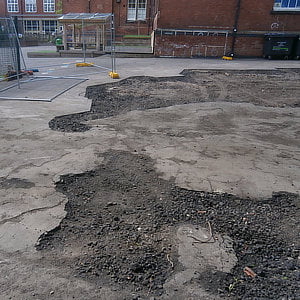
Yes, where the existing tarmac or macadam base is sound and level we can lay wet pour or a shock-pad system straight over it, which reduces groundworks and cost. We check the base on survey first, as a failing sub-base needs repair before any surfacing goes down.
Rubber mulch gives a similar natural look but does not rot, blow away or need annual topping up, and it holds a higher, more consistent Critical Fall Height. Loose bark and wood chip decompose and must be replenished, so bonded rubber mulch usually works out better over its life.
Wet pour and rubber mulch need little more than occasional brushing and clearing of leaves and debris, plus a check of the wearing course. We repair splits, worn patches and edges as they appear so small issues do not spread; see repairs and maintenance.
Timescales depend on area and groundworks, but the affected zone is fenced off while we work and while the wet pour polyurethane binder cures. We phase larger jobs where we can so part of the space stays open, and we confirm the programme on quote.
Wet pour and rubber mulch use EPDM and SBR rubber granules bound with polyurethane and are widely used across UK schools under BS EN 1177. Rubber mulch is made from shredded recycled tyre, which also gives it a recycled-content and sustainability benefit.
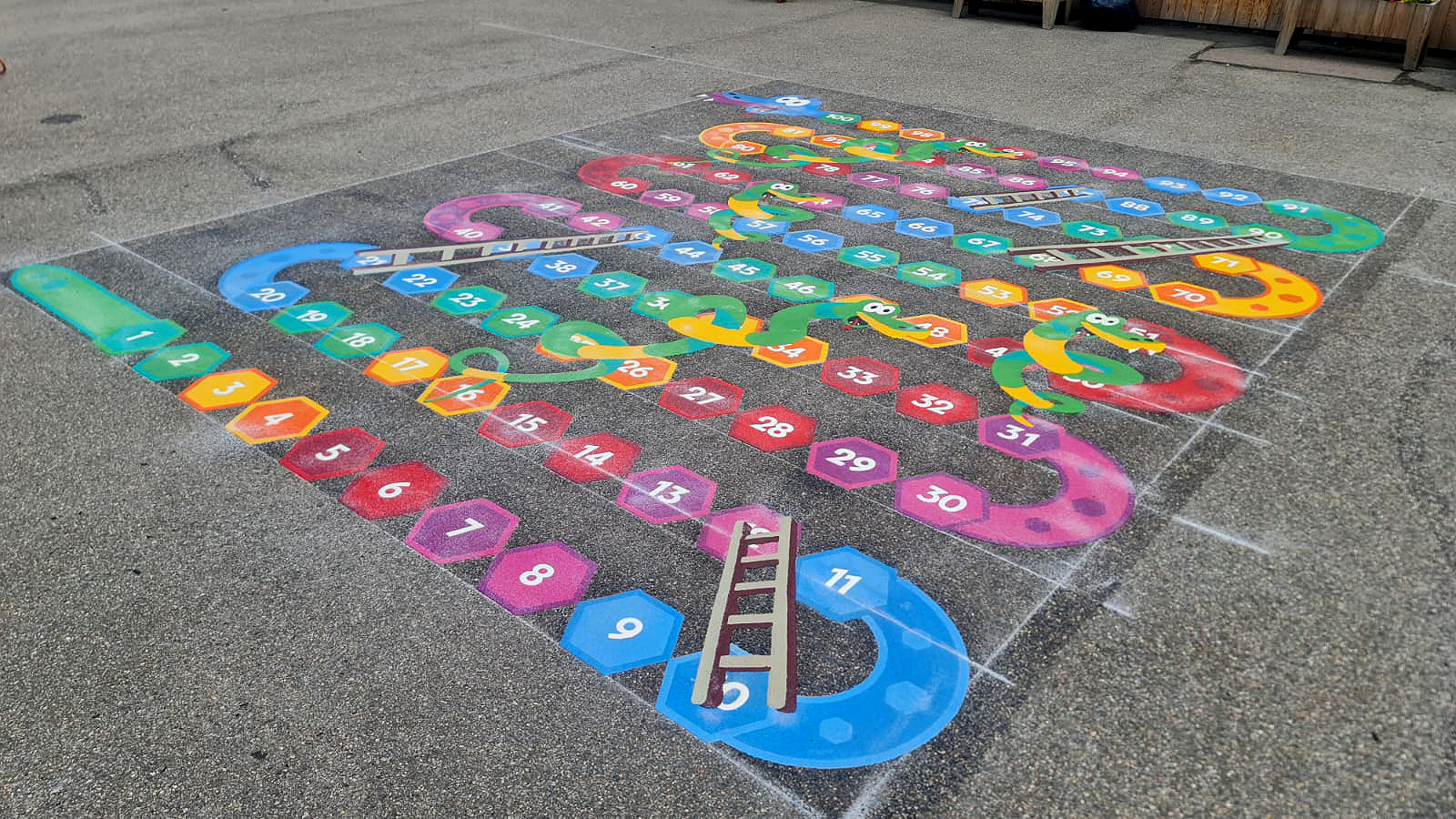
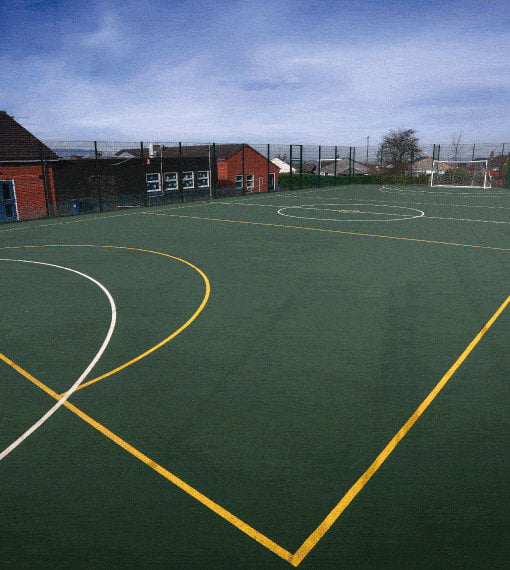
Yes. Wet pour takes colour graphics and markings in the EPDM surface itself, and we also apply thermoplastic games and designs; see thermoplastic playground markings. For courts and pitches, see MUGA sports surfacing.
A play-area glow-up at a busy designer outlet, taking a worn space to a bright, colourful place for children to play.
View project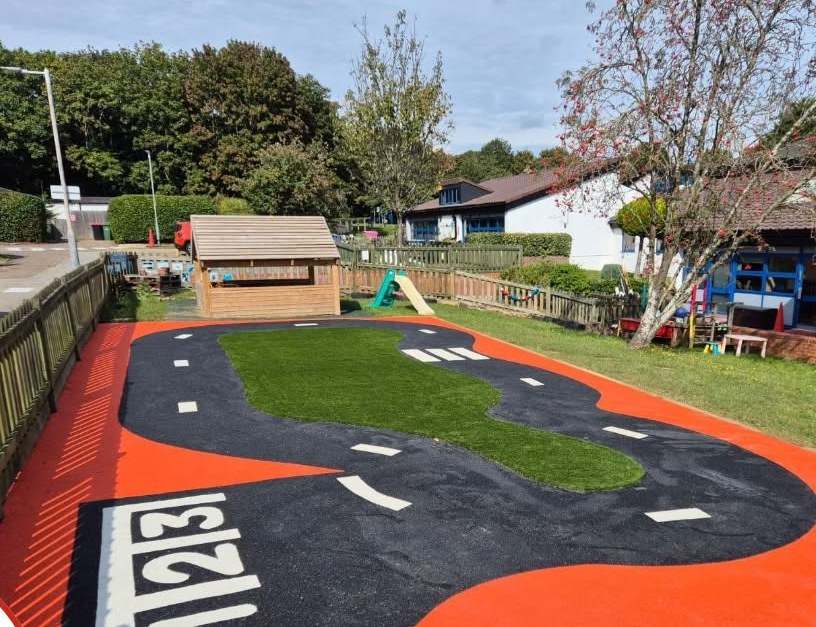
An EYFS race track rebuilt in EPDM safety surfacing with a central artificial-grass area.
View projectChoosing safe playground surfacing means matching it to equipment fall height under BS EN 1177. Compare wet pour, rubber mulch, grass mats and bark.
Read article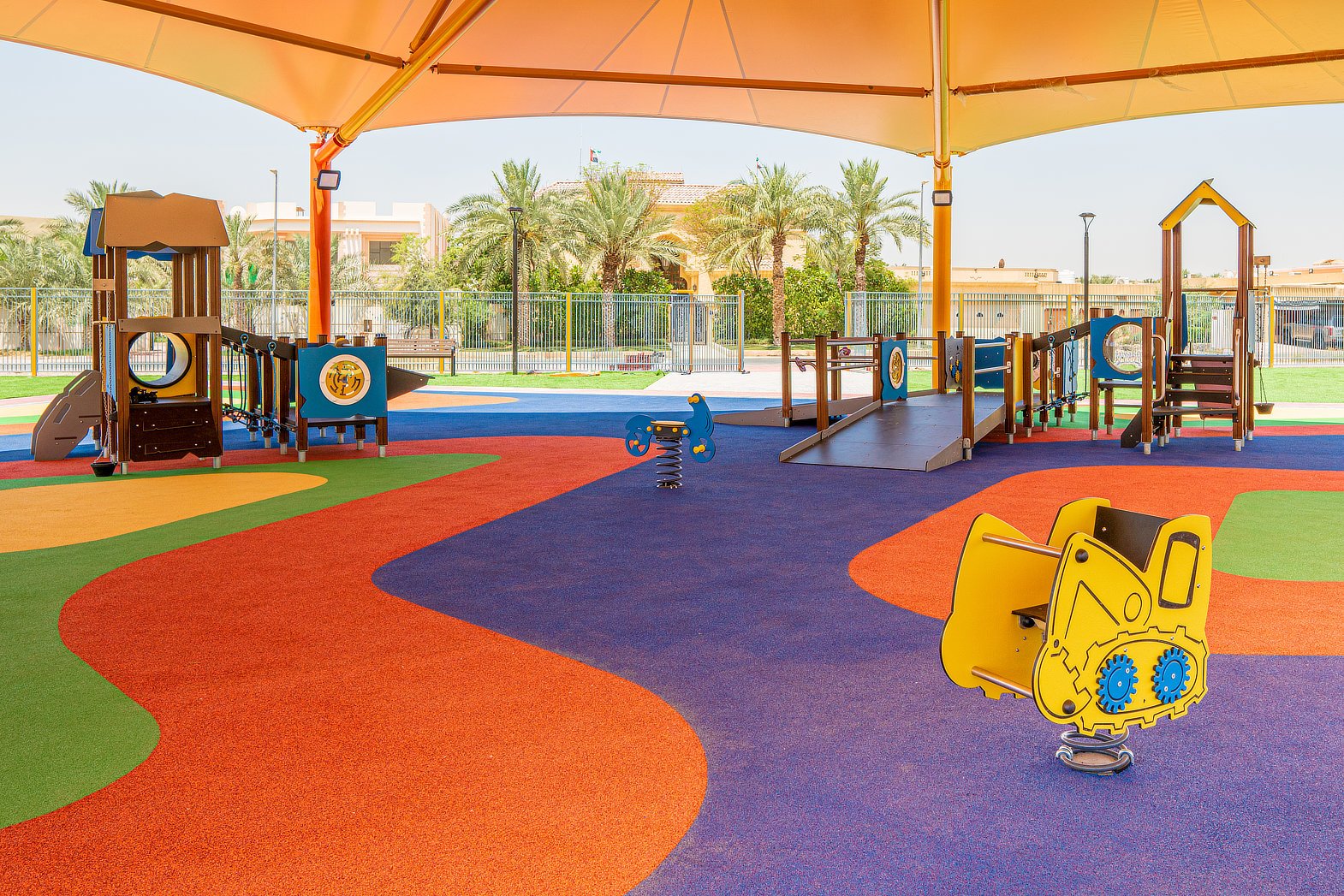
A practical step-by-step guide to planning a school playground, from auditing your space and setting aims through design, zoning, surfacing and installation.
Read articleWe install playground surfacing for schools nationwide. Choose your town for local detail, or get in touch wherever you are.
Tell us about your space and we'll arrange a free site visit, design and fixed quote.