Playground inspections
Routine, operational and annual RPII main inspections to BS EN 1176, with clear, risk-rated reports you can budget from.
Explore playground inspectionsRegular maintenance keeps a playground safe, compliant and open, and a renovation can bring a tired area back to life for a fraction of a full rebuild. Commercial Play inspects, repairs and renovates existing play areas (surfacing, equipment, fencing and structures), whoever installed them.
Playground repair and maintenance is the planned inspection, reactive repair and renovation that keeps a play area safe and open under BS EN 1176 and BS EN 1177. We inspect the equipment, safety surfacing, fencing and structures, log every defect with a risk rating, and put right the splits, worn patches, loose fixings and weathered timber that daily use creates.
Left unchecked, a small fault becomes a safety risk and then a closure notice. That is why we treat maintenance as a cycle rather than a callout: a routine visual check, an operational inspection each term, an independent annual main inspection by an RPII inspector, and the repairs that flow from each. We look after equipment and surfaces whoever originally installed them, so one team can hold your whole site to standard.
Commercial Play supplies and installs the following playground repair and maintenance services: RPII playground inspections to BS EN 1176, reactive repairs to surfacing, equipment and fencing, full playground refurbishment, and EN 1176 and EN 1177 compliance work. Each answers a different need, from a routine safety check to a tired area brought back to life, so we scope the work to your inspection findings and budget rather than a fixed package.
Here is a one-line view of each, with full detail on the dedicated pages.
Routine, operational and annual RPII main inspections to BS EN 1176, with clear, risk-rated reports you can budget from.
Explore playground inspections
Fast, reactive repairs to surfacing, equipment and fencing to keep your area safe and open, whoever installed it.
Explore request a repair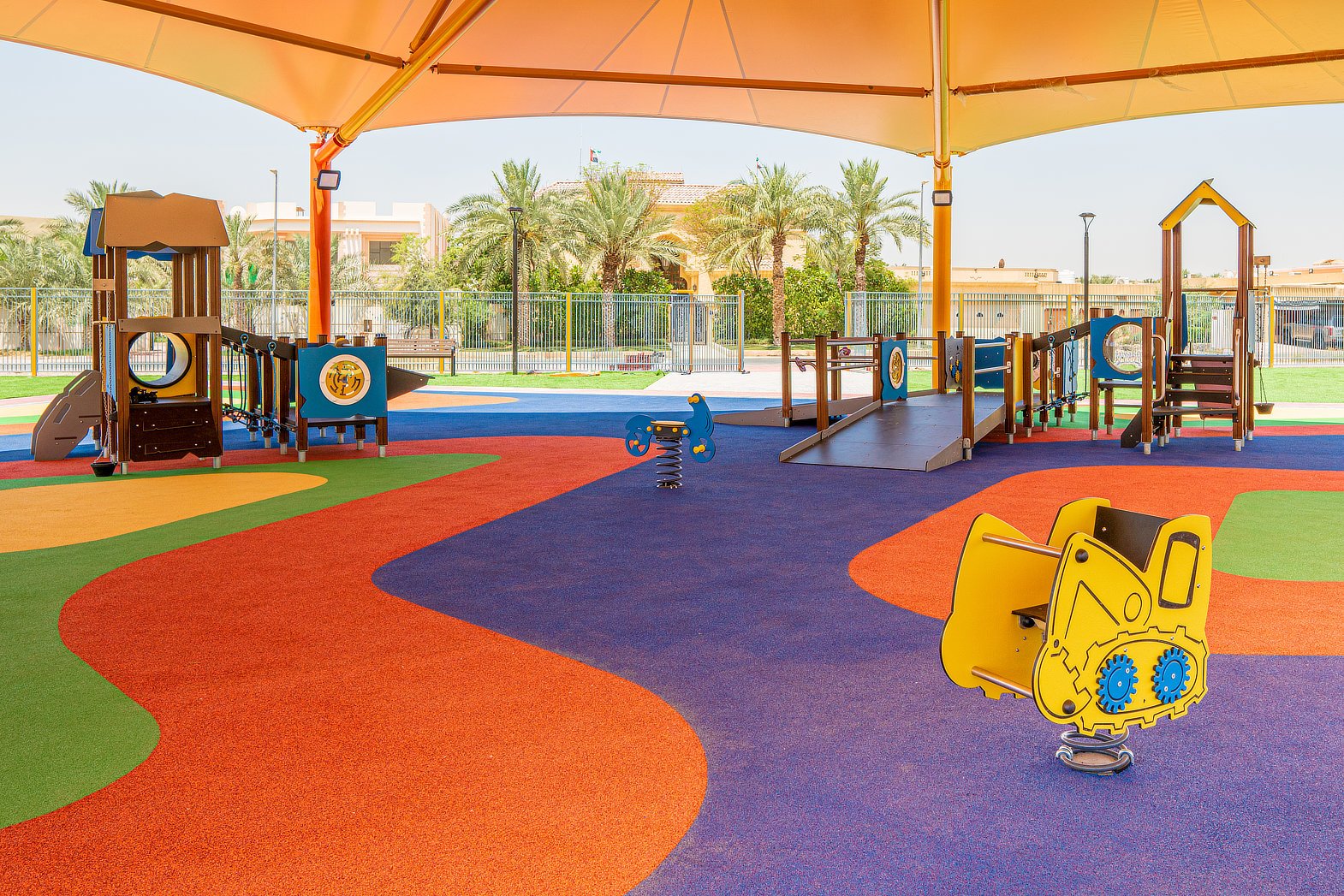
Refresh and re-plan a tired area for a fraction of a rebuild, keeping what still works.
Explore playground refurbishment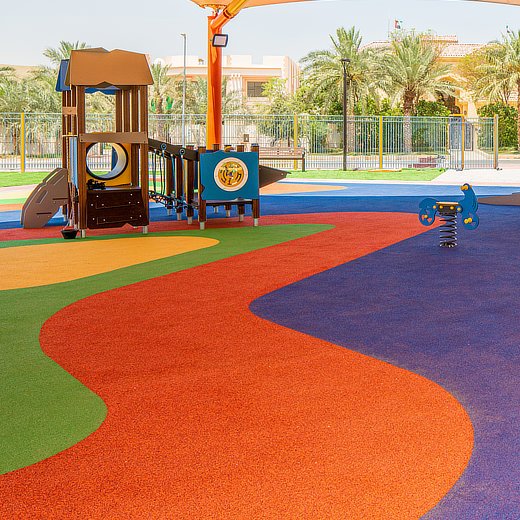
A plain-English guide to the playground safety standards and what they mean for your site.
Explore en 1176 & en 1177 complianceThe right playground repair service depends on what your last inspection found and how much of the play area is affected. A single split in the wet pour or one loose fixing calls for a reactive playground repair; a site with no current safety report needs an RPII annual main inspection first; a tired area that still has sound groundworks suits a playground refurbishment.
For a school with no recent inspection we usually start with the annual main inspection, because it gives you the risk-rated defect list to budget from. Where the report shows widespread wear across surfacing and equipment, refurbishment works out cheaper per year of life than repeated patch repairs. Our EN 1176 and EN 1177 compliance guide explains which standard governs each part of your site.
Most playground repairs fall between 500 and 2,000 pounds, and a wet pour surface repair runs at around 30 to 75 pounds per square metre installed depending on the damage. These are indicative UK ranges to confirm at survey, not fixed prices: a single patched split sits at the lower end, while a re-bonded edge, a colour match across a worn area, or a rubber mulch top-up moves the figure up.
An RPII annual main inspection is typically around 85 to 300 pounds per site for a small area, rising for larger parks with multiple zones, outdoor gyms or water play. General surface maintenance such as brushing, re-bonding and edge repair sits at roughly 25 to 50 pounds per square metre. A full refurbishment costs a fraction of a rebuild because it keeps your existing sub-base and groundworks. For a firm number, get a playground repair quote and we will price your exact site.
| Service | What it covers | Frequency or trigger | Indicative cost | Best for |
|---|---|---|---|---|
| Annual main inspection | Full RPII check to BS EN 1176, risk-rated report | Every 12 months | £85 to £300+ per site | Duty-of-care and insurance evidence |
| Reactive repair | Fix a split, loose fixing, worn edge or damaged part | As defects arise | £500 to £2,000 typical | Keeping a single fault from closing the area |
| Wet pour surface repair | Patch, re-bond and colour-match worn surfacing | As surface wears | £30 to £75 per m² | Splits, trip edges and worn zones |
| Playground refurbishment | Resurface, re-mark, re-coat and replace selected items | Tired but sound site | Fraction of full rebuild | A worn area brought back to life |
Indicative UK market ranges to confirm against your own pricing at a site survey. Larger parks, outdoor gyms and water play are priced individually.
Playground repairs are governed by BS EN 1176 for the play equipment and BS EN 1177 for the impact-absorbing surfacing, with the duty to maintain them sitting under the Health and Safety at Work Act 1974, the Occupiers' Liability Acts and the Management of Health and Safety at Work Regulations 1999. Together these make a documented inspection and repair regime effectively essential for any school play area, and many insurers require an annual main inspection as a condition of cover.
BS EN 1176-7 sets the three-tier inspection routine we work to: a routine visual check by your staff, an operational inspection roughly every one to three months, and an independent annual main inspection by an RPII-certified inspector. Any surface repair must restore the Critical Fall Height the equipment needs, proven by the BS EN 1177 headform drop test, so a patched area still returns a Head Injury Criterion below 1000. We repair to these standards and issue written, risk-rated reports you can file as evidence of your duty of care.
A school playground should have a routine visual check daily or weekly, an operational inspection every one to three months, and an independent annual main inspection every 12 months, the three-tier routine set by BS EN 1176-7. The routine and operational checks can be done by your own trained staff, while the annual main inspection must be carried out by an RPII-certified inspector who assesses long-term wear, weathering, vandalism and standards compliance.
Timber equipment adds its own cycle: we re-treat timber every 24 to 36 months to hold off rot, and steel needs its powder coating checked for rust before it spreads. We can run the operational and annual inspections for you, or train your caretaking team to carry out the routine checks and log them. Each inspection produces a risk-rated defect list, which feeds straight into a reactive repair schedule you can budget from.
Commercial Play carries out playground repairs from the inspection report outwards, starting with the highest-risk defects so the area can safely reopen fastest. For surfacing we cut out the failed section, re-lay the SBR base and EPDM wearing course to the original Critical Fall Height, and colour-match the repair into the surrounding wet pour so the fix is level and the fall height is restored.
For equipment we replace worn parts, tighten and re-secure fixings, re-treat weathered timber and re-coat rusted steel, working to BS EN 1176 throughout. We fence off the working zone while any polyurethane binder cures, and phase larger renovations so part of the space stays open. Because we fit the same surfaces and equipment new, we repair to a matching standard rather than a temporary bodge, and hand back a written record of what was done.
A properly executed wet pour surface repair lasts as long as the surrounding surfacing, so a re-bonded patch should sit safely for 8 to 12 years alongside the original, and a refurbished area typically adds a similar decade of working life for a fraction of a rebuild. The result depends on fixing the cause, not just the symptom: a split caused by a failing sub-base returns unless the base is repaired first.
Timber that is re-treated on the 24 to 36 month cycle and steel kept free of rust hold up for many more years than neglected equipment, which is why planned maintenance beats reactive callouts over a site's life. We repair and refresh worn surfaces and equipment rather than rip and replace wherever the groundworks are sound, extending the life of what you already have; see how we approach a full playground refurbishment.
Playground repair and maintenance keeps your area open and compliant, turning a risk-rated inspection defect into a documented fix before it becomes a closure notice or a claim. A planned regime does three more things well: it evidences your duty of care under the Occupiers' Liability Acts, it satisfies the annual inspection many insurers require, and it catches small faults while they are still cheap to put right.
Reactive repairs keep a single split or loose fixing from closing the whole area, so PE, break and after-school clubs carry on. Renovation makes the most of your existing sub-base and groundworks, so a tired playground is brought back for a fraction of a full rebuild. Because we inspect, repair and renovate any make from any installer, one team can hold your surfacing, equipment, fencing and structures to a single standard rather than juggling several suppliers.
Commercial Play inspects, repairs and renovates playgrounds in-house across England and Wales, so one team owns the job from the RPII inspection report through to the finished repair. We assess each site against BS EN 1176 and BS EN 1177, risk-rate every defect, and put right the surfacing, equipment, fencing and structures whoever originally installed them.
Because we design, supply and install every surface and every item of equipment new, we repair to a matching standard and can honestly tell you when a refurbishment beats repeated patch repairs. We also colour-match wet pour repairs and re-treat timber on cycle, so a fix blends in rather than showing. Talk to us about your play area and we will inspect it, tell you what it needs, and price the work.
Best practice under BS EN 1176-7 is a routine visual check daily or weekly, an operational inspection every one to three months, and an independent annual main inspection every 12 months. The routine and operational checks can be done by your trained staff, while the annual main inspection must be carried out by an RPII-certified inspector. We can run any of these and provide written, risk-rated reports.
Indicatively, an RPII annual main inspection is around 85 to 300 pounds plus VAT for a small site, rising for larger parks with multiple zones, outdoor gyms or water play. Full annual inspections with detailed compliance reporting can reach 400 to 600 pounds or more. These are market ranges to confirm on enquiry, as the number of items and the site size move the figure.
Most reactive playground repairs fall between 500 and 2,000 pounds, and a wet pour surface repair runs at around 30 to 75 pounds per square metre installed. General surface maintenance such as re-bonding and edge repair sits at roughly 25 to 50 pounds per square metre. These are indicative ranges to confirm at survey, as the damage, colour match, area and access all move the figure.
Yes. We inspect, repair and renovate play equipment, surfacing and fencing from any manufacturer or installer, bringing it back to a safe, compliant condition under BS EN 1176 and BS EN 1177. Because we fit the same surfaces and equipment new, we repair to a matching standard rather than a temporary patch.
Renovation is usually far cheaper than a full rebuild because it keeps your existing sub-base and groundworks. Resurfacing, re-marking, re-coating and replacing selected equipment can bring a tired area back for a fraction of the cost of starting again, and typically adds a similar decade of working life. Where equipment is obsolete or timber has systemic rot, replacement can work out cheaper over time.
There is no single law naming annual inspections, but the Health and Safety at Work Act 1974, the Occupiers' Liability Acts and the Management of Health and Safety at Work Regulations 1999 create duties that make a documented inspection and repair regime effectively essential. Many insurance policies also require an annual main inspection as a condition of cover.
We cut out the failed section, re-lay the SBR base and EPDM wearing course to the original Critical Fall Height, and colour-match the repair into the surrounding surface so it stays level and the fall height is restored, proven by the BS EN 1177 drop test. Where a failing sub-base caused the split, we repair the base first so the fault does not return.
Timber play equipment should be re-treated every 24 to 36 months to hold off rot, and steel should have its powder coating checked for rust before it spreads. We build this into a planned maintenance cycle so weathering is caught early, which is far cheaper than replacing a rotted or rusted unit later.
We fence off only the working zone and phase larger renovations so part of the space stays open where we can. A reactive repair keeps a single split or loose fixing from closing the whole area, and we programme the work around term times and school routines. Where a polyurethane binder needs to cure, that zone stays fenced until it is safe.
Play equipment repairs are governed by BS EN 1176 and surfacing repairs by BS EN 1177. Any surface repair must restore the Critical Fall Height the equipment needs, proven by the BS EN 1177 headform drop test so the patched area still returns a Head Injury Criterion below 1000. Our EN 1176 and EN 1177 compliance guide explains which standard governs each part of your site.
The seven most common nursery playground hazards, from unsafe surfacing to gate safety, with the practical fix for each and the standards that apply.
Read articleA practical step-by-step guide to planning a school playground, from auditing your space and setting aims through design, zoning, surfacing and installation.
Read articleTell us about your space and we'll arrange a free site visit, design and fixed quote.