Wheelchair-accessible equipment
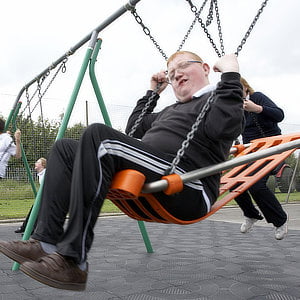
Ground-level roundabouts, wheelchair-platform swings and accessible trampolines that welcome children who use mobility aids.
Explore wheelchair-accessible equipmentAn inclusive play area lets children of every ability play side by side, not separately. Commercial Play designs SEN and inclusive playgrounds (wheelchair-accessible equipment, continuous step-free surfacing and sensory zones) so no child is left watching from the edge.
SEN and inclusive play is playground provision designed so children with physical, sensory and cognitive needs play alongside their peers, built to BS EN 1176 for equipment and BS EN 1177 for surfacing. We plan the whole journey rather than one accessible item: level step-free routes, ground-level and transfer-friendly equipment, sensory variety and quiet retreats in one connected scheme.
The difference between accessible and inclusive matters. An accessible playground meets the Equality Act 2010 minimum so a wheelchair user can reach it; an inclusive playground goes further so that child can actually use and enjoy it side by side with everyone else. We design to that second bar, mixing wheelchair-accessible equipment, unitary wet pour surfacing, calming sensory zones and autism-friendly zoning so no child watches from the edge.
Commercial Play supplies and installs the following SEN and inclusive play types: wheelchair-accessible equipment, inclusive swings and roundabouts, calm and quiet spaces, autism-friendly designed layouts, and full accessibility-standard schemes. Each answers a different need (physical access, shared movement play, self-regulation, predictable zoning), so we specify by your pupils' profile, your site and your budget rather than a house default.
Ground-level roundabouts, wheelchair-platform swings, transfer platforms and tactile panels can all sit in one scheme. Here is a one-line view of each, with full detail on the dedicated pages.
Ground-level roundabouts, wheelchair-platform swings and accessible trampolines that welcome children who use mobility aids.
Explore wheelchair-accessible equipment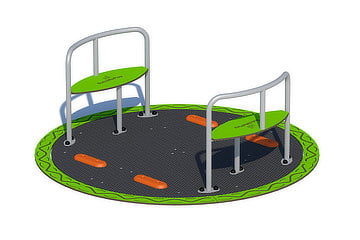
Nest and basket swings, supportive seats and level-access roundabouts so movement play is shared by everyone.
Explore inclusive swings & roundabouts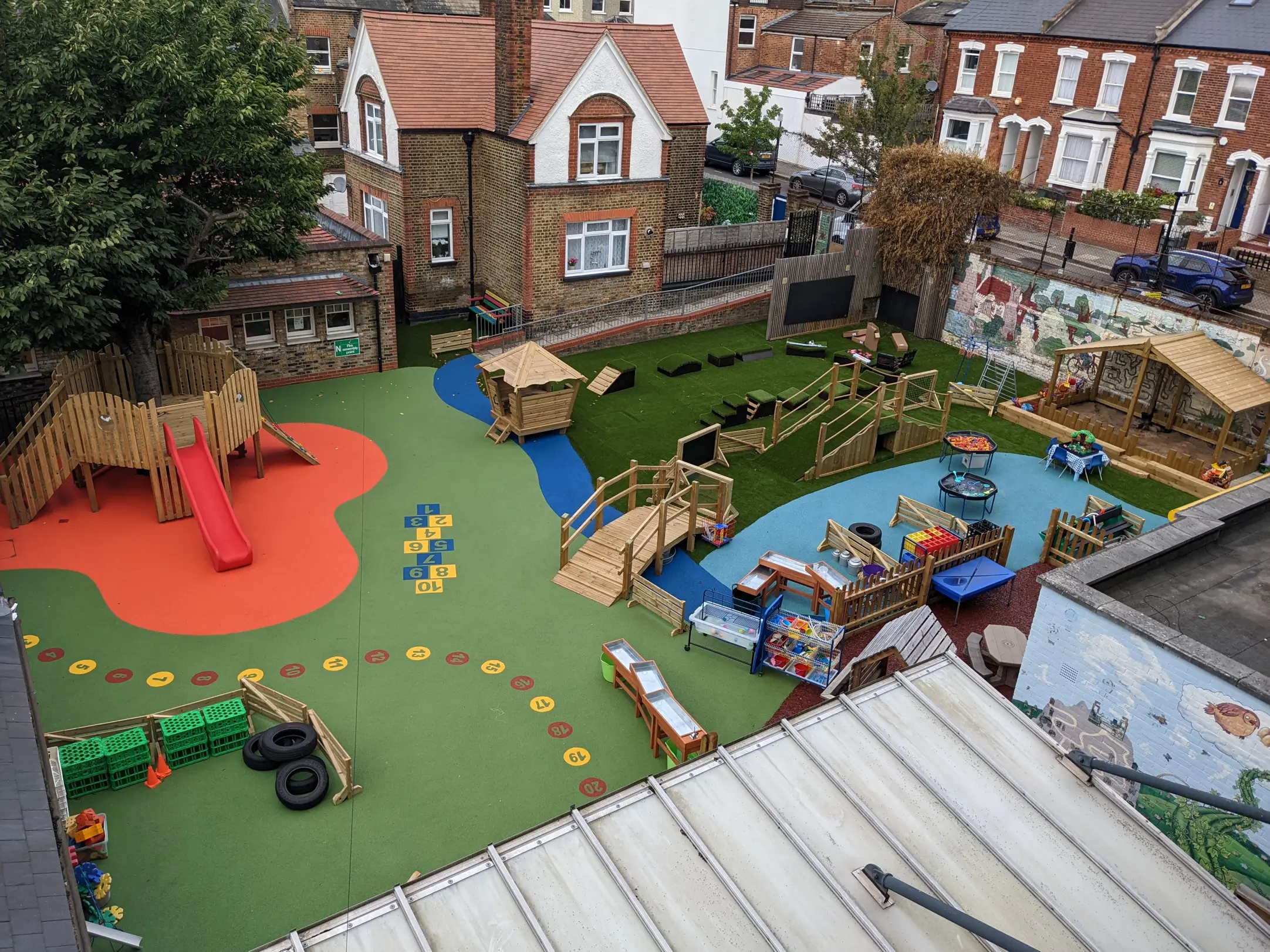
Shaded, enclosed retreats where children can step away from busy play and self-regulate.
Explore calm & quiet spaces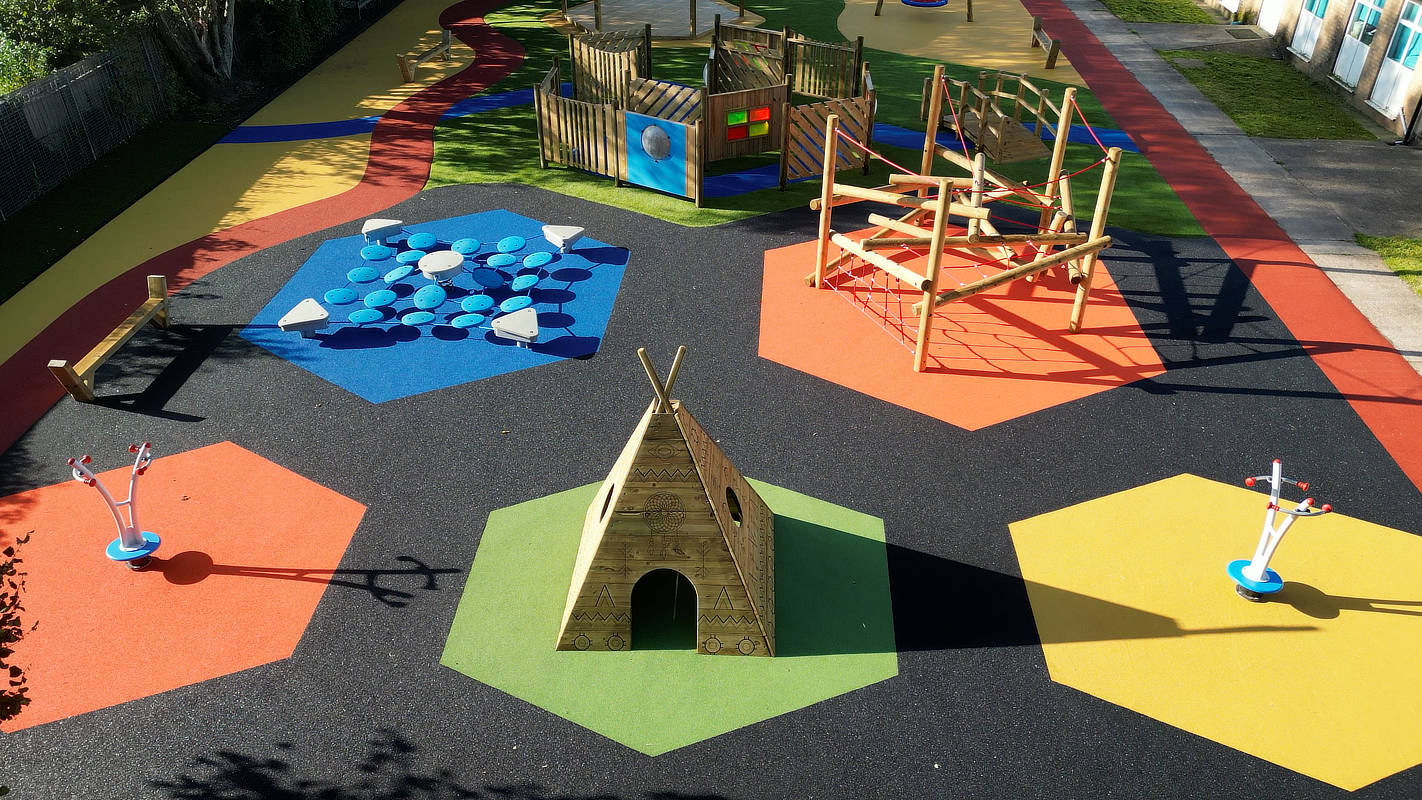
Predictable, clearly zoned layouts with calm retreats and clear sightlines that reduce overwhelm.
Explore autism-friendly design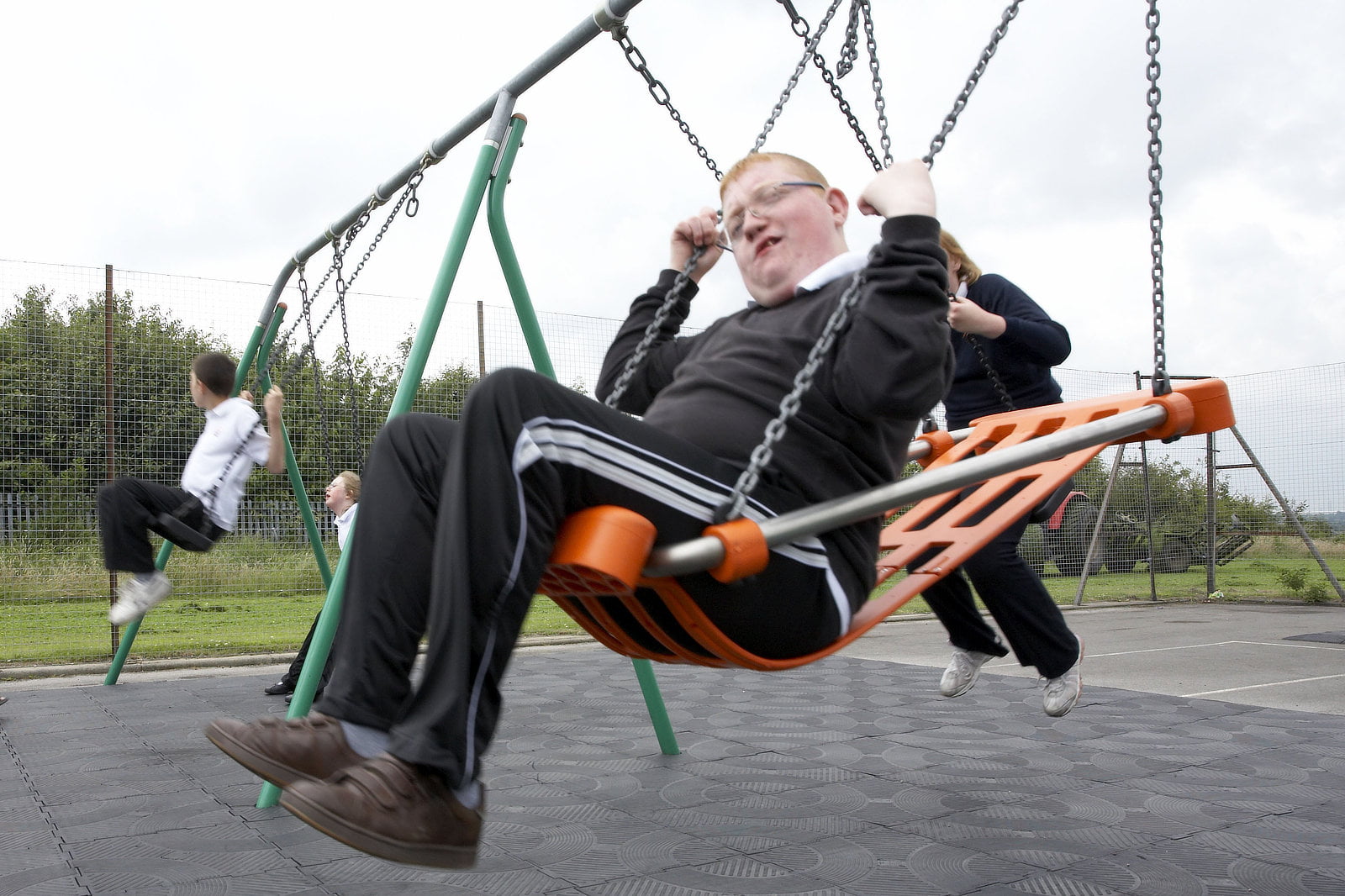
What genuinely inclusive play looks like beyond the Equality Act minimum, and how we design to it.
Explore accessibility standardsThe best inclusive option is the mix matched to your pupils' physical, sensory and cognitive needs, your site and your budget, not a single flagship item. Wheelchair-accessible equipment suits sites with mobility-aid users; nest and basket swings suit shared movement play; calm and quiet spaces suit sensory-processing and autism needs; a clearly zoned autism-friendly layout ties it together with predictable sightlines.
For a special school we usually lead with ground-level wheelchair-accessible equipment and a calm retreat, then layer in sensory play. For a mainstream primary aiming beyond the Equality Act minimum, an inclusive swing and roundabout plus continuous surfacing brings every child into the same space. We survey first and design to your accessibility standards, not a catalogue page.
A wheelchair-accessible roundabout costs around 4,000 to 9,000 pounds installed, a wheelchair-platform swing around 3,000 to 6,000 pounds, and a nest or basket swing around 1,500 to 4,000 pounds. These are indicative ranges to confirm at survey, not fixed prices: a full inclusive scheme with equipment, wet pour surfacing and a calm zone typically runs from around 15,000 to 60,000 pounds and beyond depending on the number of pieces and the area surfaced.
Your final cost is driven by the equipment mix, the area of unitary safety surfacing, the Critical Fall Height it must reach and site access. Wet pour rubber, the firm level surface a wheelchair needs, adds around 29 to 90 pounds per square metre installed, and new MOT Type 1 groundworks add roughly 18 to 30 pounds per square metre where the base needs building up. For a firm number, get an inclusive play area quote and we will price your exact site.
| Element | Indicative installed cost | Access type | Standard | Best for |
|---|---|---|---|---|
| Wheelchair-accessible roundabout | £4,000 to £9,000 | Ground-level / flush transfer | BS EN 1176 | Shared spinning play for wheelchair and seated users |
| Wheelchair-platform swing | £3,000 to £6,000 | Roll-on platform | BS EN 1176 | Children who stay in a mobility aid |
| Nest / basket swing | £1,500 to £4,000 | Supported / shared seat | BS EN 1176 | Postural support and side-by-side play |
| Wet pour safety surfacing | £29 to £90 / m² | Step-free, unitary | BS EN 1177 | Firm, level wheelchair and buggy access |
| Full inclusive scheme | £15,000 to £60,000+ | Whole-area design | BS EN 1176 / 1177 / BS 8300-2 | A complete SEN or mainstream inclusive playground |
Indicative UK market ranges to confirm against your own pricing at a site survey. Equipment costs vary by manufacturer, quantity and groundworks.
SEN and inclusive play is governed by BS EN 1176 for the equipment and BS EN 1177 for the impact-absorbing surface, while accessible design follows BS 8300-2:2018 for the external environment and the Equality Act 2010, which places a duty on schools and local authorities to advance equality of opportunity for disabled pupils. Meeting the legal minimum and being genuinely inclusive are not the same thing, and we design to the higher bar.
In practice that means the surface's Critical Fall Height must equal or exceed the free height of fall of the equipment above it, safety surfacing is required wherever that fall exceeds 0.6m up to the 3m maximum, and access routes must stay firm, level and wide enough for a wheelchair or walking frame. We specify a unitary wet pour surface rather than loose fill, because loose bark and wood chip trap wheels and fail the firm, stable route BS 8300-2 expects. We can also arrange independent RPII or RoSPA inspection where you want the scheme signed off.
An autism-friendly playground uses predictable, clearly zoned layouts, calm retreats and clear sightlines to reduce sensory overwhelm, kept within a secure perimeter so a child cannot wander into danger. We separate active, high-stimulation play from quiet areas, keep routes legible, and add controlled sensory input (tactile, musical and calming panels) rather than a wall of noise and colour.
A shaded, enclosed calm and quiet space lets a child step out of busy play and self-regulate, then return when ready. We pair that with secure playground fencing around the boundary, clear visual zoning between activity areas, and low-glare surfacing colours, so the space supports children with autism and sensory-processing differences instead of overloading them. Read the full approach on our autism-friendly design page.
Commercial Play installs inclusive play as a connected scheme over a compacted MOT Type 1 stone sub-base, fixing ground-level equipment on cast concrete foundations and building wet pour up to the Critical Fall Height so equipment and surface work as one system. We survey the site, set out level step-free routes first, then position wheelchair-accessible equipment, transfer platforms and swings so a mobility aid can reach and use each item.
For the surface we mix the SBR shock base and EPDM wearing course on site, lay each layer by hand and let the polyurethane binder cure before the area reopens, giving the firm, flush, trip-free finish a wheelchair needs. We install to BS EN 1176 for the equipment and BS EN 1177 for the surface, fence off the working zone while foundations set, and phase larger schemes so part of the playground stays open. A level, continuous playground surfacing layer is what makes the whole area genuinely step-free.
Galvanised and powder-coated steel inclusive equipment typically lasts 15 to 20 years with routine inspection, while HDPE panels and moving parts such as swing bearings and roundabout mechanisms sit at around 10 to 15 years. We specify galvanised steelwork and marine-grade fixings because SEN equipment takes heavy, sustained use and must stay safe under it.
The wet pour surface beneath typically lasts 10 years or more with light maintenance, holding its firm, level finish for wheelchair access across that life. We service the moving parts, retighten fixings and refresh worn surfacing through our playground repairs and maintenance rather than defaulting to full replacement, which keeps an inclusive area safe and open for longer and protects the original spend.
SEN and inclusive play lets children of every ability play side by side rather than separately, mixing ground-level equipment, step-free wet pour surfacing, sensory variety and quiet retreats so physical, sensory and cognitive needs are all met in one space. A wheelchair user, a child with autism and their non-disabled classmates share the same playground, which builds friendships and belonging that a segregated accessible corner never can.
A firm, unitary wet pour surface gives smooth, level access for wheelchairs, walking frames and buggies with no lips or trip edges, and it drains straight through a permeable sub-base into the ground so play resumes minutes after rain and puddles do not block a wheel. Calm zones and clear autism-friendly zoning let a child choose their level of stimulation and self-regulate, so active play and quiet retreat sit side by side. Designed this way, the playground reaches beyond the Equality Act minimum to genuine inclusion.
Commercial Play designs, supplies and installs SEN and inclusive playgrounds in-house across England and Wales, so one team owns the scheme from survey to handover. We plan the whole area to BS EN 1176, BS EN 1177 and BS 8300-2 (level routes, wheelchair-accessible equipment, sensory zones and calm retreats) around your pupils' actual needs, not a single accessible item bolted onto a standard layout.
Because we install the equipment and the surfacing together, the finished playground is genuinely step-free rather than an accessible item stranded on loose bark. We also inspect and repair inclusive equipment and surfacing, whoever installed it, so we can extend what you have instead of defaulting to replacement. Talk to us about your inclusive play area and we will tell you honestly what your pupils need.
An inclusive playground combines wheelchair-accessible equipment, step-free surfacing tested to BS EN 1177, sensory variety and quiet spaces so children with physical, sensory and cognitive needs play alongside their peers rather than in a separate area. It goes beyond the Equality Act 2010 minimum of simply being reachable to being genuinely usable by every child.
An accessible playground meets the minimum duty under the Equality Act 2010, so a disabled child can reach it. An inclusive playground goes further so that child can actually use and enjoy it side by side with everyone else, mixing ground-level equipment, transfer platforms, firm wet pour surfacing and calm zones. We design to that higher inclusive bar, guided by BS 8300-2:2018.
Indicatively, a wheelchair-accessible roundabout runs around 4,000 to 9,000 pounds installed, a wheelchair-platform swing around 3,000 to 6,000 pounds, and a nest swing around 1,500 to 4,000 pounds. A full scheme with equipment and surfacing typically runs from around 15,000 to 60,000 pounds and beyond. These are market ranges to confirm at a site survey, as the equipment mix, area and access all move the figure.
No. Inclusive design benefits every setting. Mainstream schools have pupils, siblings, parents and staff with disabilities, and an inclusive playground welcomes them all while enriching play for every child. Shared items such as nest swings and ground-level roundabouts are used and enjoyed by disabled and non-disabled children together.
A unitary wet pour rubber surface is best, because it gives a firm, level, trip-free route a wheelchair, walking frame or buggy can cross, and it is tested to BS EN 1177 for impact protection. Loose fill such as bark or wood chip traps wheels and fails the firm, stable access route BS 8300-2 expects, so we specify bonded rubber for inclusive areas. See our playground surfacing page for the options.
Yes. We use predictable, clearly zoned layouts with clear sightlines, secure fencing, low-glare surfacing and calm retreats where a child can step away and self-regulate, alongside controlled tactile, musical and sensory input. This supports children with autism and sensory-processing differences instead of overwhelming them. Full detail is on our autism-friendly design page.
The equipment is governed by BS EN 1176 and the impact-absorbing surface by BS EN 1177, while accessible external design follows BS 8300-2:2018 and the Equality Act 2010 duty on schools to advance equality for disabled pupils. The surface Critical Fall Height must match the equipment above it, and access routes must stay firm, level and wide enough for a mobility aid. We can arrange independent RPII or RoSPA inspection to sign the scheme off.
Yes, that is the point of inclusive design. Ground-level roundabouts and transfer platforms let a child spin or climb whether they stay in their wheelchair or move across to a seat, and wheelchair-platform swings take the mobility aid straight on. We mix ground-level and transfer-friendly items so disabled and non-disabled children share the same equipment, not a separate accessible corner.
Galvanised, powder-coated steel equipment typically lasts 15 to 20 years with routine inspection, while HDPE panels and moving parts such as swing bearings sit at around 10 to 15 years, and the wet pour surface beneath lasts 10 years or more. SEN equipment takes heavy, sustained use, so we specify galvanised steelwork and marine-grade fixings and service the moving parts to keep it safe across that life.
Yes. We survey what you have and add inclusive elements to it, such as a ground-level roundabout, a nest swing, wet pour over loose fill, a calm zone or clearer zoning, rather than starting again. We inspect and repair equipment and surfacing whoever installed it, so an existing area can be brought closer to genuine inclusion for a fraction of a full rebuild.
Outdoor play equipment for an SEN school, built to be enjoyed year-round.
View projectHow to design an inclusive playground for SEN and special schools, covering accessible surfacing, wheelchair-friendly equipment, sensory zones and clear layouts.
Read article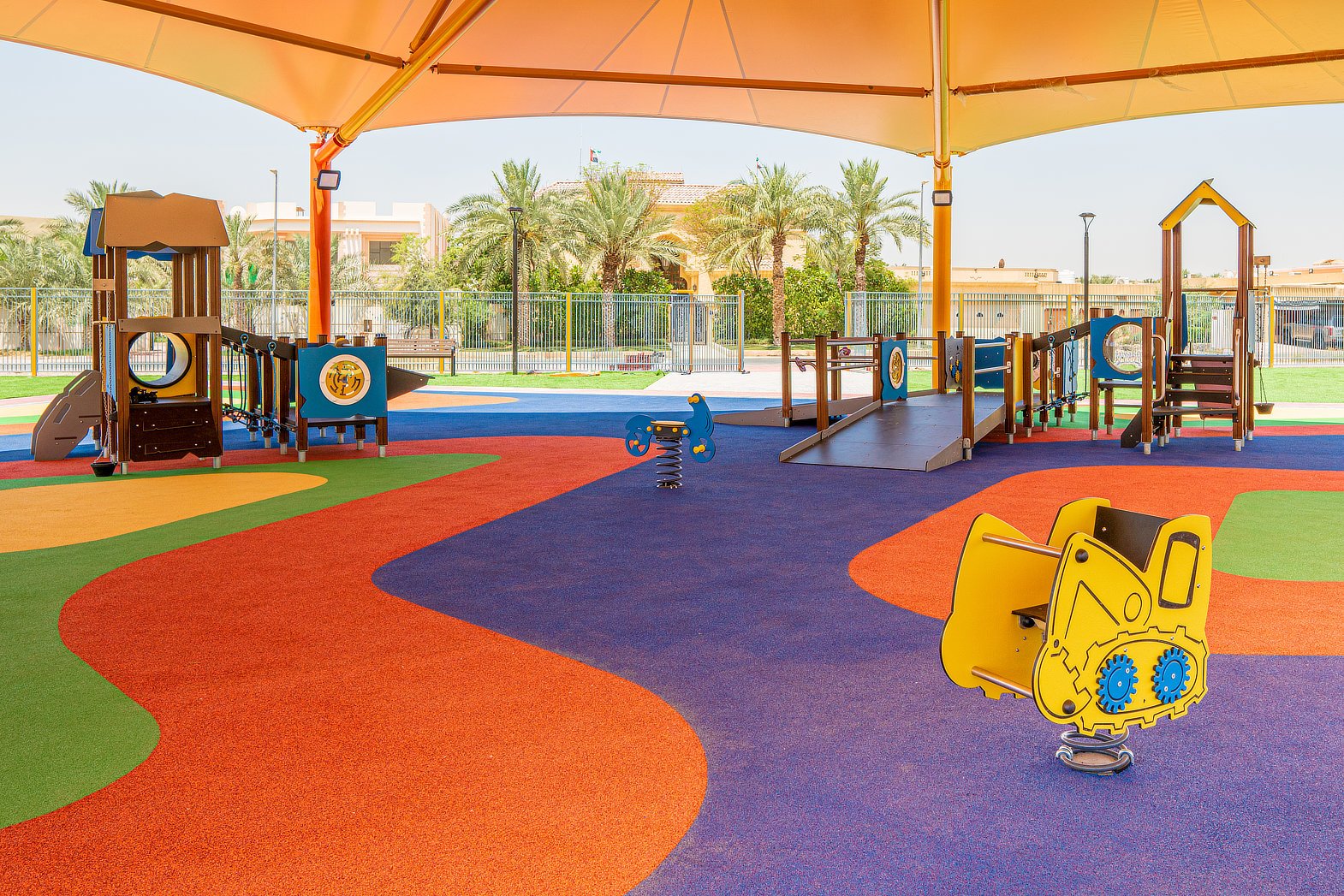
A practical step-by-step guide to planning a school playground, from auditing your space and setting aims through design, zoning, surfacing and installation.
Read articleTell us about your space and we'll arrange a free site visit, design and fixed quote.