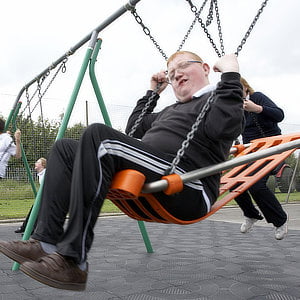
Wheelchair-Accessible Equipment
Wheelchair accessible play equipment is designed so children who use wheelchairs or walking aids can get on, hold on and play alongside their friends, not watch from the sidelines.
View wheelchair-accessible equipmentThis guide explains what makes play genuinely inclusive beyond the legal minimum, from step-free routes and transfer-friendly equipment to sensory variety and quiet spaces, and how we design to it.
The inclusive play and accessibility standards guide is our reference for designing playgrounds that children of every ability can reach, use and enjoy together, built around the Equality Act 2010, BS 8300 and BS EN 1176. Inclusive play reaches past the legal duty not to discriminate, and past a single accessible-item box, towards a whole space that works for all.
Meeting the legal minimum and being genuinely inclusive are not the same thing. A playground can technically comply and still leave some children watching from the edge, so this guide sets out the practical ingredients we build in, from step-free routes and transfer-friendly equipment to sensory variety and quiet retreats, that turn access on paper into play in reality. See our full inclusive and SEN play service.
Commercial Play designs inclusive play by starting with the route, a firm, free-draining wet pour surface laid to a maximum running slope of 1:20 that gives wheelchairs and buggies a level path to every activity with no lip or loose fill. From there a mix of ground-level and transfer-friendly equipment lets a child play whether they stay in their wheelchair or move across to a seat.
Genuine inclusion also thinks beyond mobility. Sensory variety gives children different ways to engage, quiet spaces give them somewhere to self-regulate, and a considered layout with clear sightlines and zoning ties it together. Every piece is specified to BS EN 1176 and every surface tested to BS EN 1177, so the space is inclusive and safe as a whole. Our wheelchair accessible equipment and wet pour surfacing carry this through.
Inclusive and accessible play design serves every child in a school or nursery, including wheelchair users, children with limited mobility, and neurodivergent children with sensory or communication needs covered by the Equality Act 2010. The point is play side by side, so a disabled child and their friends share the same equipment rather than a separate accessible corner.
Schools, nurseries, councils and SEN settings across England and Wales use this approach to meet their reasonable-adjustment duty and pass Ofsted and access-audit scrutiny. Early-years and EYFS areas gain most from step-free wet pour and ground-level play, while primary and special schools add transfer platforms, wheelchair-accessible roundabouts and calm and quiet spaces for children who need to retreat and regulate.
An inclusive play area typically costs around 15,000 to 60,000 pounds installed, with a compact early-years inclusive scheme starting near 15,000 pounds and a full primary inclusive playground reaching 60,000 pounds or more. These are indicative ranges to confirm at survey, not fixed prices: the accessible route in wet pour, the transfer-friendly equipment and any wheelchair-accessible roundabout are the items that move the figure most.
Your final cost is driven by the area, the equipment mix, the wet pour depth set by the Critical Fall Height, ground conditions and site access. Accessible wet pour surfacing sits around 29 to 90 pounds per square metre installed, and a single wheelchair-accessible roundabout with a flush deck runs roughly 6,000 to 12,000 pounds. Inclusion rarely costs more when it is designed in from the start rather than retrofitted. For a firm number, get an inclusive play quote and we will price your exact site.
Inclusive play in the UK is governed by the Equality Act 2010, which places a duty on schools and providers to make reasonable adjustments so disabled children are not put at a substantial disadvantage. It sets the legal baseline, while BS 8300 gives the technical design guidance for accessible outdoor routes, gradients and transfer points, and BS EN 1176 covers the play equipment itself.
There is no single legal playground-inclusion standard, so BS 8300 and good practice fill the gap: an accessible route at a maximum 1:20 running slope, firm and jointless surfacing, transfer platforms sized for independent transfer, and clear sightlines for supervision. Impact-absorbing surfacing under and around equipment is tested to BS EN 1177 to a Head Injury Criterion below 1000, and we specify and test to all of these, arranging independent RPII or RoSPA inspection where you want it signed off.
A genuinely inclusive playground combines six ingredients rather than one accessible item: step-free routes, transfer-friendly equipment, ground-level play, sensory variety, quiet retreat spaces, and a layout planned for everyone. Each is measured against BS 8300 and BS EN 1176, so access is real rather than a box ticked on paper.
The route is a firm, free-draining wet pour path at up to a 1:20 slope with no lip or loose fill; transfer platforms sit at roughly 380 to 430mm to match a wheelchair seat; ground-level play such as an at-grade sandpit or a flush-deck roundabout keeps a child in their chair in the game; and sensory panels plus a quiet zone with clear sightlines let neurodivergent children engage and self-regulate. The table below shows how each ingredient maps to a standard and a target.
| Inclusive ingredient | What it does | Standard or target | Typical detail |
|---|---|---|---|
| Step-free access route | Level path to every activity | BS 8300, max 1:20 slope | Jointless wet pour, no lip or loose fill |
| Transfer-friendly equipment | Move from chair to seat independently | BS EN 1176 | Transfer platform ~380 to 430mm high |
| Ground-level play | Play without leaving the wheelchair | BS EN 1176 | Flush-deck roundabout, at-grade sand or water |
| Sensory variety | Multiple ways to engage | Good practice | Tactile, musical and visual panels |
| Quiet retreat space | Somewhere to self-regulate | Good practice | Low-stimulus zone with clear sightlines |
| Layout for everyone | Zoning and supervision | BS 8300 | Wide circulation, sightlines, logical zones |
Indicative design targets to confirm on a site survey. Transfer heights and slopes are set to the equipment and site.
An inclusive playground lasts 15 to 25 years for the equipment and 10 years or more for the wet pour access surface, so a scheme built to BS EN 1176 and BS EN 1177 stays usable for a generation of pupils with routine care. Powder-coated steel roundabouts and climbing frames sit at the top of that band, while timber elements sit lower.
The accessible wet pour route typically lasts 8 to 12 years, and several in the industry cite 15 years or more for a well-maintained surface, so we present 10 years or more as a fair indicative life. We repair and refresh worn wet pour and re-tension or re-fix equipment rather than rip and replace, extending the life of what you already have; see wet pour surfacing.
Inclusive play and accessibility standards let children of every ability play together, meeting the Equality Act 2010 duty while going past the legal minimum to a space that works for all. A firm, jointless wet pour route gives step-free access, transfer-friendly and ground-level equipment opens the whole playground to wheelchair users, and sensory variety plus quiet spaces support neurodivergent children.
Designing to BS 8300, BS EN 1176 and BS EN 1177 also protects the school: it satisfies the reasonable-adjustment duty, stands up to an access audit or Ofsted, and cuts the risk of a child being left on the edge. Because inclusion is planned in from the survey rather than bolted on, it rarely adds cost, and a considered layout with clear sightlines keeps supervision easy. This works hand in hand with our calm and quiet spaces and sensory play.
Commercial Play designs, supplies and installs inclusive playgrounds in-house across England and Wales to the Equality Act 2010, BS 8300, BS EN 1176 and BS EN 1177, so one team owns the job from access survey to handover. We design past the legal baseline, building step-free routes, transfer-friendly equipment, sensory variety and quiet spaces into the layout rather than adding a single accessible item.
We fit the surfacing and the equipment, so our recommendation follows your children and your site rather than one product we happen to sell, and we can arrange independent RPII or RoSPA sign-off. We also repair and refresh what you already have instead of defaulting to full replacement. Talk to us about your play area and we will tell you honestly what genuine inclusion needs, within our full inclusive and SEN play offer.
The Equality Act 2010 places a duty on schools and providers to avoid discriminating against disabled children and to make reasonable adjustments so they are not put at a substantial disadvantage. It sets an important baseline, but truly inclusive play usually goes further than the minimum the law requires.
Play equipment should meet BS EN 1176 and impact-absorbing surfacing should meet BS EN 1177, whether or not a piece is described as inclusive, with BS 8300 guiding accessible routes and gradients. These cover safety and access; inclusion is about how thoughtfully those safe pieces are chosen and arranged for all children.
Not really. A single accessible piece is a start, but genuine inclusion is about the whole space, the step-free routes, the mix of ground-level and transfer-friendly equipment, the sensory and quiet options and the layout, working together so children of all abilities can play side by side rather than in a separate corner.
Indicatively, an inclusive play area runs around 15,000 to 60,000 pounds installed, with accessible wet pour surfacing about 29 to 90 pounds per square metre and a wheelchair-accessible roundabout roughly 6,000 to 12,000 pounds. These are market ranges to confirm on a site survey, as area, equipment mix and ground conditions all move the figure.
An accessible route should have a maximum running slope of about 1:20 under BS 8300 guidance, laid as a firm, jointless, free-draining surface such as wet pour with no lip or loose fill. We survey the levels and set the falls so wheelchairs and buggies reach every activity without a barrier.
Transfer-friendly equipment has a platform at roughly 380 to 430mm, close to a wheelchair seat height, so a child can move across independently and then use the play piece. Paired with ground-level options like a flush-deck roundabout, it lets a child play whether they stay in their chair or transfer out.
We begin with step-free access and firm wet pour surfacing at up to a 1:20 slope, add a blend of ground-level and transfer-friendly equipment, and build in sensory variety and quiet spaces. We then plan the layout, zoning and sightlines so the finished playground is inclusive as a whole, always working to the Equality Act 2010, BS 8300, BS EN 1176 and BS EN 1177.
No. Many settings make a real difference by adding a step-free wet pour route, a wheelchair-accessible roundabout, a transfer platform and a quiet zone within the space they already have. We can plan improvements in stages to suit your site, your access audit and your budget.
Powder-coated steel inclusive equipment typically lasts 15 to 25 years and the wet pour access surface 10 years or more with routine care, both built to BS EN 1176 and BS EN 1177. We repair and refresh worn surfacing and re-fix equipment rather than rip and replace, extending the life of what you already have.
Part of our full inclusive & sen play range, explore the other surfaces below.
Wheelchair accessible play equipment is designed so children who use wheelchairs or walking aids can get on, hold on and play alongside their friends, not watch from the sidelines.
View wheelchair-accessible equipment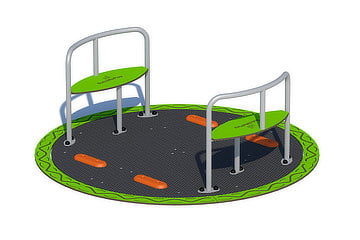
Inclusive swings and roundabouts bring the joy of movement to every child, with nest swings, supportive cradle seats and level-access carousels that a wheelchair can simply roll straight onto.
View inclusive swings & roundabouts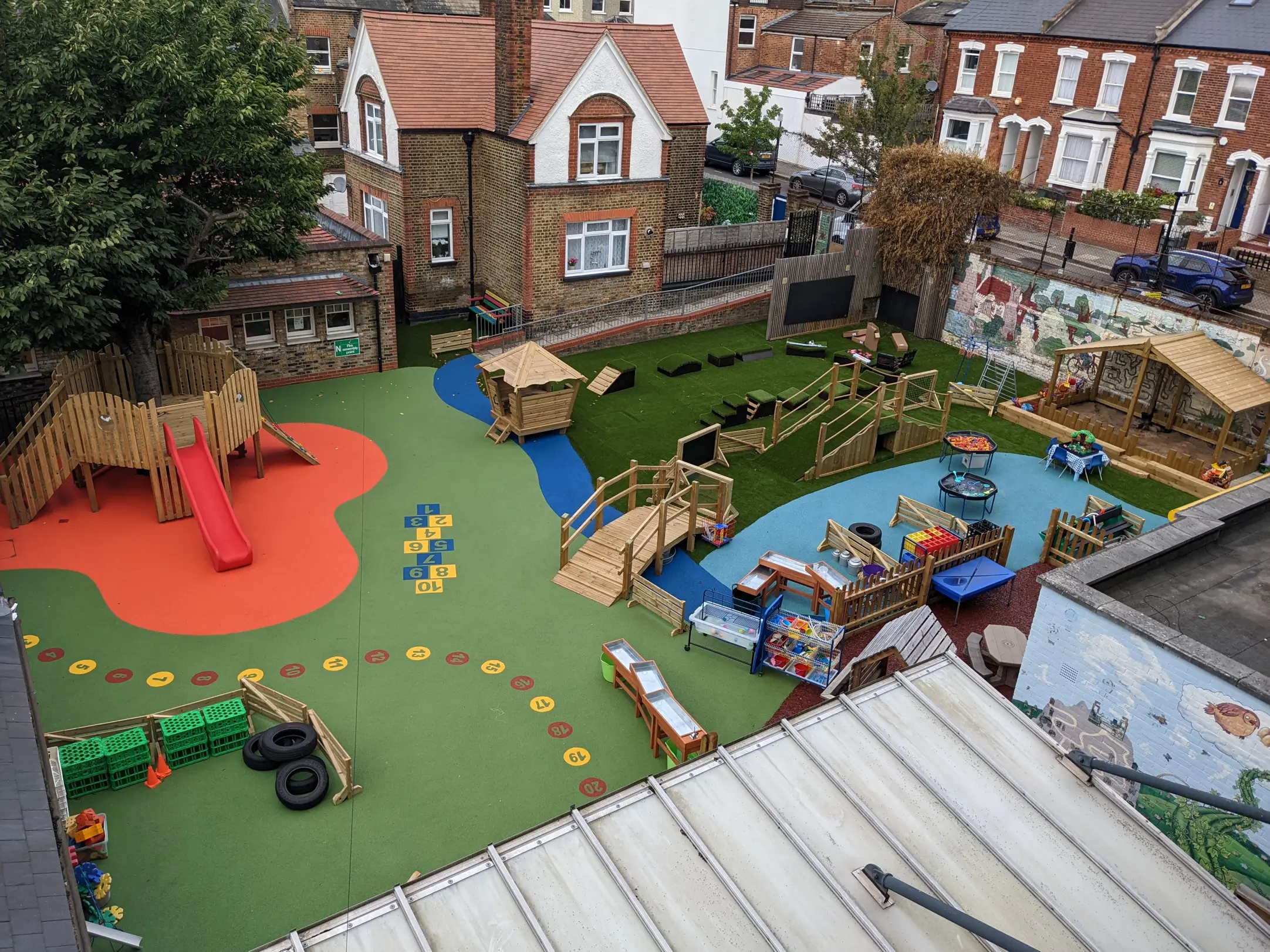
A calm, quiet space is a sheltered outdoor retreat, a pod, den or planted nook, where a child can step away from noise and bustle to settle, breathe and self-regulate.
View calm & quiet spaces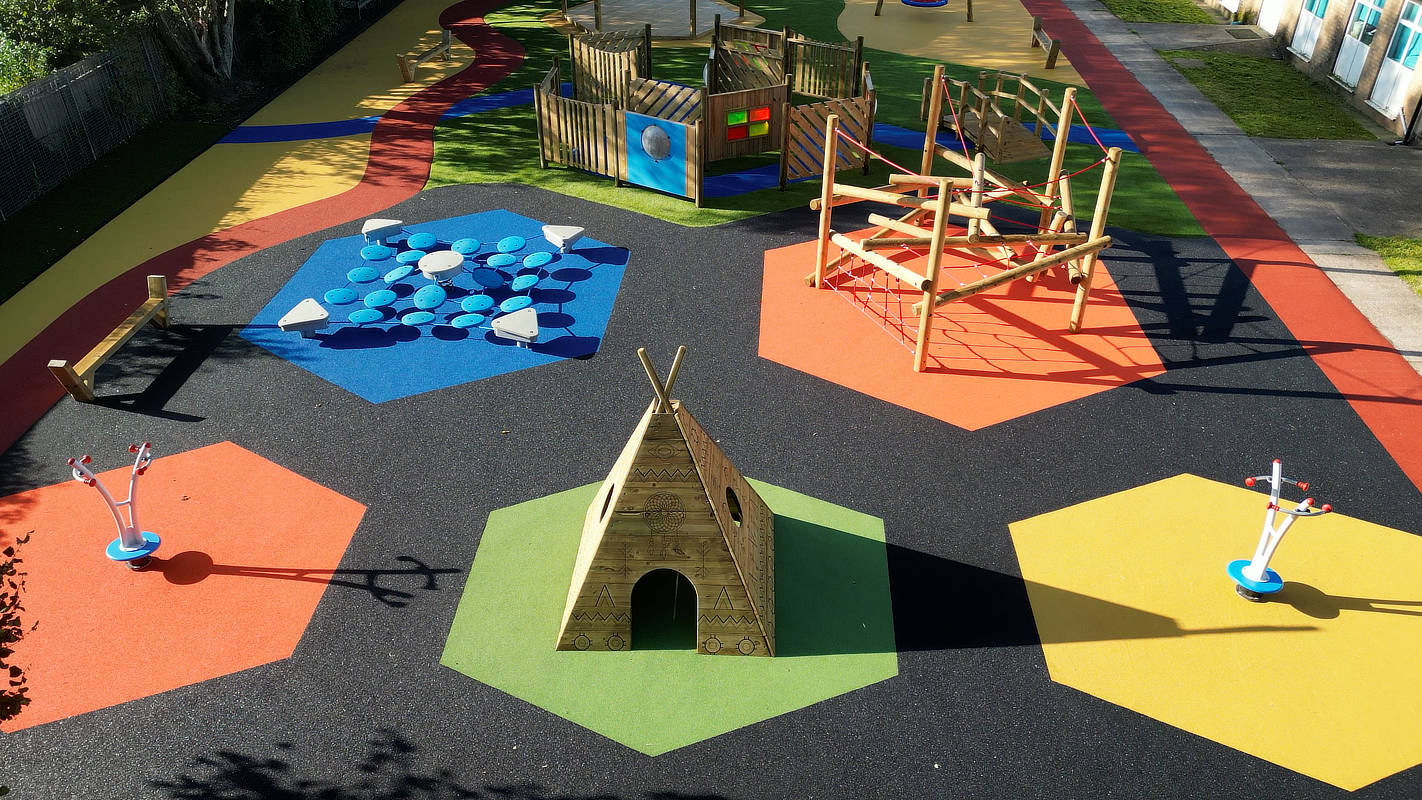
Autism-friendly playground design shapes the whole space around predictability and choice, with clear zones, calm retreats and considered sensory input, so play feels safe rather than overwhelming.
View autism-friendly playBook a free site visit and we'll measure up, recommend the right surface and send a clear, fixed quote.