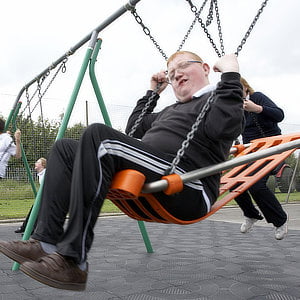
Wheelchair-Accessible Equipment
Wheelchair accessible play equipment is designed so children who use wheelchairs or walking aids can get on, hold on and play alongside their friends, not watch from the sidelines.
View wheelchair-accessible equipmentA calm, quiet space is a sheltered outdoor retreat, a pod, den or planted nook, where a child can step away from noise and bustle to settle, breathe and self-regulate.
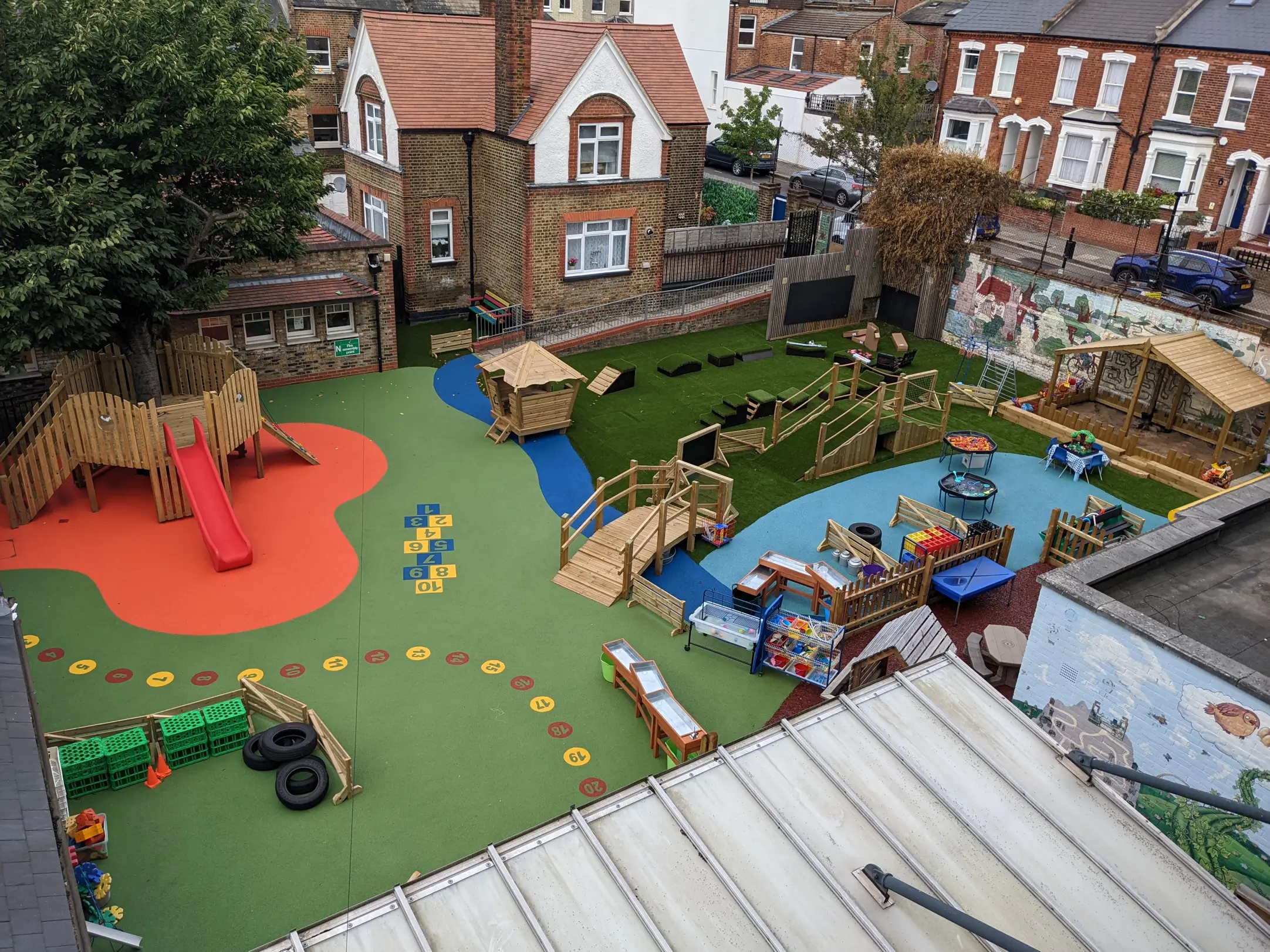
A calm and quiet outdoor space is a low-stimulation retreat, a shaded pod, enclosed den or planted nook, set slightly apart from the main play area so a child can withdraw, breathe and self-regulate. We build it from softer light, a sense of enclosure and muted natural materials, away from the busy, noisy heart of the playground.
For many children, and especially autistic and sensory-sensitive ones, a crowded playground can become overwhelming within minutes. A dedicated place to decompress is what lets them stay outside, recover and rejoin play when they are ready, rather than reaching crisis point. We shape it with planting, low walls and shade so it reads as a genuine retreat, not just a spare corner.
A calm and quiet space works by lowering the sensory load through four levers we control: enclosure, shade, muted colour and distance from noise. We wrap the seating in soft, sensory-friendly planting such as lavender, honeysuckle and bamboo, hold the palette to muted greens, soft blues and earthy neutrals, and place the pod a little away from the noisiest equipment.
The effect is a space that feels tucked away yet stays open enough for staff to keep an eye in. We use low structures and shaping to give shelter while preserving clear sightlines, so a child feels enclosed but is never truly out of sight. Softer light under a canopy or timber roof, natural materials and quieter tones all lower the temperature of the space and turn a simple corner into a reliable place to reset.
A calm and quiet outdoor space is for autistic children and those with sensory processing differences, anxiety or wider SEN, who can find crowded, noisy areas hard to manage. It gives them a safe, low-stimulation place to calm down and self-regulate, so a wobble does not turn into a meltdown and they can stay outside with their peers.
In practice almost any child benefits from somewhere quieter to sit, talk or take a breather, which is why we design it into mainstream and special-school grounds alike. It pairs naturally with wider inclusive layouts: see our autism-friendly playground design and our sensory play range, both part of our inclusive and SEN play service.
A calm and quiet outdoor space costs roughly 2,300 to 3,600 pounds for a single structure such as a sensory shelter or reading pod, and from around 5,000 up to 60,000 pounds and beyond for a fuller scheme with planting, seating, shade and groundworks. These are indicative ranges to confirm on a site survey, not fixed prices, as the pod, the planting and the surfacing all move the figure.
Your final cost is driven by the size of the retreat, the structure you choose, the planting scheme, any shade or canopy, and whether the ground needs preparing. A modest shaded nook with a comfortable seat sits at the lower end; a designed sensory garden with pods, level access and soft surfacing sits far higher. For a firm number, book a free site survey and we will price your exact space.
A calm and quiet outdoor space is designed to BS EN 1176, the playground equipment standard, wherever it includes play structures, and to the Equality Act 2010 duty to make settings genuinely accessible. Where any equipment carries a free height of fall above 0.6m we add impact-attenuating surfacing tested to BS EN 1177, so the retreat is safe as well as calming.
Supervision is built in from the start rather than added later. We design enclosure and clear sightlines together, using planting and low structures that give a sense of shelter while keeping the space visible to supervising staff, so a child feels tucked away but an adult can always see in. Timber structures use FSC-certified, pressure-treated stock and safe, well-finished detailing throughout.
A calm and quiet outdoor space is built from FSC-certified, pressure-treated Scandinavian redwood timber, soft sensory-friendly planting and a muted natural palette of greens, soft blues and earthy neutrals. A typical reading pod or den seats around 10 to 12 early-years children under a sheltered timber roof, with built-in bench seating and a sense of enclosure on three sides.
Planting does much of the calming work: lavender and honeysuckle add gentle scent, while bamboo and large-leafed plants give a soft rustle in the wind that many children find settling. We finish underfoot with a level, hard-wearing surface where wheelchairs and buggies need step-free access, and keep every edge rounded and smooth. Colours stay quiet by design, since bright, high-contrast finishes work against the low-stimulation purpose of the space.
| Element | Typical spec | Indicative cost | Lifespan | Role in the space |
|---|---|---|---|---|
| Timber pod or den | FSC pressure-treated redwood, seats 10 to 12 | £2,300 to £3,600 each | 10 years or more | Enclosed, shaded retreat with bench seating |
| Sensory planting | Lavender, honeysuckle, bamboo, muted foliage | Confirmed on survey | Renewed seasonally | Scent, soft sound and a natural, calming edge |
| Shade or canopy | Timber roof or tensioned shade sail | Confirmed on survey | 10 to 20 years | Softer light and shelter through the school day |
| Quiet seating | Timber or recycled-plastic benches | Confirmed on survey | 10 to 20 years | Comfortable place to sit, settle and reset |
Indicative UK ranges to confirm against your own pricing at a site survey. Planting, shade and seating are specified to your space and budget.
The timber structures in a calm and quiet outdoor space last 10 years or more, with FSC pressure-treated Scandinavian redwood carrying a 10-year guarantee against wood rot and insect damage. Canopies, shade sails and quality seating sit in a similar 10 to 20 year band with routine care, so the built fabric of the retreat is a long-term fixture, not a seasonal one.
Planting is the part that renews over time: some plants establish and spread, others need occasional replacing or cutting back through the seasons, which is normal for any living scheme. We use hard-wearing, well-finished materials throughout so the pods, benches and surfacing stand up to daily school use, and we can refresh planting or repair timber rather than replace a whole space.
A calm and quiet outdoor space gives a child a dedicated place to reset, decompress and self-regulate before rejoining play, which keeps a difficult moment from escalating. It does three more things well: soft, sensory-friendly planting lowers the sensory load, enclosed pods and nooks give room to withdraw without leaving the outdoors, and shade keeps the retreat comfortable through the school day.
The wider gain is that more children can stay outside with their peers rather than being brought indoors when a playground gets too much. Muted natural materials, clear sightlines for staff and a sheltered, low-stimulation feel turn a busy corner into a reliable regulation space, which supports autistic children and those with anxiety or SEN while making the whole playground calmer for everyone.
Commercial Play designs and installs calm and quiet outdoor spaces in-house across England and Wales, so one team owns the job from survey to handover. We balance enclosure against supervision on your actual site, specify the pod, planting, shade and surfacing to match your children and budget, and build to BS EN 1176 and the Equality Act rather than a house template.
We fit the retreat into your wider grounds, connecting it to autism-friendly zoning and sensory play so the calm space is part of a readable whole, not a bolt-on. Even a modest corner can become an effective retreat, so we plan improvements in stages where a full scheme is not the right step. Talk to us about your play area and we will tell you honestly what it needs.
A busy playground is loud, bright and unpredictable, which can overwhelm a child within minutes. A calm and quiet space gives them a safe, low-stimulation place to settle and self-regulate, so a wobble does not turn into a meltdown and they can stay outside with their peers rather than being brought indoors.
Autistic children and those with sensory processing differences, anxiety or SEN benefit most, because they can find crowded, noisy areas hard to manage. In practice almost any child appreciates somewhere quieter to sit, talk or take a breather, so the space helps a much wider group than its core users.
A single sensory shelter or reading pod costs roughly 2,300 to 3,600 pounds, while a fuller scheme with planting, shade, seating and groundworks runs from around 5,000 up to 60,000 pounds and beyond. These are indicative ranges to confirm on a site survey, as the structure, planting and surfacing all move the figure.
We design enclosure and clear sightlines together, using planting and low structures that give a sense of shelter while keeping the space visible to supervising staff. A child feels tucked away, but an adult can always see in. Any play equipment is built to BS EN 1176, with BS EN 1177 surfacing where the fall height calls for it.
Yes, even a modest corner can become an effective retreat. A shaded nook with soft planting and a comfortable seat, set a little apart from the busiest equipment, is often all it takes. We can plan the space in stages to suit a tight site and budget, adding a pod or more planting later.
We use FSC-certified, pressure-treated Scandinavian redwood timber for pods and dens, quiet timber or recycled-plastic seating, and soft sensory planting such as lavender, honeysuckle and bamboo. The palette stays muted, in soft greens, blues and earthy neutrals, because bright, high-contrast finishes work against the low-stimulation purpose.
The timber structures last 10 years or more, with pressure-treated redwood carrying a 10-year guarantee against rot and insect damage, and canopies and seating sit in a 10 to 20 year band with routine care. Planting is the living part that renews seasonally, which we can refresh rather than replace.
A calm and quiet space is one dedicated retreat within the grounds, whereas an autism-friendly playground is a whole-space approach that zones the entire area and builds calm retreats into it. The two work together: our autism-friendly playground design uses calm spaces as its quiet zone.
Part of our full inclusive & sen play range, explore the other surfaces below.
Wheelchair accessible play equipment is designed so children who use wheelchairs or walking aids can get on, hold on and play alongside their friends, not watch from the sidelines.
View wheelchair-accessible equipment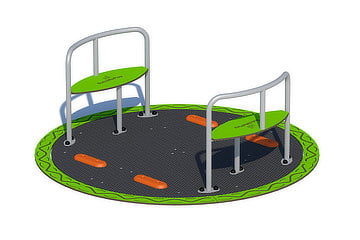
Inclusive swings and roundabouts bring the joy of movement to every child, with nest swings, supportive cradle seats and level-access carousels that a wheelchair can simply roll straight onto.
View inclusive swings & roundabouts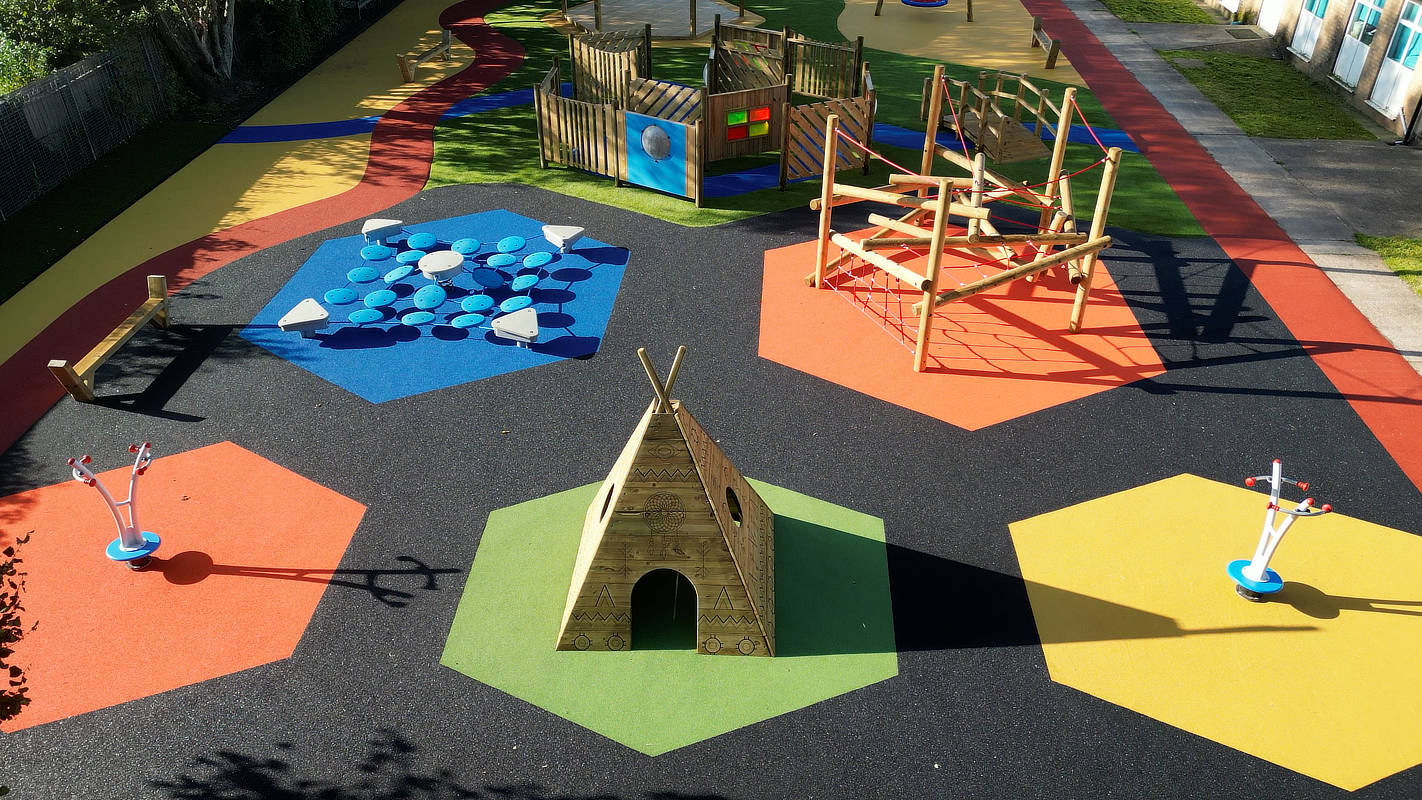
Autism-friendly playground design shapes the whole space around predictability and choice, with clear zones, calm retreats and considered sensory input, so play feels safe rather than overwhelming.
View autism-friendly playThis guide explains what makes play genuinely inclusive beyond the legal minimum, from step-free routes and transfer-friendly equipment to sensory variety and quiet spaces, and how we design to it.
View accessibility standardsBook a free site visit and we'll measure up, recommend the right surface and send a clear, fixed quote.