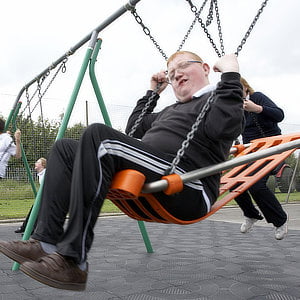
Wheelchair-Accessible Equipment
Wheelchair accessible play equipment is designed so children who use wheelchairs or walking aids can get on, hold on and play alongside their friends, not watch from the sidelines.
View wheelchair-accessible equipmentAutism-friendly playground design shapes the whole space around predictability and choice, with clear zones, calm retreats and considered sensory input, so play feels safe rather than overwhelming.
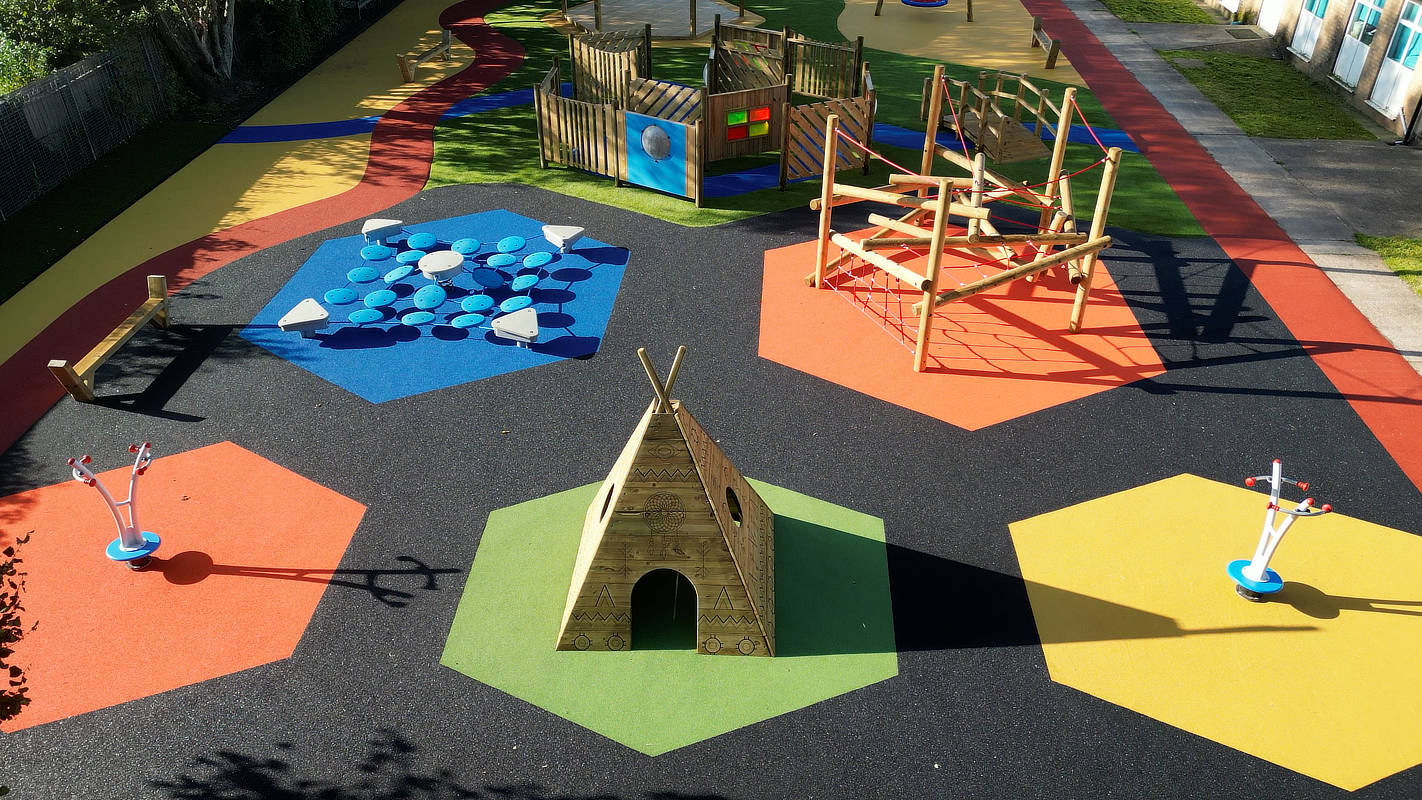
Autism-friendly playground design shapes the whole play area around predictability and choice, using clearly defined zones, calm retreats and measured sensory input tested to BS EN 1176. It is a whole-space approach, not a single piece of equipment, built to make the outdoors readable and reassuring for autistic children.
We organise the space into four working zones: an active zone for energetic play, a social zone for gathering, a sensory zone for exploration, and a calm zone to withdraw to. Clear routes and natural cues between them signal what each area is for, so a child can see what is coming and choose where to go rather than face a chaotic, unpredictable playground.
Autism-friendly playground design works by giving children control over how much stimulation they take on, offering sensory input gradually and by choice rather than forcing it, all within a predictable layout that separates high- and low-stimulation areas. Many autistic children find sudden sensory overload and unpredictability difficult, so a layout that signals purpose and lets a child dial input up or down supports self-regulation.
We use colour as a wayfinding tool, giving each zone a distinct colour so a child reads where they are and what activity is expected, and we keep the surface consistent underfoot with continuous wet pour so there are no unexpected changes to manage. Strong sightlines and made-to-measure planting or low structures create a sense of shelter around calm retreats while keeping every zone visible to supervising staff, working to BS EN 1176 for equipment and BS EN 1177 for surfacing.
Autism-friendly playground design is for autistic children and those with sensory processing differences, anxiety or wider SEN, from EYFS settings taking children from age 2 through primary and SEN secondary schools across England and Wales. The same principles that help autistic children make the space calmer and easier to use for almost every child.
We design for mainstream schools adding an inclusive zone, dedicated SEN and SEND settings, and nurseries building a calmer early-years garden. Predictable layouts, quiet spaces and clear zoning benefit children with anxiety and sensory needs, so the finished playground works as a whole rather than leaving some children watching from the edge; this pairs with our calm and quiet spaces and sensory play range.
Autism-friendly playground design costs around 12,000 to 60,000 pounds for a typical school project, with a full inclusive zone reaching 25,000 to 120,000 pounds and beyond. These are indicative UK ranges to confirm at survey, not fixed prices: a small early-years sensory area or single calm retreat starts around 12,000 to 20,000 pounds, while a whole-playground rebuild with graded sensory zones, inclusive equipment and continuous surfacing sits at the upper end.
Your final cost is driven by the area, the number and type of zones, the equipment specified, and the surfacing, which alone is often 25 to 40 percent of the project. Individual tactile and sensory panels run about 1,500 to 5,000 pounds each and an inclusive trampoline system around 10,000 to 25,000 pounds, so we plan improvements in stages to suit your site and budget. For a firm number, get an autism-friendly playground quote and we will price your exact site.
| Element | Typical scope | Indicative cost | Notes |
|---|---|---|---|
| Small sensory or calm area | One zone or retreat, early-years scale | £12,000 to £20,000 | A good phased starting point |
| Full autism-friendly playground | Zoned active, social, sensory and calm areas | £25,000 to £120,000+ | Whole-space design and rebuild |
| Sensory or tactile panel | Single interactive element | £1,500 to £5,000 each | Added into the sensory zone |
| Inclusive trampoline system | In-ground accessible unit | £10,000 to £25,000 | Level-access, wheelchair-friendly |
| Safety surfacing | Share of total project | 25% to 40% of cost | Continuous wet pour to BS EN 1177 |
Indicative UK market ranges to confirm against your own pricing at survey. Costs vary with area, zone count, equipment and surfacing.
Autism-friendly playground design is governed by BS EN 1176 for the play equipment and BS EN 1177 for the impact-absorbing surfacing, and it reaches past the Equality Act 2010 duty not to discriminate towards genuine inclusion. Equipment and surfacing carry the same safety obligations whether or not a piece is described as inclusive.
BS EN 1177 surfacing must match or exceed the Critical Fall Height of the equipment above it, with safety surfacing required wherever the free height of fall exceeds 0.6m, up to the 3m playground maximum. We specify and test to these standards, keep sightlines and safety zones clear, and can arrange independent RPII or RoSPA inspection where you want the finished space signed off; read this alongside our inclusive play and accessibility standards guide.
An autism-friendly playground uses hard-wearing, well-finished materials, a continuous wet pour or rubber surface for a consistent feel underfoot, and a zoned layout that separates active, social, sensory and calm areas with clear routes between them. Continuous wet pour typically runs an EPDM wearing course of about 6mm over a deeper SBR shock base, set to the Critical Fall Height it must protect, up to the 3m maximum.
We use powder-coated steel and made-to-measure timber for equipment and low enclosing structures, colour-coded zones for wayfinding, and soft planting to shelter calm retreats without blocking staff sightlines. Sensory input is layered by choice across the sensory zone, from tactile panels to quiet natural elements, so a child takes on only what they are ready for while the heavy-duty finishes stand up to daily use.
An autism-friendly playground lasts a long time by element: continuous wet pour surfacing typically lasts 8 to 12 years with routine care, while powder-coated steel equipment and structures often stand for 15 years or more. We present these as fair indicative lives to stand behind, not guarantees, since use and maintenance move the figure.
Timber elements and sensory panels sit within that band and are simple to refresh in place, and we repair and reskin worn wet pour rather than rip and replace, extending the life of what you already have. Phasing the design in stages means each part is renewed on its own cycle; see our playground surface repairs and maintenance.
Autism-friendly playground design reduces overwhelm and supports self-regulation by making the space predictable, giving children control over sensory input, and building in calm retreats, all tested to BS EN 1176. Dedicated retreats let a child step away and settle before rejoining play, so a wobble does not turn into a meltdown and more children stay outside with their peers.
Clear zones and colour-coded routes tell a child what each area is for and what comes next, continuous surfacing keeps the ground consistent underfoot, and strong sightlines let staff support children calmly from a distance. The same design benefits children with anxiety, sensory needs and wider SEN, so the playground works for everyone rather than a single group; it connects naturally with our sensory play and inclusive and SEN play service.
Commercial Play designs and installs autism-friendly playgrounds in-house across England and Wales, so one team owns the job from survey to handover, working to BS EN 1176 and BS EN 1177 throughout. We design the whole space, the zones, routes, sightlines, sensory choice and calm retreats, rather than selling a single accessible item and calling the playground inclusive.
We fit the surfacing and the equipment, so our recommendation follows your site, your children and your budget rather than one product we happen to stock, and we plan improvements in stages where a full rebuild is not needed yet. Talk to us about your play area and we will tell you honestly what it needs; this works hand in hand with our calm and quiet spaces within our full inclusive and SEN play offer.
It is designed to be predictable and to give children control over sensory input. Clear zones, defined quiet and active areas, calm retreats and strong sightlines work together to reduce overwhelm, all tested to BS EN 1176, rather than relying on any one special piece of equipment.
Indicatively around 12,000 to 60,000 pounds for a typical school project, with a full inclusive zone reaching 25,000 to 120,000 pounds and a small sensory area or single calm retreat starting near 12,000 to 20,000 pounds. Surfacing alone is often 25 to 40 percent of the total, so we confirm the figure at a site survey.
No, the same principles help a much wider group. Predictable layouts, quiet spaces and clear zoning benefit children with anxiety, sensory needs or wider SEN, and make the playground calmer and easier to use for every child from EYFS upwards.
Not necessarily. Many settings make a real difference by adding a calm retreat, improving zoning and sightlines, and introducing sensory choice within the space they already have. We plan improvements in stages to suit your site and budget, so a small early-years area can start from around 12,000 to 20,000 pounds.
Zoning gives each part of the playground a clear purpose, so a child can predict what happens where and choose an area that suits how they feel. Being able to move from a busy zone to a calm one, see the boundary between them and read it by colour supports self-regulation and lowers anxiety.
Play equipment meets BS EN 1176 and impact-absorbing surfacing meets BS EN 1177, and the design reaches past the Equality Act 2010 duty not to discriminate towards genuine inclusion. Surfacing must match the Critical Fall Height of the equipment above it, and we can arrange independent RPII or RoSPA inspection.
Continuous wet pour surfacing typically lasts 8 to 12 years with routine care, while powder-coated steel equipment and structures often stand for 15 years or more. We repair and reskin worn surfacing rather than replace it, and phasing the design lets each element renew on its own cycle.
A consistent surface underfoot that feels the same across the whole play area removes an unexpected sensory change, which lowers the sensory load. We lay continuous wet pour with no lips or trip edges between zones, giving a level, step-free finish that also suits wheelchairs and buggies and is tested to BS EN 1177.
We survey the site, then plan the whole space into active, social, sensory and calm zones with clear routes, colour wayfinding and strong sightlines, specifying equipment to BS EN 1176 and surfacing to BS EN 1177. We fit both the surfacing and the equipment in-house across England and Wales, and can phase the work to suit your budget.
Part of our full inclusive & sen play range, explore the other surfaces below.
Wheelchair accessible play equipment is designed so children who use wheelchairs or walking aids can get on, hold on and play alongside their friends, not watch from the sidelines.
View wheelchair-accessible equipment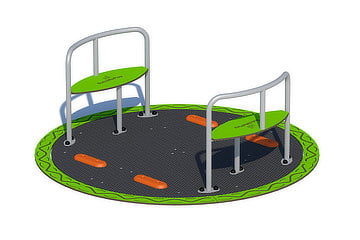
Inclusive swings and roundabouts bring the joy of movement to every child, with nest swings, supportive cradle seats and level-access carousels that a wheelchair can simply roll straight onto.
View inclusive swings & roundabouts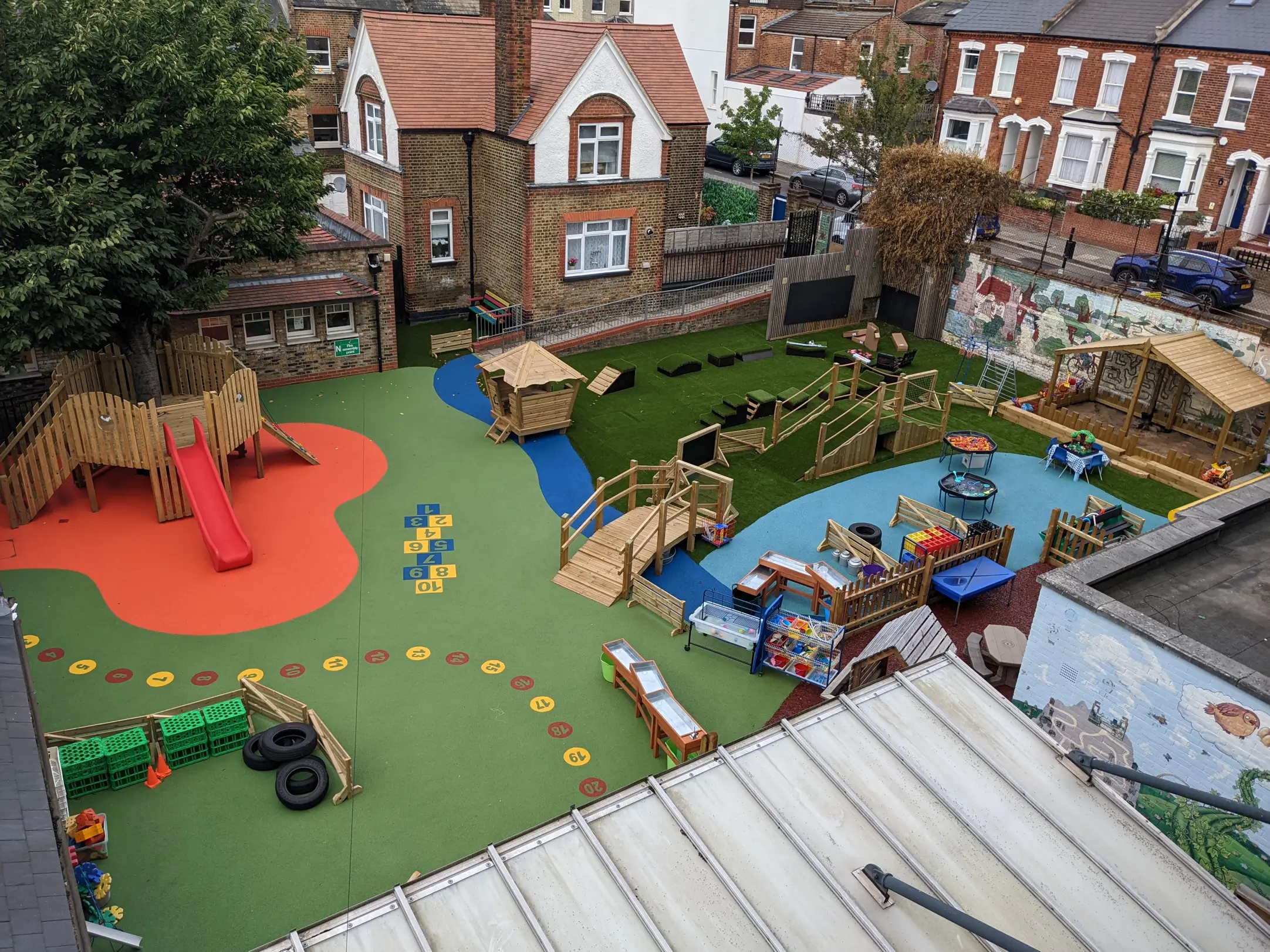
A calm, quiet space is a sheltered outdoor retreat, a pod, den or planted nook, where a child can step away from noise and bustle to settle, breathe and self-regulate.
View calm & quiet spacesThis guide explains what makes play genuinely inclusive beyond the legal minimum, from step-free routes and transfer-friendly equipment to sensory variety and quiet spaces, and how we design to it.
View accessibility standardsBook a free site visit and we'll measure up, recommend the right surface and send a clear, fixed quote.