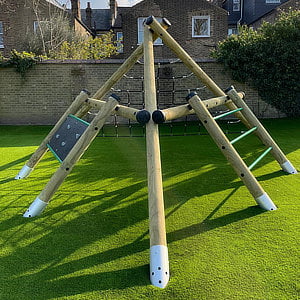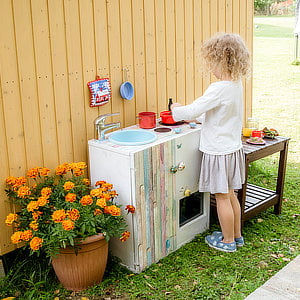
Play houses & dens
Timber playhouses, dens and den-building kits for open-ended imaginative and cooperative play that builds language and social skills.
Explore play houses & densThemed and imaginative play gives children a stage for storytelling, role-play and cooperative games. Commercial Play creates immersive play zones (role-play units, dens, stages and mud kitchens) and transforms plain tarmac with colourful thermoplastic playground markings.
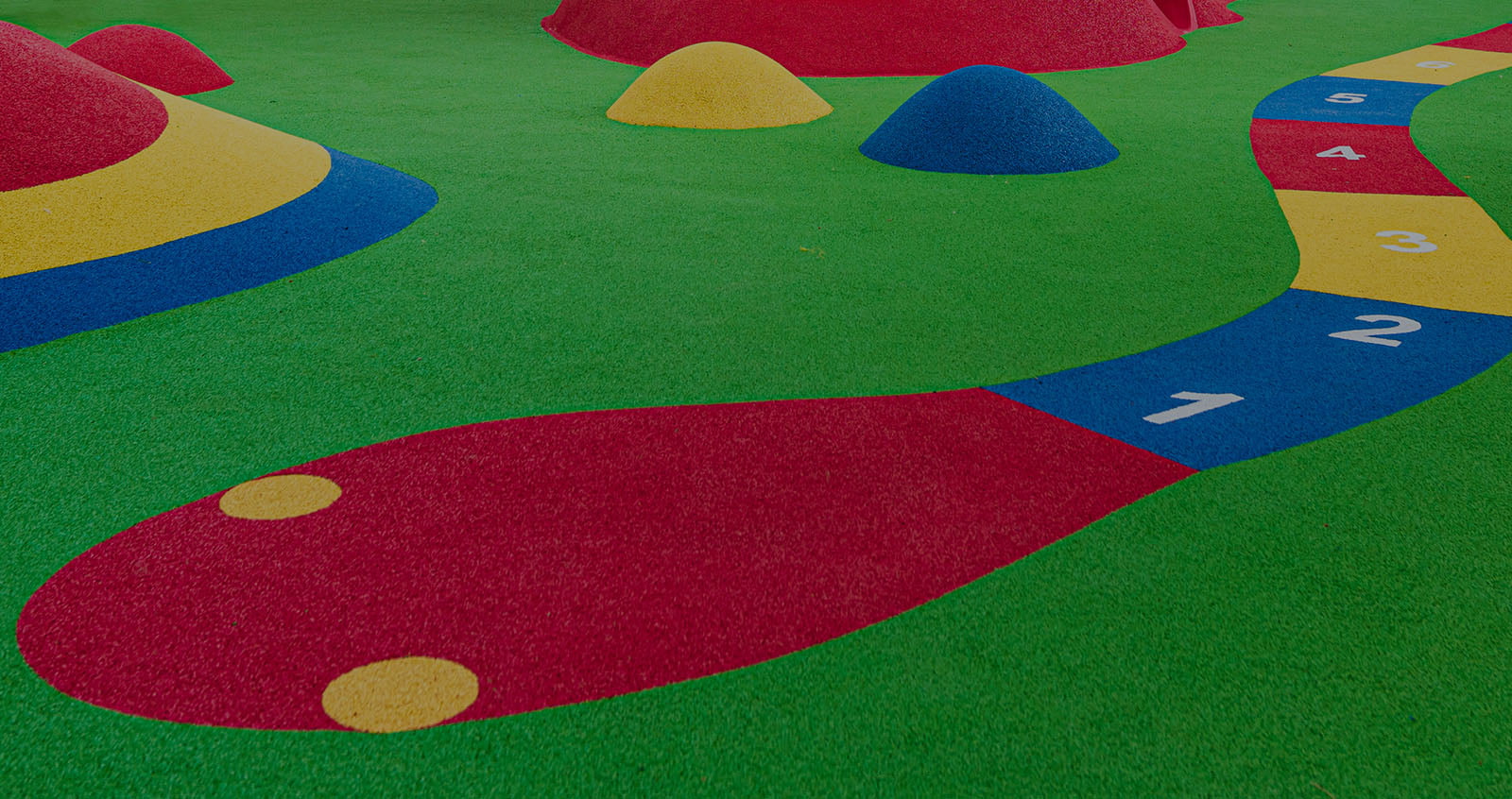
Themed play is outdoor provision built around a story or setting, a pirate ship, a farm, a shop or a town roadway, that prompts children to role-play, negotiate and cooperate. We deliver themed play as three linked parts: timber themed units, imaginative role-play resources like mud kitchens and dens, and thermoplastic playground markings printed straight onto tarmac.
The point is not the object itself but the play it starts. A timber boat becomes a lifeboat, a submarine or a market stall depending on the children in it, so imaginative play develops language, turn-taking and social reasoning as directly as a climbing frame develops the body. We design each zone around your curriculum and setting rather than dropping in a catalogue item, which is why every job starts with the age group and the space you have.
Commercial Play supplies and installs the following themed play types: timber play houses and den-making kits, boats, vehicles and role-play units, thermoplastic playground markings, and outdoor performance stages. Each sits at a different price, suits a different age group and is built from different materials, so we specify by your curriculum, your space and your budget rather than a house default. Mud kitchens, sand and water stations and story corners are added into these zones where an early-years setting calls for them.
Here is a one-line view of each type, with full detail on the dedicated pages.
Timber playhouses, dens and den-building kits for open-ended imaginative and cooperative play that builds language and social skills.
Explore play houses & dens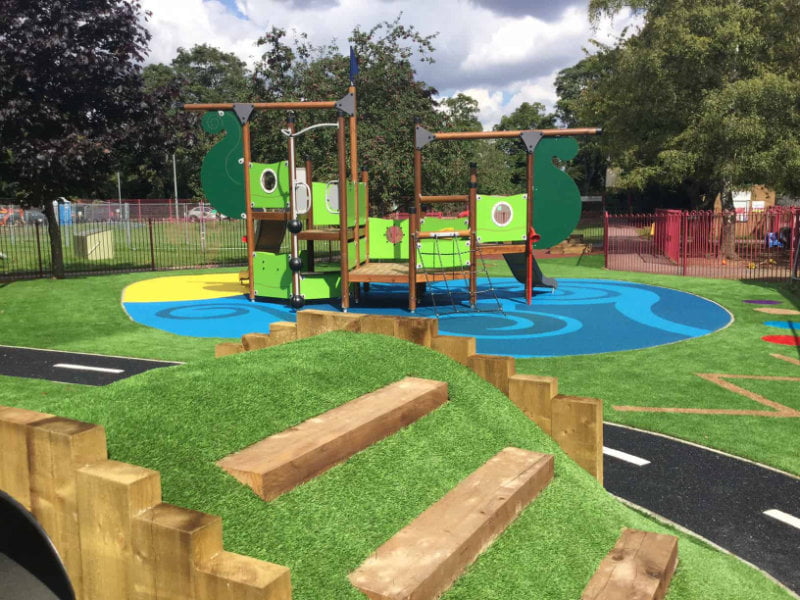
Themed boats, cars, trains, shops and stages that children turn into whatever they imagine, driving storytelling and cooperative play.
Explore boats, vehicles & role playHard-wearing thermoplastic graphics (number grids, hopscotch, roadways, maps and games) applied to tarmac to add instant play and learning value.
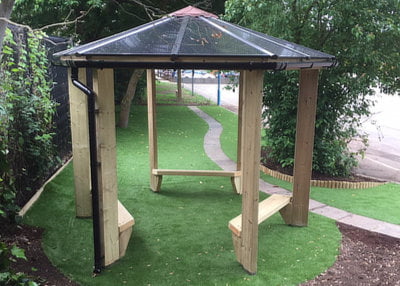
Outdoor stages and amphitheatre seating for assemblies, drama and music in the fresh air.
Timber play houses and dens are the best themed play type for open-ended early-years imaginative play, while boats, vehicles and role-play units suit cooperative storytelling for a mixed primary group, thermoplastic markings suit a low-cost, curriculum-linked refresh of existing tarmac, and performance stages suit assemblies, drama and music. The best choice is the one matched to your age group, your space and how the zone is used across the school day.
For an EYFS garden we usually steer towards play houses, dens and a mud kitchen for the loose, child-led play the framework asks for. For a busy junior playground on a tight budget, thermoplastic markings add the most play and learning value per pound, turning plain tarmac into number grids, hopscotch and a road-safety roadway in a single day.
Thermoplastic playground markings cost around 10 to 70 pounds per square metre installed, so a set of curriculum graphics on existing tarmac often lands between about 800 and 3,000 pounds, while a timber themed unit such as a role-play boat or a large playhouse typically runs from about 2,500 to 12,000 pounds supplied and fitted. These are indicative ranges to confirm at survey, not fixed prices: plain single-colour markings sit at the lower end and detailed multi-colour maps or roadways reach the top of it.
Your final cost is driven by the type, the size of the unit or graphic, the timber grade, and whether the ground needs a new base or impact-absorbing surface beneath it. A stand-alone timber structure with a raised deck usually needs safety surfacing to BS EN 1177 around it, which adds to the figure, whereas ground-level markings and mud kitchens do not. For a firm number, get a themed play quote and we will price your exact site.
| Themed play type | Typical materials | Indicative installed cost | Lifespan | Best for |
|---|---|---|---|---|
| Playground markings | Preformed thermoplastic on tarmac | £10 to £70 per m² (approx £800 to £3,000 per scheme) | 5 to 10 years | Curriculum graphics, roadways and games on existing tarmac |
| Play houses and dens | Robinia / Douglas fir timber | £2,500 to £8,000 per unit | 15 to 20 years+ | Early-years child-led and cooperative imaginative play |
| Boats, vehicles and role play | Robinia / Douglas fir timber, HPL panels | £3,500 to £12,000 per unit | 15 to 20 years+ | Cooperative storytelling across mixed primary groups |
| Performance stages | Timber deck, optional canopy | £3,000 to £10,000 per unit | 15 to 20 years+ | Assemblies, drama, music and outdoor performance |
Indicative UK market ranges to confirm against your own pricing at survey. Safety surfacing to BS EN 1177 around raised timber units is priced separately.
Themed play equipment is governed by BS EN 1176, the playground equipment standard, while any impact-absorbing surface beneath a raised unit is governed by BS EN 1177 and thermoplastic markings follow BS EN 1436. Where a timber unit has a free height of fall above 0.6m, safety surfacing must extend across the falling space, typically at least 1.5m around static items, and reach the Critical Fall Height of the deck.
BS EN 1176 sets the finger, head and neck entrapment gaps, guardrail heights and structural loads a themed unit must pass, and it also carries the inspection regime in Part 7. We build and install to these, grade each zone to the right age group so scale and challenge suit the children, and can arrange independent RPII or RoSPA inspection to sign the installation off. Ground-level markings, mud kitchens and role-play props carry no fall height, so they need no safety surfacing.
Our timber themed units are built from Robinia and Douglas fir, hardwoods that resist rot naturally and need no chemical preservative treatment, which is why they last 15 to 20 years and more outdoors. Robinia in ground contact can outlast that again, so we set posts on galvanised steel shoes rather than burying raw timber, keeping the load-bearing timber clear of wet British ground.
Play panels, counters and detailing are cut from HPL (high-pressure laminate) and marine-grade ply that shrug off weather and graffiti, and fixings are stainless steel or galvanised to stop rust bleed. Thermoplastic markings are a bonded plastic laid hot onto the tarmac, not painted, so the colour is fused into the surface and wears far slower than paint. We match each material to the setting: natural timber and rope for a woodland or forest-school look, brighter HPL for a shop, boat or vehicle theme.
Commercial Play installs themed play as a surveyed, foundation-first build, not a drop-and-go delivery, working to BS EN 1176 for the equipment and BS EN 1177 for any surface beneath it. We set timber units on concreted footings or galvanised ground shoes, level and align each frame, then fit any safety surfacing up to the Critical Fall Height of the raised deck before the zone reopens.
Thermoplastic markings go down in a single visit: we clean and dry the tarmac, heat the preformed graphics and bond them to the surface, so children are usually back on them the same day. Mud kitchens, dens and role-play props are positioned and secured within the wider zone. We fence the working area off while we install and hand over with the paperwork you need for your own inspection records.
Timber themed units built from Robinia and Douglas fir last 15 to 20 years and more with routine care, because the hardwood resists rot without chemical treatment and the galvanised ground shoes keep the posts out of standing water. That is the load-bearing life; panels and moving parts such as steering wheels or hatches are replaceable long before the frame is spent.
Thermoplastic playground markings last 5 to 10 years on sound, well-maintained tarmac, wearing far better than painted graphics and topping up cleanly in high-traffic spots like a roadway junction. Rather than rip and replace, we refresh worn markings and repair timber as it ages, extending the life of what you already have; for the surface those markings sit on, see playground surfacing.
Themed play develops language, negotiation and cooperation by giving children a shared story to play inside, and research on imaginative play links it directly to stronger early language and social skills. A themed zone does three more things well: it stretches a small budget, it ties the playground to the curriculum, and it works in all weathers on a surface children can use minutes after rain.
Thermoplastic markings turn plain tarmac into a teaching resource, so number grids support maths, compass points and maps support geography, and a painted roadway supports pedestrian and road-safety training, all outdoors and all at once. Timber role-play units and dens draw quieter and less sporty children into active, social play they might skip on a MUGA. Where a setting needs calmer, self-regulating provision, we pair themed zones with sensory play and inclusive play equipment so every child has somewhere that suits them.
Commercial Play designs, supplies and installs themed play in-house across England and Wales, so one team owns the job from the first survey to the signed-off handover. We design each zone around your curriculum, your age groups and the space you have, then build it to BS EN 1176 with rot-resistant Robinia and Douglas fir timber and bonded thermoplastic markings.
Because we fit the full range, timber units, mud kitchens, role-play props and markings, our recommendation follows your setting rather than the one product we happen to stock, and we can combine several in one visit to stretch the budget. We also refresh worn markings and repair timber instead of defaulting to replacement. Talk to us about your play area and we will tell you honestly what it needs.
Bonded thermoplastic markings typically last 5 to 10 years on sound, well-maintained tarmac, wearing far better than painted graphics because the colour is fused into the surface rather than laid on top. High-traffic spots like a roadway junction can be topped up or refreshed as they wear, and the material conforms to BS EN 1436.
Indicatively, thermoplastic markings are around 10 to 70 pounds per square metre installed, so a set of curriculum graphics often lands between 800 and 3,000 pounds, while a timber role-play unit or large playhouse runs from about 2,500 to 12,000 pounds supplied and fitted. These are market ranges to confirm at survey, as size, timber grade and any safety surfacing all move the figure.
Yes, number lines, 100-squares, clocks, compass points, maps and roadways are designed as teaching tools, bringing maths, literacy and road-safety lessons outdoors. We lay them as bonded thermoplastic on existing tarmac, so a school can add real curriculum value without groundworks or a new surface.
Imaginative play benefits all primary ages and the early years especially, so we scale themes and resources from toddler role-play in an EYFS garden to cooperative games for older juniors. We grade each zone to the age group under BS EN 1176 so the scale and challenge suit the children using it.
We build timber themed units from Robinia and Douglas fir, hardwoods that resist rot naturally and need no chemical preservative treatment, which is why they last 15 to 20 years and more outdoors. We set posts on galvanised steel ground shoes to keep the load-bearing timber clear of wet ground, and use HPL panels and stainless steel fixings for the detailing.
A timber unit with a raised deck or a free height of fall above 0.6m needs impact-absorbing surfacing to BS EN 1177 across its falling space, typically at least 1.5m around the unit and up to its Critical Fall Height. Ground-level markings, mud kitchens and role-play props carry no fall height, so they need no safety surfacing, which keeps their cost down.
Themed play equipment is built and installed to BS EN 1176, the playground equipment standard, any surface beneath a raised unit meets BS EN 1177, and thermoplastic markings follow BS EN 1436. BS EN 1176 also sets the inspection regime in Part 7, and we can arrange independent RPII or RoSPA inspection to sign the installation off.
We set timber units on concreted footings or galvanised ground shoes, then fit any safety surfacing up to the Critical Fall Height before the zone reopens; a single unit is usually a day or two, larger schemes longer. Thermoplastic markings go down in one visit, bonded hot to clean, dry tarmac, so children are often back on them the same day. We fence the working area off while we install.
Yes, we refresh and top up worn thermoplastic markings and repair timber as it ages rather than rip and replace, which extends the life of what you already have. Because the graphics are bonded to the surface, a worn roadway or number grid can be reapplied without redoing the tarmac beneath it.
Yes, early-years settings are a core part of what we do, with play houses, dens, mud kitchens and role-play resources scaled for toddlers and EYFS children. We design these zones around the child-led, loose-parts play the framework asks for, and pair them with sensory provision where a setting needs calmer, self-regulating space.
Discover thermoplastic playground marking ideas grouped by subject that turn plain tarmac into a durable, everyday resource for learning and active play.
Read article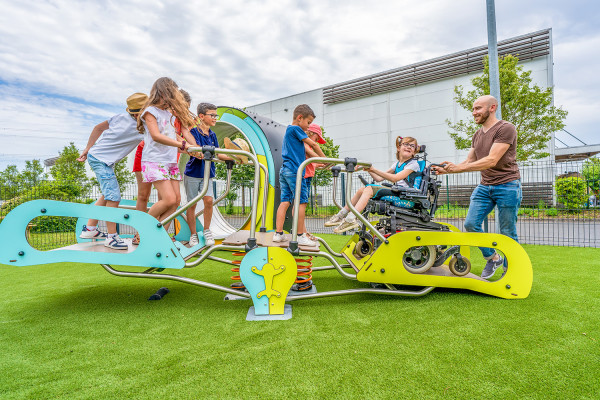
Learning through play develops the whole child. Here is why it matters and how outdoor, active and imaginative play build different skills.
Read articleTell us about your space and we'll arrange a free site visit, design and fixed quote.