School canopies
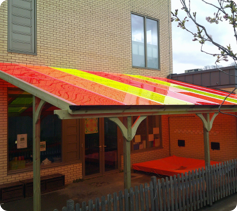
Wall-mounted, roofed structures fixed to the building, sheltered doorways, dining overspill and covered play, the cost-effective way to add daily covered space.
Explore school canopiesA canopy or shelter turns exposed outdoor space into usable, all-weather space for learning, dining, waiting and play. Commercial Play designs and installs steel and timber structures: from straight-wall canopies fixed to the school building to free-standing gazebos and full outdoor classrooms.
Canopies and shelters are roofed steel or timber structures that turn exposed playground into all-weather covered space for outdoor learning, dining, waiting and play. We build each one as an engineered system on concrete pad or pile foundations, with a powder-coated or galvanised steel frame and a UV-stable multiwall polycarbonate or fabric roof.
The distinction matters for planning, siting and cost. A wall-mounted canopy borrows the school building for one of its supports and covers an adjoining area such as an early-years door or a dining overspill, while a free-standing outdoor classroom, barn or gazebo can sit in the middle of the field for forest school. We survey the site, then specify the frame, roof and foundations to the wind and snow loads that structure must carry.
Commercial Play supplies and installs the following canopy and shelter types: wall-mounted school canopies, free-standing outdoor classrooms and gazebos, tensioned shade sails, covered walkways, seating and picnic benches, and raised stages and storytelling areas. Each suits a different job, span and budget, so we specify by your site, the use and the daily footfall rather than a house default.
Straight-wall, curved-roof and mono-pitch canopy profiles are all options where a site calls for them. Here is a one-line view of each, with full detail on the dedicated pages.
Wall-mounted, roofed structures fixed to the building, sheltered doorways, dining overspill and covered play, the cost-effective way to add daily covered space.
Explore school canopies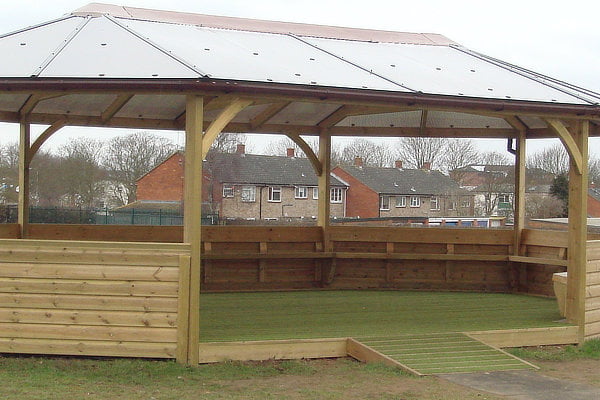
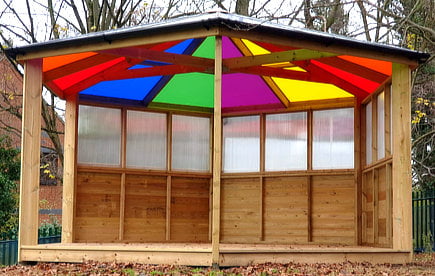
Free-standing gazebos, barns and timber shelters that stand anywhere in the grounds for forest school, teaching, performance and quiet time.
Explore outdoor classrooms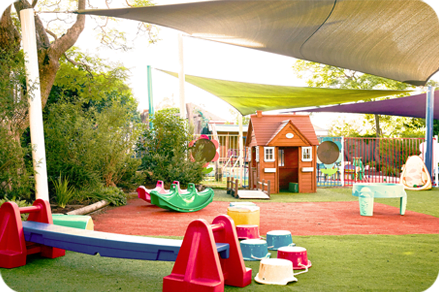
Tensioned fabric sails that add colourful UV protection over sandpits, seating and early-years areas at a lighter price point.
Explore shade sails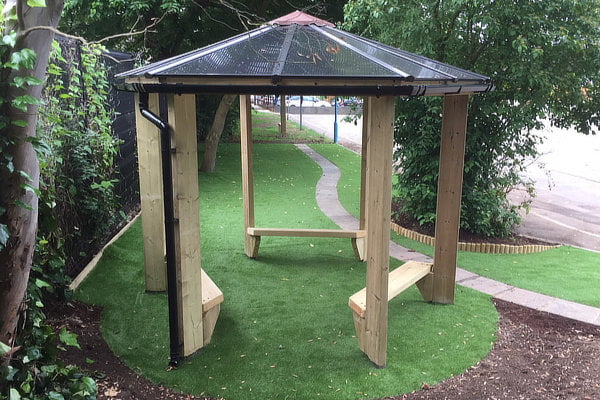
Roofed links between buildings, gates and entrances that keep the busiest routes across your site dry in any weather.
Explore covered walkways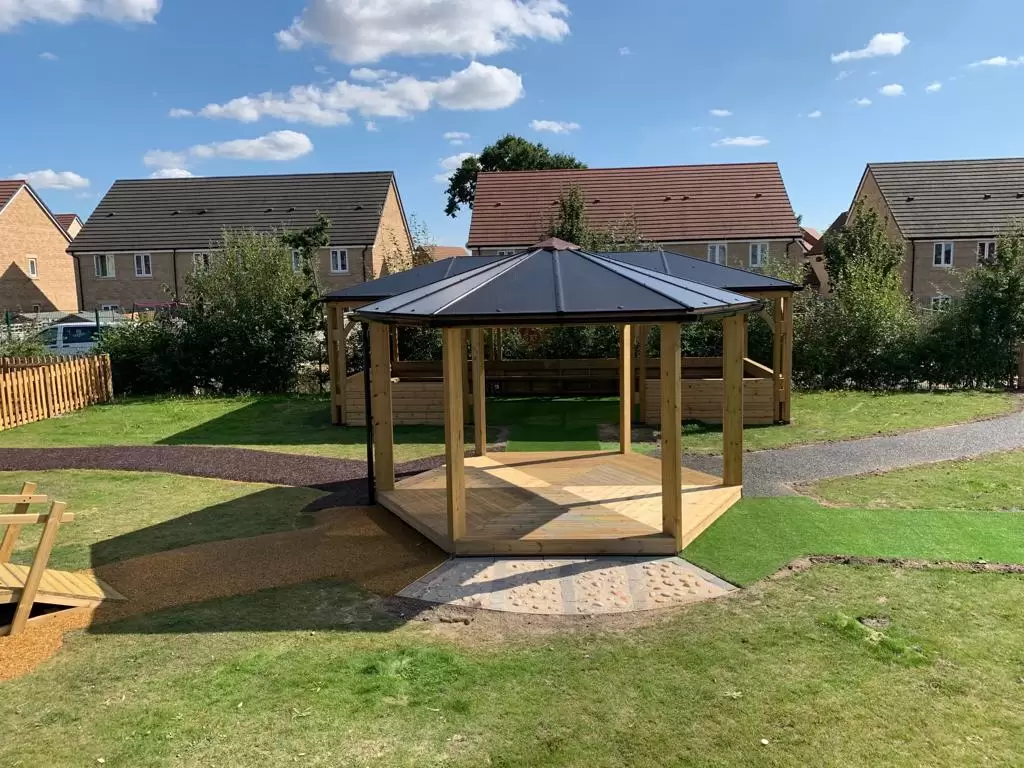
Hard-wearing picnic tables, benches and buddy benches in timber or recycled plastic, with wheelchair-accessible options, ready to shelter under a canopy.
Explore seating & picnic benches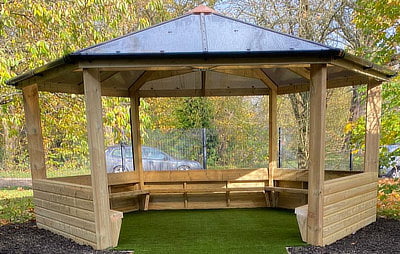
Raised performance decks and tiered storytelling circles that give children a place to perform, present and gather outdoors.
Explore stages & storytelling areasThe best canopy or shelter is the one matched to where the covered space is needed, how it will be used and your budget. A wall-mounted school canopy suits a doorway, dining overspill or covered play against the building; a free-standing outdoor classroom or gazebo suits forest school and teaching away from the buildings; a tensioned shade sail suits UV protection over sandpits and early-years areas at a lighter price point.
For a covered route between blocks or gates a covered walkway keeps the busiest paths dry, while a raised stage or storytelling circle gives children a place to perform and gather. Where the priority is simply getting pupils out of the rain daily, the wall-mounted canopy gives the most sheltered square metres for the money; where the space must double as a classroom, the free-standing barn earns its extra cost.
A school canopy costs around 2,500 to 15,000 pounds installed, with most wall-mounted play and dining canopies landing between roughly 6,000 and 12,000 pounds. These are indicative ranges to confirm at survey, not fixed prices: a small early-years door canopy sits at the lower end, while a large clear-span dining or outdoor-classroom structure with guttering, lighting and side infill reaches the upper end and beyond.
Your final cost is driven by the footprint and clear span, the frame material, the roof covering, the ground conditions and any extras such as guttering, LED lighting, branding or enclosing side panels. A tensioned shade sail is the lightest option and starts lower, while a polycarbonate-roofed steel canopy costs less per square metre than a tensile fabric membrane of the same span. Groundworks add cost where foundations meet poor ground or existing services need diverting. For a firm number, get a canopy and shelter quote and we will price your exact site.
| Structure | Typical span | Roof / cover | Indicative cost installed | Lifespan | Best for |
|---|---|---|---|---|---|
| Wall-mounted school canopy | 3m to 8m projection | 16mm to 25mm multiwall polycarbonate | £6,000 to £12,000 | 20 years or more | Covered play, dining overspill, early-years doors |
| Outdoor classroom / gazebo | Free-standing, up to 8m plus | Polycarbonate or timber-clad roof | £12,000 to £30,000 plus | 20 years or more | Forest school, teaching, performance, quiet time |
| Shade sail | Tensioned, per bay | UPF 50+ HDPE or PVC fabric | £2,500 to £8,000 | 10 to 15 years (fabric) | UV protection over sandpits, seating, early years |
| Covered walkway | Per linear run | Polycarbonate over steel | Confirm on survey | 20 years or more | Dry links between buildings, gates and entrances |
Indicative UK market ranges to confirm against your own pricing at a site survey. Span, ground conditions and extras such as guttering, lighting and side infill all move the figure.
Canopies and shelters are designed to the Eurocode wind and snow loading standards (BS EN 1991, which superseded BS 6399 Part 2), with site-specific structural calculations signed off by a structural engineer. Every frame is sized to the wind speed and snow load for its postcode and exposure, and steel is corrosion-protected by hot-dip galvanising or a polyester powder coat so it holds up outdoors for decades.
Play use brings further standards into scope: where a canopy sits over play equipment the equipment stays governed by BS EN 1176 and its safety surfacing by BS EN 1177, and roof and column edges are detailed to avoid trap and impact hazards for children. Roofing is typically UV-stabilised multiwall polycarbonate rated to Class B roof performance, and shade fabric carries a UPF 50+ certificate blocking around 98 percent of UV. We provide the structural calculations, CE or UKCA declarations and, where required, the planning and building-control paperwork.
Many school canopies fall under permitted development through the GPDO Part 32 schools allowance, so no full application is needed where the structure adds under 25 percent to the existing building footprint, stands no taller than 5 metres, and sits more than 5 metres from a boundary. Larger structures, or any near a site boundary, on a listed building or within a conservation area, usually do need planning permission and sometimes building regulations approval.
We assess the planning position for your exact site as part of the survey, and where consent is needed we prepare and submit the application with the structural calculations and drawings. Ridge heights, column positions and roof pitch are set both to the loads and to keep the structure within permitted-development limits wherever that is possible, which shortens the programme. Where it is not, we manage the application so groundworks and installation follow approval cleanly.
Commercial Play installs canopies and shelters as an engineered build over concrete pad or piled foundations, not a bolt-on kit. We excavate and cast the foundations to the depths the structural calculations set, cure them, then erect the powder-coated or galvanised steel frame, fix the multiwall polycarbonate or fabric roof, and add guttering, downpipes and any side infill, lighting or branding.
A typical wall-mounted canopy is installed in a few days once the foundations have cured, while a larger free-standing classroom or barn takes longer. We fence the work zone off from pupils throughout and programme the noisy and heavy-plant stages around term times, drop-off and PE where we can, so the rest of the site keeps running. Every structure is checked and signed off against its structural calculations before handover.
A steel canopy with a powder-coated or galvanised frame and a UV-stabilised polycarbonate roof typically lasts 20 years or more, and the steel structure itself outlasts that with routine care. Multiwall polycarbonate carries a co-extruded UV layer that keeps it clear and sound for a service life of 10 to 20 years, and most sheet comes with a 10 to 15 year manufacturer warranty against yellowing and breakage.
Shade-sail fabric is the shorter-lived part, giving around 10 to 15 years before the HDPE or PVC membrane is re-tensioned or replaced, while the steel posts it hangs from last far longer. Timber shelters and outdoor classrooms use pressure-treated or hardwood sections that last decades with occasional re-oiling. We service, repair and re-roof existing structures rather than replace them, so a frame you already have can carry a fresh roof for another cycle.
Canopies and shelters extend the usable school day outdoors by keeping a defined space dry in rain and shaded in strong sun, so outdoor lessons, dining and play go ahead in weather that would otherwise cancel them. A good structure does three more things well: it protects children from UV with a UPF 50+ roof or fabric, it handles rainwater through integrated guttering, and it adds covered capacity without the cost of a permanent building.
Covered outdoor space also earns its place educationally and commercially. It gives forest school, wet-play and dining a home, it eases pressure on the indoor hall at lunchtime, and a powder-coated steel frame with a polycarbonate roof shrugs off the weather for two decades with minimal upkeep. Colours, dimensions and roofing are specified to your site and existing buildings, so the structure reads as part of the school rather than a bolt-on.
Commercial Play designs, supplies and installs canopies and shelters in-house across England and Wales, so one team owns the job from survey and structural calculations through planning to groundworks, erection and handover. We size every frame to the wind and snow loads for your postcode, specify the roof and foundations to match, and set heights to keep the structure within permitted development wherever we can.
We fit the full range, from wall-mounted school canopies and outdoor classrooms to shade sails and covered walkways, so our recommendation follows your site rather than the one product we happen to sell. Where a canopy sits over play, we coordinate the safety surfacing beneath it as part of the same project. Talk to us about your outdoor space and we will tell you honestly what it needs.
Many canopies fall under permitted development via the GPDO Part 32 schools allowance, where the structure adds under 25 percent to the existing building, stands under 5 metres tall and sits more than 5 metres from a boundary. Larger structures, or those near a boundary, on a listed building or in a conservation area, can need planning permission. We assess your site and, where needed, prepare and submit the application.
A canopy is usually fixed to a building and covers an adjoining area such as a doorway or dining overspill, while a shelter or gazebo is free-standing and can be sited anywhere in the grounds for forest school or teaching. Both create all-weather covered space; the wall-mounted canopy tends to give the most sheltered square metres for the money.
Indicatively, a school canopy costs around 2,500 to 15,000 pounds installed, with most wall-mounted play and dining canopies landing between roughly 6,000 and 12,000 pounds. A small shade sail starts lower and a large clear-span outdoor classroom reaches higher. These are market ranges to confirm at survey, as span, ground conditions and extras such as guttering and lighting all move the figure.
A steel canopy with a powder-coated or galvanised frame and a UV-stabilised polycarbonate roof typically lasts 20 years or more. The polycarbonate roof gives a 10 to 20 year service life with a 10 to 15 year warranty, while shade-sail fabric lasts around 10 to 15 years before it is re-tensioned or replaced. We re-roof and service existing frames rather than replace them.
Most of our steel canopies use 16mm to 25mm multiwall polycarbonate with a co-extruded UV layer that blocks around 99 percent of UV and stays clear for years. Shade sails use UPF 50+ HDPE or PVC fabric, and outdoor classrooms can take a solid timber-clad or tiled roof. We match the roof to the span, the light you want through it and the budget.
Yes. Every canopy is designed to the Eurocode wind and snow loading standards (BS EN 1991), with site-specific structural calculations sized to the wind speed and snow load for your postcode and exposure. Steel is protected by hot-dip galvanising or a polyester powder coat, and the structure is signed off against its calculations before handover.
A typical wall-mounted canopy is installed in a few days once the foundations have cured; larger classrooms and barns take longer. We fence the work zone off from pupils throughout and programme the heavy-plant and noisy stages around term times, drop-off and PE where we can, so the rest of the site keeps running.
Yes. We site the foundations and columns to clear existing equipment and paths, and where the canopy sits over play we coordinate the BS EN 1177 safety surfacing beneath it. The equipment stays governed by BS EN 1176, and we detail roof and column edges to keep the covered play area safe for children.
Yes. A polycarbonate roof blocks around 99 percent of UV, and shade-sail fabric carries a UPF 50+ certificate blocking about 98 percent of UV, which is the standard to insist on for a children's area. Shade is most effective when the structure is positioned for the peak-sun hours of roughly 10am to 2pm, which we plan at survey.
Yes. Free-standing gazebos, barns and timber shelters make good outdoor classrooms for forest school, teaching, performance and quiet time, and can take side infill, seating and power where needed. See our outdoor classrooms page, and pair it with seating and picnic benches beneath the cover.
A coloured corner canopy and surfacing delivered on a tight, hard-to-access site.
View projectSpace-saving Peak shelters giving pupils covered outdoor space to use through the year.
View project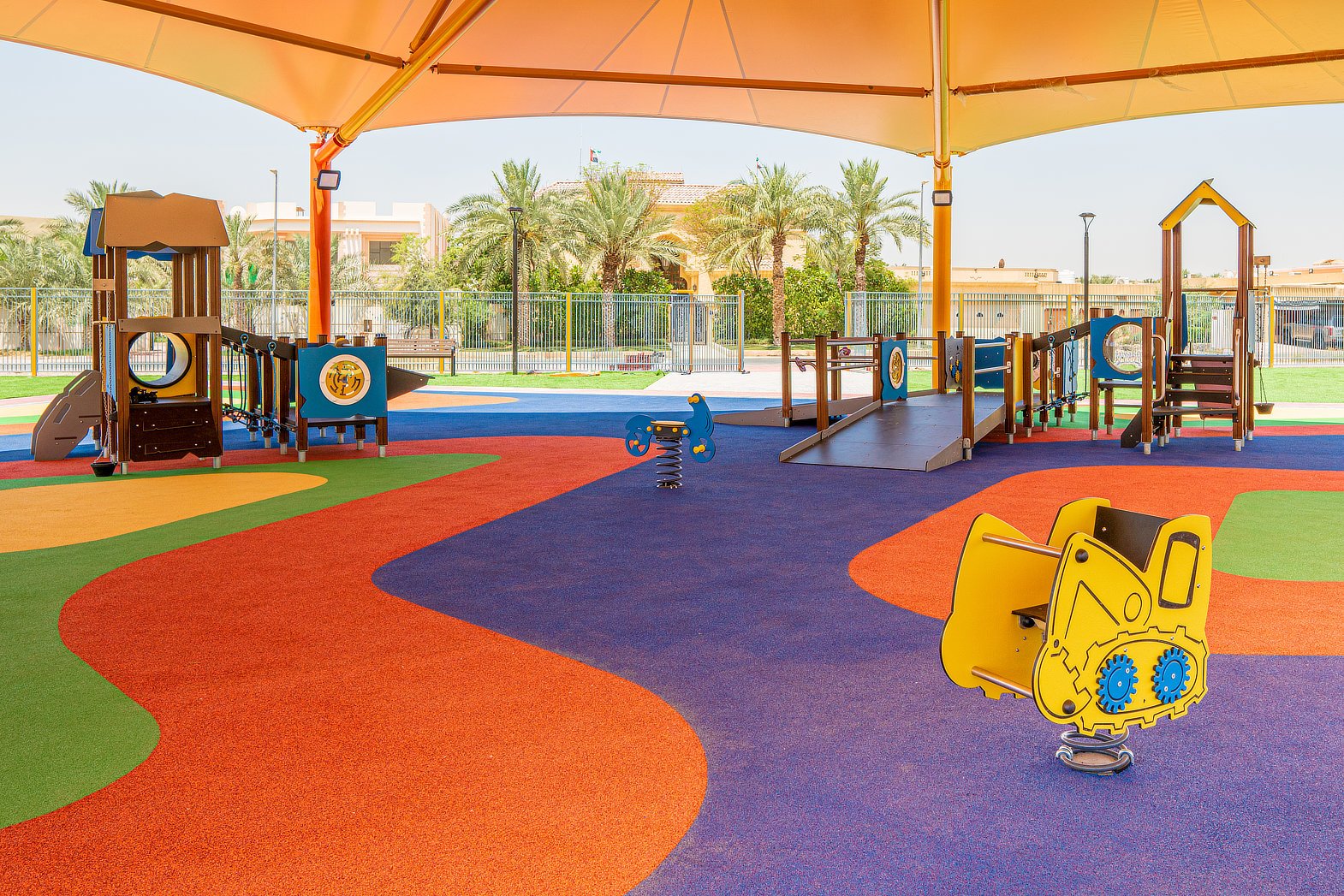
A practical step-by-step guide to planning a school playground, from auditing your space and setting aims through design, zoning, surfacing and installation.
Read article
A practical guide to funding a new UK school playground, from capital budgets and the PE & Sport Premium to grants, fundraising and phasing.
Read articleTell us about your space and we'll arrange a free site visit, design and fixed quote.