Bow top & mesh fencing
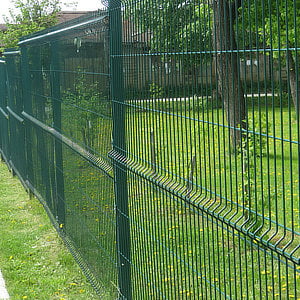
Anti-trap bow-top railings and welded mesh, secure, see-through and colourful, with heights specified to each boundary.
Explore bow top & mesh fencingFencing keeps children safely inside the play area and keeps traffic, intruders and hazards out. Commercial Play supplies and installs the full range (secure perimeter mesh, MUGA rebound fencing and decorative bow-top railings), all specified to keep pupils safe.
Playground fencing is the perimeter and dividing barrier that keeps pupils inside the play area and keeps traffic, intruders and open water out, installed to BS 1722 for the fence itself and BS EN 1176 for entrapment gaps. We build it as a system: concrete-set or dug-in posts, a hot-dip galvanised and polyester powder-coated steel or treated-timber infill, and anti-trap detailing sized to each boundary.
A line that manages a road, a car park or a pond needs a different height and infill from one that simply divides two play zones. So every job starts with what each boundary actually holds in or keeps out, not a house default. We survey the site, work out what each line contains or excludes, and set the height, infill and gates to match.
Commercial Play supplies and installs the following fencing types: anti-trap bow top railings, welded mesh security fencing, MUGA rebound fencing, timber post-and-rail and closeboard fencing, and low nursery fencing with self-closing gates. Each suits a different boundary, sits at a different height and carries a different infill, so we specify by what the line has to hold in, your age groups and your budget.
Here is a one-line view of each, with full detail on the dedicated pages.
Anti-trap bow-top railings and welded mesh, secure, see-through and colourful, with heights specified to each boundary.
Explore bow top & mesh fencing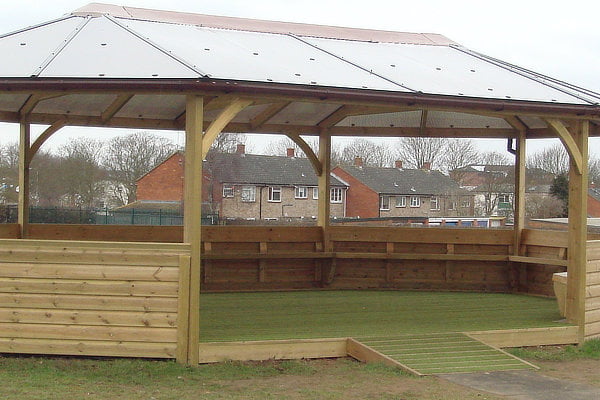
Natural timber post-and-rail, picket and closeboard fencing and gates for forest-school and nature areas.
Explore timber fencing & gatesLow, anti-trap fencing and self-closing gates that keep toddlers safely in and roads and water out.
Explore nursery fencing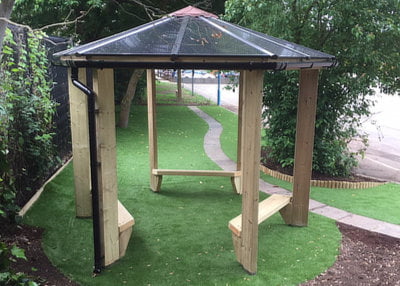
Sheds and lockable stores that keep outdoor toys, PE kit and loose parts tidy, dry and secure.
Explore outdoor storageThe best playground fencing is the type matched to what the boundary manages, the sport or age group behind it and your budget. Anti-trap bow top and welded mesh fencing suits see-through secure perimeters; low nursery fencing with self-closing gates suits EYFS lines next to roads and water; MUGA rebound fencing suits ball courts; timber fencing suits forest-school and nature areas.
For an early-years boundary we usually steer towards 1.2m anti-trap bow top, so toddlers cannot climb it, trap fingers or slip through. Around a MUGA we specify 3m twin-bar rebound mesh that keeps the ball in play. For a security perimeter next to a car park or highway, welded mesh at 1.8m to 2.4m gives a see-through line that is hard to cut or climb.
School fencing costs around 40 to 160 pounds per linear metre installed, with anti-trap bow top and welded mesh sitting at roughly 40 to 85 pounds per metre and 3m MUGA rebound fencing higher again. These are indicative ranges to confirm at survey, not fixed prices: height, wire gauge, the galvanised and powder-coated finish, gates and ground conditions all move the figure, and gates typically add a few hundred pounds each.
Your final cost is driven by the fence type, the height set by what the boundary holds, the run in linear metres, the number and type of gates, and site access and ground conditions. Rock or made-up ground that needs cored or larger post footings adds to the groundworks. For a firm number, get a playground fencing quote and we will price your exact site.
| Fencing type | Typical height | Infill / spec | Indicative cost / linear m | Lifespan | Best for |
|---|---|---|---|---|---|
| Anti-trap bow top railings | 1.2m to 1.8m | Pales under 100mm gaps, galvanised and powder-coated | £40 to £85 | 20 to 30 years+ | EYFS and primary perimeters, see-through secure lines |
| Welded mesh security fencing | 1.8m to 2.4m | Twin-wire or 358 mesh, galvanised and powder-coated | £40 to £85 | 20 to 30 years+ | Security perimeters next to roads, car parks and boundaries |
| MUGA rebound fencing | 3m to 4.5m | Twin-bar weldmesh, 6mm verticals / 8mm horizontals | Confirm on survey | 20 to 30 years+ | Ball courts, keeping the game in play |
| Timber post-and-rail / closeboard | 1.05m to 1.8m | Pressure-treated softwood | Confirm on survey | 10 to 15 years | Forest-school, nature areas, low-risk field boundaries |
Indicative UK market ranges to confirm against your own pricing at survey. MUGA rebound and timber pricing is confirmed on a site survey; gates are priced separately.
Playground fencing is governed by BS 1722, the fencing specification standard, while the anti-entrapment gaps around a play area follow BS EN 1176, the playground equipment standard. Vertical infill gaps must stay under 89mm to prevent head, neck and wrist entrapment, and anti-trap bow top removes the finger and clothing traps that spiked or overlapping older railings can create.
A play boundary next to a road or open water is a safeguarding line, so we specify self-closing, self-latching gates with finger-safe hinges and no footholds to climb. We install to BS 1722-14 for bow top, use hot-dip galvanised then polyester powder-coated steel for corrosion resistance, and can provide the sign-off notes your safeguarding and health-and-safety records need.
Playground fencing under 2m in height is generally permitted development in England and Wales and needs no planning application, while fencing over 2m, or over 1m next to a highway used by vehicles, usually requires planning permission. Most anti-trap bow top and nursery boundaries sit at 1.2m to 1.8m and fall under permitted development, so they proceed without an application.
MUGA rebound fencing at 3m or more, taller security perimeters and fences in conservation areas or next to listed buildings do need planning consent, and floodlit courts can add a further condition. We check the height, the boundary and the local position on survey, and where an application is needed we prepare and submit it so the line goes in compliant.
Playground fencing height is set by what each boundary manages, so we specify around 1.2m for EYFS and nursery lines, 1.8m to 2.4m for a security perimeter next to a road or car park, and 3m to 4.5m for MUGA rebound fencing that keeps the ball in play. A 1.2m anti-trap bow top is low enough to see over yet high enough that a toddler cannot climb or vault it.
Higher is not always better: an over-tall fence around an early-years garden feels institutional and blocks the sightlines staff need for supervision. We balance containment against supervision, match the height to what the boundary actually holds in or keeps out, and add anti-climb detailing only where the risk warrants it. Not sure what each boundary needs? Book a free site survey and we will set the heights with you.
Commercial Play installs playground fencing on concrete-set posts dug to a depth matched to the fence height and ground, not simply driven in, working to BS 1722 for the fence and BS EN 1176 for the entrapment gaps. We set out the line, dig or core the post holes, concrete the posts plumb, then fix the panels or railings and hang the gates once the concrete has cured.
For bow top and welded mesh we fix pre-galvanised, powder-coated panels between posts and cap every top for a finished line. For MUGA rebound fencing we set deeper posts to carry the load of a ball court and bolt the twin-bar panels tight, so they rebound rather than flex. We phase larger runs around term times and fence off the working zone so the rest of the site stays open.
Hot-dip galvanised and polyester powder-coated steel fencing typically lasts 20 to 30 years or more with routine care, because the galvanising resists rust from the inside while the powder-coat holds the RAL colour on the outside. Steel bow top, welded mesh and MUGA rebound all sit in this band, which is why we specify the galvanise-then-coat finish as standard rather than a single painted coat.
Pressure-treated timber fencing lasts roughly 10 to 15 years before posts and rails weather and need replacing, which is one reason steel usually works out better over its life on a hard-used school boundary. We also repair and refit damaged panels, posts and gates rather than replace a whole run; see playground repairs and maintenance.
Playground fencing safeguards children by containing them inside the play area and excluding traffic, intruders and open water, with anti-trap bow top removing the finger and clothing traps older railings create. A good steel system does three more things well: it stays see-through for supervision, it holds its RAL colour for decades, and it keeps ball games in play.
Anti-trap detailing keeps vertical gaps under the 89mm BS EN 1176 limit so fingers, heads and wrists cannot be caught, and self-closing, self-latching gates stop toddlers reaching a road or car park unsupervised. A hot-dip galvanised and powder-coated finish resists rust and holds its colour through frost and sun, and welded mesh and bow top stay see-through so staff keep a clear line of sight across the space. Around a MUGA, rebound fencing keeps the ball on the court and cuts disruption to neighbouring areas.
Commercial Play designs, supplies and installs playground and sports fencing in-house across England and Wales, so one team owns the job from survey to handover. We survey each site, work out what every boundary has to hold in or keep out, and set the height, infill and gates to match, not a one-size template.
We fit every fence type, so our recommendation follows your site rather than the one product we happen to sell, and we coordinate fencing with the surfacing, courts and equipment we install so the whole scheme lands together; see our MUGA fencing and playground surfacing. We also repair and refit damaged fences whoever installed them. Talk to us about your boundaries and we will tell you honestly what each one needs.
Height is set by what each boundary manages: EYFS and nursery lines around 1.2m, security perimeters next to roads and car parks 1.8m to 2.4m, and MUGA rebound fencing 3m to 4.5m depending on the sport. A 1.2m anti-trap bow top is low enough to see over yet too high for a toddler to climb.
Indicatively, school fencing runs around 40 to 160 pounds per linear metre installed, with anti-trap bow top and welded mesh at roughly 40 to 85 pounds per metre and 3m MUGA rebound fencing higher again. These are market ranges to confirm at survey, as height, wire gauge, gates and ground conditions all move the figure.
Anti-trap fencing, such as bow top railings, is built without the gaps and spikes that can catch fingers, heads or clothing, keeping vertical infill gaps under the 89mm BS EN 1176 limit. It replaces the finger and head traps of older spiked or overlapping railings, making it the safer choice around a play area.
Playground fencing is installed to BS 1722, the fencing specification standard, with anti-entrapment gaps following BS EN 1176 at under 89mm. Bow top follows BS 1722-14, and we use hot-dip galvanised then polyester powder-coated steel for corrosion resistance, with sign-off notes for your safeguarding records.
Fencing under 2m is generally permitted development and needs no application, while fencing over 2m, or over 1m next to a vehicle highway, usually needs planning permission. MUGA rebound fencing at 3m or more and fences in conservation areas do need consent; we check the position on survey and submit any application needed.
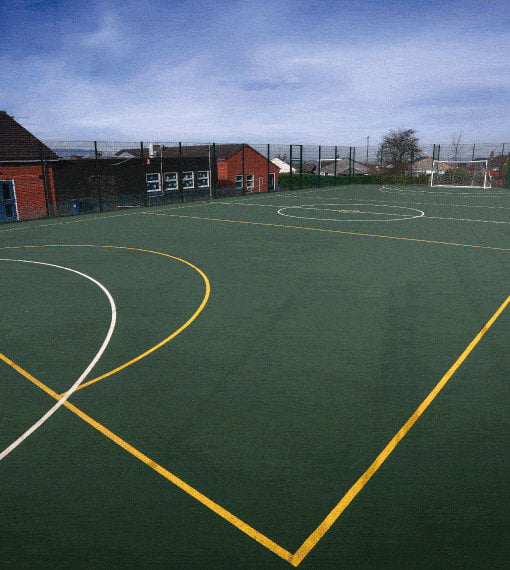
MUGA rebound fencing is the sports-rated barrier around a Multi-Use Games Area, typically 3m high in twin-bar weldmesh with 6mm vertical and 8mm horizontal wires, extended to 4.5m where anti-climb or the sport needs it. It keeps the ball in play, doubles as a rebound surface for practice and cuts disruption to neighbouring areas.
Yes. Steel fencing is hot-dip galvanised then polyester powder-coated in a wide range of RAL colours, so it complements your surfacing, markings and school branding. The galvanising resists rust from the inside while the powder-coat holds the colour on the outside for decades.
Hot-dip galvanised and powder-coated steel fencing typically lasts 20 to 30 years or more with routine care, covering bow top, welded mesh and MUGA rebound. Pressure-treated timber lasts around 10 to 15 years before posts and rails weather, which is why steel usually works out better over its life on a hard-used boundary.
Low anti-trap bow top at around 1.2m with self-closing, self-latching gates suits EYFS and nursery boundaries, keeping toddlers safely in and roads and water out. It has no finger traps, no footholds to climb and no gaps to slip through; see our nursery fencing for the full detail.
Yes. We repair and refit damaged panels, posts and gates and replace worn runs, whoever originally installed the fence, bringing the line back to a safe, compliant condition. Where a boundary is beyond repair we quote a like-for-like or upgraded replacement on survey.
Yes. We hang pedestrian and vehicle gates with self-closing, self-latching mechanisms and finger-safe hinges as part of the run, sized to the access each boundary needs. Gates are priced separately and typically add a few hundred pounds each depending on width, height and locking.
The seven most common nursery playground hazards, from unsafe surfacing to gate safety, with the practical fix for each and the standards that apply.
Read article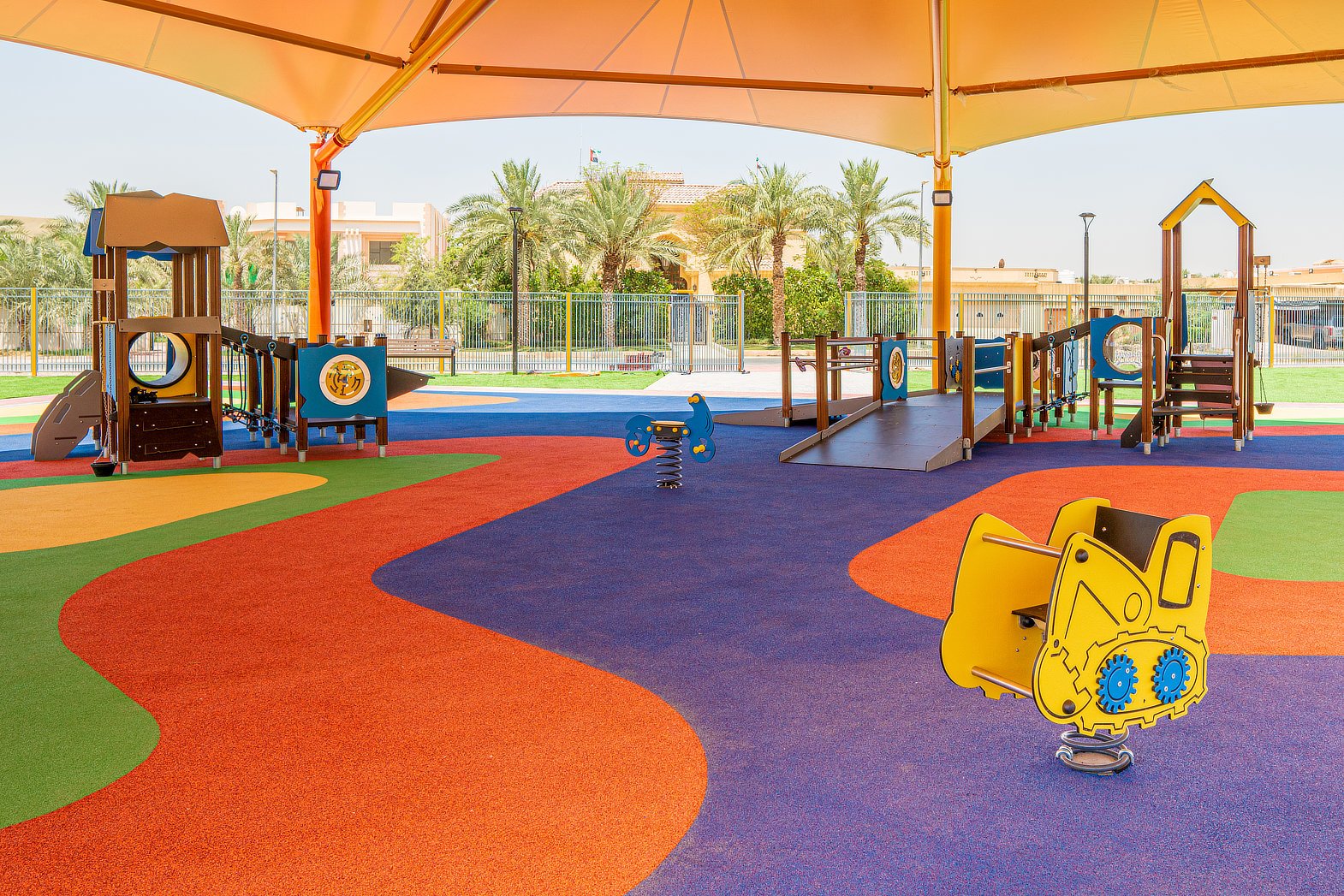
A practical step-by-step guide to planning a school playground, from auditing your space and setting aims through design, zoning, surfacing and installation.
Read articleTell us about your space and we'll arrange a free site visit, design and fixed quote.