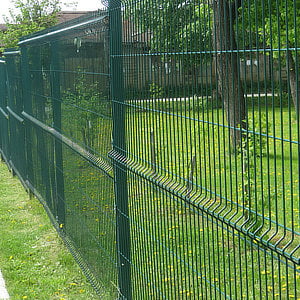
Bow Top & Mesh Fencing
Bow-top railings and welded mesh panels give schools a secure, see-through boundary that keeps children safely inside while staff can supervise the whole space at a glance.
View bow top & mesh fencingNursery fencing is low, anti-trap bow-top with self-closing, finger-safe gates, keeping toddlers safely in and roads, car parks and water firmly out during busy nursery days.
Nursery and EYFS playground fencing is a low anti-trap bow-top steel boundary, usually around 1.2m high, that contains toddlers within a supervised outdoor area and keeps roads, car parks and water features out. We build each run from smooth bow-top railing with vertical infill bars spaced under 89mm, hot-dip galvanised to BS EN ISO 1461, then powder-coated.
For an early-years setting the fence is a safeguarding measure first and a boundary second. The bow-top loops close the top rail so there is no gap to trap a finger, head or clothing, the vertical bars stop a small child slipping through, and self-closing gates with child-resistant latches control every point where children arrive and leave.
Nursery and EYFS playground fencing is made from mild-steel bow-top panels, hot-dip galvanised to BS EN ISO 1461 then polyester powder-coated to BS EN 13438, and installed against RoSPA and BS 1722-14 guidance for anti-trap play-area fencing. We set the posts into concrete foundations, typically 450mm to 600mm deep, then hang the panels and the self-closing gates level along the boundary.
The anti-trap detail is in the fabrication, not an add-on. The pales run through the bottom rail and loop over the top so there are no protruding ends, the pale spacing below the top rail stays around 100mm, and we avoid horizontal rails that give a foothold to climb. Gates carry the same detailing at the hinge and leading edge, fitted with self-closing hinges and a child-resistant latch set out of a toddler reach at around 1.2m.
Nursery and EYFS playground fencing is used to enclose early-years outdoor areas for children aged from birth to five, in nurseries, pre-schools, reception classes and childminding settings across England and Wales. We fit it where a supervised toddler space meets a hazard: a boundary onto a road or car park, a drop-off zone, a pond or a shared route used by older pupils.
It suits any setting bound by the EYFS statutory framework, which requires premises and outdoor spaces to be safe and secure. A 1.2m boundary keeps toddlers contained while staying low enough for staff to see across the whole area, so supervision, secure drop-off and safeguarding all work together rather than against each other.
Nursery and EYFS playground fencing costs around 40 to 160 pounds per linear metre installed, with 1.2m anti-trap bow-top supply sitting at roughly 27 to 100 pounds per metre before fitting. These are indicative UK ranges to confirm at survey, not fixed prices: standard bow-top sits at the lower end, and colour, ground conditions and access move the figure.
Your final cost is driven by the run length, the height, the number and type of gates, the ground you are digging into and site access. Self-closing pedestrian gates typically add around 300 to 700 pounds each, and a colour finish beyond standard green or black carries a small premium. For a firm number, ask us for a playground fencing quote and we will price your exact boundary.
| Element | Typical spec | Indicative cost | Notes |
|---|---|---|---|
| 1.2m anti-trap bow-top run | 1.2m high, infill under 89mm | £40 to £160 per metre installed | Supply from ~£27 to £100 per metre; fitting, gates and groundworks on top |
| Self-closing pedestrian gate | 1.0m to 1.2m leaf, child-resistant latch | £300 to £700 each | Self-closing hinge and out-of-reach latch included |
| Powder-coat colour | Any RAL, over galvanised base | Small premium on standard | Standard green or black is the base finish |
| Post foundations | 450mm to 600mm concrete | In the metre rate | Deeper or rock ground adds cost |
Indicative UK market ranges to confirm against your own pricing at survey. Gate count, run length, colour and access all move the final figure.
Nursery and EYFS playground fencing is manufactured to BS 1722-14, the standard for bow-top and anti-trap steel fencing, and follows RoSPA play-area guidance on infill spacing and climbability. The vertical infill spacing stays below 89mm so a child cannot pass their head or body through, in line with the gap limits carried across BS EN 1176 for play areas.
The finish is governed too: hot-dip galvanising to BS EN ISO 1461 protects the steel, then polyester powder coating to BS EN 13438 adds the colour and a second barrier. Above all sits the EYFS statutory framework, which requires the outdoor space to be safe and secure, so we specify the height, spacing and gate detail to meet a setting's safeguarding policy and can note the sign-off for your records.
Nursery and EYFS playground fencing needs vertical infill bars spaced under 89mm, a working height around 1.2m, and bow-top loops that close the top rail so there is no finger, head or clothing trap. We keep the pale spacing below the top rail at roughly 100mm to meet anti-trap guidance, and run the pales through the bottom rail so no sharp end is left exposed.
The detail that stops climbing matters as much as the spacing. We leave out horizontal mid-rails that give a foothold, set the latch out of a toddler reach at around 1.2m, and fit self-closing hinges so a gate cannot be left open. Supervision always stays essential alongside the fence, and we size the height and gate positions to how your children actually move through the space, from around 1.1m up to 1.2m for early years.
Nursery and EYFS playground fencing lasts around 25 years where the steel is hot-dip galvanised to BS EN ISO 1461 and powder-coated, with product guarantees commonly running to 10 years. The galvanised layer resists rust from the inside, and the powder coat holds its colour and adds a second barrier against weather and knocks in a busy nursery.
Upkeep is light. A periodic check of posts, self-closing hinges and latches keeps the boundary safe, and a recoat every several years refreshes a tired colour without replacing the fence. Individual panels and gates can be swapped if damaged rather than replacing a whole run, which is why a galvanised bow-top boundary outlasts an untreated or timber alternative in the same setting.
Nursery and EYFS playground fencing protects small children by removing finger, head and clothing traps at toddler height, with bow-top loops closing the top rail and infill bars set under 89mm. A good boundary does three more things well: it keeps roads, cars and water out, it supports a calm secure drop-off, and it stays low enough for staff to supervise the whole area at a glance.
The self-closing gates mean an open gate never goes unnoticed, and child-resistant latches sit out of a toddler reach so children stay in their supervised zone. A powder-coated colour finish, chosen from any RAL, makes the space feel welcoming rather than institutional and can gently signal zones to children. The galvanised steel then holds all of that in place for around 25 years with little upkeep.
Commercial Play designs, supplies and installs nursery and EYFS playground fencing in-house across England and Wales, so one team owns the job from survey to handover. We survey each site, work out the height, infill spacing and gate positions your setting needs, and specify anti-trap bow-top and self-closing gates to match your safeguarding policy rather than a house default.
We also fit the wider boundary and access range, so our advice follows your site rather than one product. For a steel alternative with taller security or a mesh infill, see our bow top and mesh fencing, or view the full range of playground fencing. Talk to us about your outdoor area and we will tell you honestly what the boundary needs.
Around 1.2m is typical for nurseries and EYFS settings, from roughly 1.1m up to 1.2m. It is tall enough to keep toddlers safely contained and support supervision, while staying low enough for staff to see across the whole area easily. We advise on the right height for your setting.
Vertical infill bars are spaced under 89mm so a child cannot pass their head or body through, in line with the gap limits carried across BS EN 1176 for play areas. The bow-top loops also close the top rail, and the pale spacing below it stays around 100mm to meet anti-trap guidance.
Yes. Gates are self-closing so they cannot be left open, and latches are child-resistant and positioned out of a toddler reach at around 1.2m. The gate design carries the same anti-trap detailing as the fencing, with no finger traps at the hinge or leading edge.
The design discourages climbing by leaving out horizontal mid-rails and footholds that give little feet a step up. Combined with a 1.2m height and self-closing gates, it keeps children safely inside their supervised area. Supervision always remains essential alongside it.
We manufacture to BS 1722-14 for bow-top and anti-trap fencing, follow RoSPA play-area guidance on spacing and climbability, and finish the steel with hot-dip galvanising to BS EN ISO 1461 and powder coating. Above these sits the EYFS statutory framework, which requires the outdoor space to be safe and secure.
Indicatively, installed nursery bow-top runs around 40 to 160 pounds per linear metre, with 1.2m anti-trap bow-top supply at roughly 27 to 100 pounds per metre before fitting, and self-closing gates adding around 300 to 700 pounds each. These are market ranges to confirm at survey, as run length, gate count and ground conditions all move the figure.
Around 25 years where the steel is hot-dip galvanised and powder-coated, with product guarantees commonly running to 10 years. The galvanised layer resists rust and the powder coat holds its colour, so upkeep is limited to a periodic check of hinges and latches and an occasional recoat.
Yes. Nursery fencing is powder-coated over a galvanised base and comes in any RAL colour, so it feels warm and welcoming rather than institutional. We can match your setting branding or use colour to help define zones within the outdoor area.
It is low-maintenance. Hot-dip galvanising and a powder coat protect the steel, and a periodic check of posts, self-closing hinges and latches keeps everything safe. You can recoat the colour over time, and individual panels or gates can be swapped if damaged rather than replacing a whole run.
Part of our full playground fencing range, explore the other surfaces below.
Bow-top railings and welded mesh panels give schools a secure, see-through boundary that keeps children safely inside while staff can supervise the whole space at a glance.
View bow top & mesh fencingTimber fencing and matching gates bring a warm, natural boundary to forest-school, nature and early-years areas, blending softly into planting while still marking a clear, safe edge.
View timber fencing & gates
Outdoor storage means sheds, stores and lockable units that keep loose parts, PE kit and wheeled toys tidy, dry and secure, so a busy playground stays clear and ready to use.
View outdoor storageBook a free site visit and we'll measure up, recommend the right surface and send a clear, fixed quote.