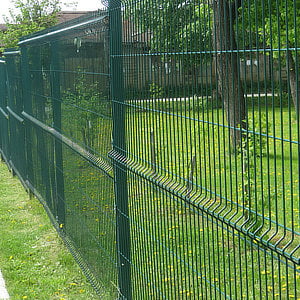
Bow Top & Mesh Fencing
Bow-top railings and welded mesh panels give schools a secure, see-through boundary that keeps children safely inside while staff can supervise the whole space at a glance.
View bow top & mesh fencingTimber fencing and matching gates bring a warm, natural boundary to forest-school, nature and early-years areas, blending softly into planting while still marking a clear, safe edge.
Timber playground fencing and gates is a wooden boundary system built from pressure-treated posts and rails, supplied as post-and-rail, picket, closeboard or low trip-rail with matching timber gates. We use it to draw a warm, natural edge around forest-school, nature and early-years areas that reads as part of the landscape rather than fenced off from it.
The style you pick does a specific job. Picket and post-and-rail mark a boundary while keeping an open feel, closeboard gives full-height screening and privacy, and a low trip-rail defines an edge or protects a planted border without blocking the view. We match the style to the line each run of fence has to draw.
Timber playground fencing and gates is built from UC4 pressure-treated softwood, the Use Class 4 grade rated for permanent ground contact, set into posts we concrete or drive to a firm line. We dig and set the posts first, fix the rails or boards to match the chosen style, then hang the gates on hardware suited to daily school use.
Gates are made in the same timber and profile as the fence, sized to your openings as single or double leaf so equipment and maintenance vehicles get through. We cap posts and seal every cut end with a preservative so the UC4 protection stays intact where the saw has opened the grain, and we set gate latches out of small children's reach on early-years runs.
Timber playground fencing and gates suits forest-school, nature, sensory and early-years areas where a wooden boundary sits naturally alongside trees, planting and mud kitchens. We install it for primary schools, nurseries and EYFS settings that want an organic edge rather than the crisp steel line of bow top and mesh fencing.
It works as a perimeter, as internal zoning between active and quiet areas, and as a low trip-rail guarding a planted border or growing bed. Where a boundary manages a genuine road, car park or water risk we usually steer towards taller anti-trap steel, and we advise honestly run by run so the material follows the risk, not a house default.
Timber playground fencing costs around 30 to 75 pounds per metre installed for post-and-rail or picket, and roughly 70 to 120 pounds per metre for closeboard screening, with gates priced by size and leaf count on top. These are indicative UK ranges to confirm at survey, not fixed prices: the timber section, the height, the post spacing and ground conditions all move the figure.
Your final cost is driven by the style, the run length, the number and width of gates, and site access for digging and setting posts. A low trip-rail defining a planting bed sits at the lower end, while a tall closeboard screen with double-leaf gates reaches the upper end. For a firm number, get a timber fencing quote and we will price your exact site.
| Timber style | Typical height | Indicative cost / m | Lifespan | Best for |
|---|---|---|---|---|
| Low trip-rail | 0.3m to 0.45m | £30 to £45 | 15 years or more | Edging planted borders and gently guiding movement |
| Picket | 0.9m to 1.2m | £40 to £75 | 15 years or more | Open, friendly boundaries for early-years and nature areas |
| Post-and-rail | 1.0m to 1.3m | £30 to £60 | 15 years or more | Forest-school perimeters and internal zoning |
| Closeboard | 1.5m to 1.8m | £70 to £120 | 15 to 20 years | Screening, privacy and windbreaks |
Indicative UK market ranges to confirm against your own pricing at survey. Matching timber gates are priced separately by opening width and leaf count.
Timber playground fencing and gates is governed by BS 1722, the fencing specification, with BS 1722-7 covering wooden post-and-rail fences and BS 1722-5 covering closeboard and palisade. Where the fence sits near play equipment, the entrapment rules of BS EN 1176 also apply, so gaps and openings avoid the finger, head, neck and clothing traps that standard forbids.
RoSPA guidance recommends a minimum railing height of 1.0m with posts capped, and gates that never open onto a road or hazard. We set gate latches out of reach and fit self-closing hardware on early-years boundaries, and we specify UC4 pressure treatment, the Use Class 4 grade carrying a desired service life of at least 15 years, so the timber meets the ground-contact standard from the day it goes in.
Timber playground fencing and gates uses UC4 pressure-treated softwood, kiln-dried to 28 percent moisture or below and treated so the preservative penetrates deep enough to resist rot and insect attack in the ground. Posts are typically 100mm to 175mm square or machine-rounded, with rails and pickets sized to the style and the run.
Wood is a natural material, so treated timber silvers and moves a little as it weathers, which is part of its character rather than a fault. Capped posts, galvanised fixings and sealed cut ends keep it sound, and you can re-treat or stain the timber over the years to refresh its colour. Individual rails and pickets are simple to swap if one is damaged, so the whole run rarely needs replacing at once.
Timber playground fencing and gates lasts 15 years or more when built from UC4 pressure-treated posts and kept to routine care, with some ground-contact timber rated to 15 to 25 years depending on soil and drainage. Waterlogged or heavy clay ground shortens that, which is why we set posts to drain and seal every cut end on site.
Rails, pickets and gate furniture are the parts that wear first, and each is simple and cheap to replace without disturbing the rest of the run. A periodic check of posts, rails and gate hinges keeps everything safe, and re-treating the timber every few years protects the wood and holds its colour, so a well-kept boundary reaches the top of that band.
Timber playground fencing and gates gives a warm, natural boundary that blends into planting and greenery, which suits forest-school, nature and early-years spaces where a steel line would feel harsh. Solid UC4 posts and rails mark a clear, safe edge and stand firm against everyday knocks and leaning, while matching timber gates keep the boundary consistent the whole way round.
The material carries three more advantages: it pairs naturally with planting beds and mud kitchens, it is made to your layout with runs, heights and gate positions sized to how children move through the space, and worn rails or pickets are simple to replace rather than ripping out the whole run. Pressure treatment keeps upkeep light, needing little more than a periodic check and an occasional re-treat.
Commercial Play designs, supplies and installs timber playground fencing and gates in-house across England and Wales, so one team owns the job from survey to handover. We survey each site, work out the height and style each run needs, and set UC4 pressure-treated posts to a firm line with matching gates sized to your openings.
We fit both timber and steel fencing, so our recommendation follows your site rather than the one material we happen to sell: where a boundary manages a road or car park risk we will say so and steer you towards bow top and mesh fencing instead. Browse the full range on our playground fencing page, or talk to us about your boundary and we will tell you honestly what it needs.
Yes, when it is the right specification. We use UC4 pressure-treated timber, the Use Class 4 grade rated for ground contact with a desired service life of at least 15 years, set on sound posts and galvanised fixings. With routine care it gives 15 years or more of service, and individual rails or pickets are simple to replace if damaged.
Post-and-rail or picket at around 1.0m to 1.2m usually suits forest-school and nature areas, as they mark the boundary while keeping an open, natural feel. Where you need screening or a windbreak, closeboard at 1.5m to 1.8m works better, and a low trip-rail defines a planted edge. We can mix styles across one site.
Indicatively, post-and-rail or picket runs around 30 to 75 pounds per metre installed and closeboard around 70 to 120 pounds, with matching gates priced separately by size and leaf count. These are UK market ranges to confirm at survey, as height, timber section, run length and ground conditions all move the figure.
Timber fencing built from UC4 pressure-treated posts lasts 15 years or more with routine care, and some ground-contact timber is rated to 15 to 25 years depending on soil and drainage. Poorly draining or waterlogged ground shortens that, so we set posts to drain and seal every cut end on site.
It is fairly low-maintenance. UC4 pressure treatment protects the wood, and a periodic check of posts, rails and gate hinges keeps everything safe and sound. You can re-treat or stain the timber every few years to protect it and refresh its colour, and worn rails or pickets swap out without disturbing the rest of the run.
Yes. We make timber gates in the same style and finish as the fence, sized to your openings, with hardware suited to school use. Gates can be single or double leaf depending on the access you need for equipment and maintenance, and we fit self-closing hinges and out-of-reach latches on early-years runs.
It depends on what each boundary manages. RoSPA guidance recommends a minimum railing height of 1.0m with posts capped. A low trip-rail of 0.3m to 0.45m edges a planted border, post-and-rail or picket at 1.0m to 1.2m suits zoning and early-years areas, and closeboard at 1.5m to 1.8m gives screening. We advise on the right height run by run.
Timber fencing follows BS 1722, with BS 1722-7 for post-and-rail and BS 1722-5 for closeboard and palisade. Near play equipment the entrapment rules of BS EN 1176 also apply, so gaps avoid finger, head, neck and clothing traps. Gates must never open onto a road or hazard, and we cap posts and specify UC4 ground-contact timber throughout.
Timber suits forest-school, nature and early-years areas where a warm, natural boundary fits the setting, while steel suits perimeters managing a road, car park or genuine security risk. We fit both, so we will look at what each run has to hold back and recommend timber, bow top or mesh honestly rather than defaulting to one material.
Part of our full playground fencing range, explore the other surfaces below.
Bow-top railings and welded mesh panels give schools a secure, see-through boundary that keeps children safely inside while staff can supervise the whole space at a glance.
View bow top & mesh fencingNursery fencing is low, anti-trap bow-top with self-closing, finger-safe gates, keeping toddlers safely in and roads, car parks and water firmly out during busy nursery days.
View nursery fencing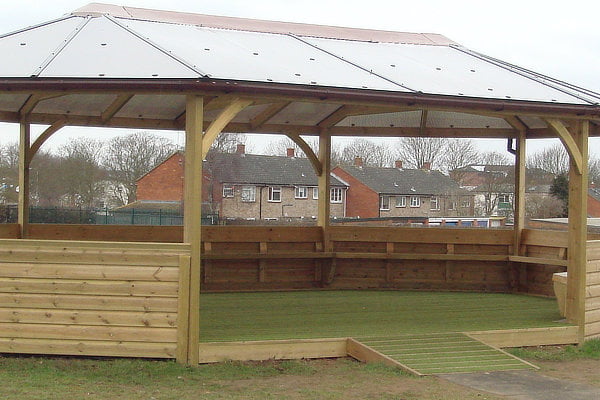
Outdoor storage means sheds, stores and lockable units that keep loose parts, PE kit and wheeled toys tidy, dry and secure, so a busy playground stays clear and ready to use.
View outdoor storageBook a free site visit and we'll measure up, recommend the right surface and send a clear, fixed quote.