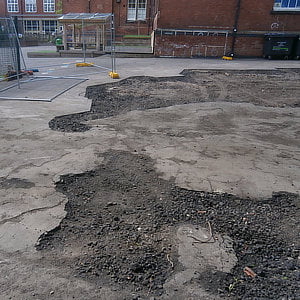
Playground Inspections
An RPII playground inspection is an independent, expert check of your equipment and surfacing against BS EN 1176, giving you a clear, risk-rated report and evidence of your duty of care.
View playground inspectionsA playground refurbishment refreshes a tired area, resurfacing, re-marking, re-coating and replacing selected equipment, to transform how it looks and plays for a fraction of a full rebuild.
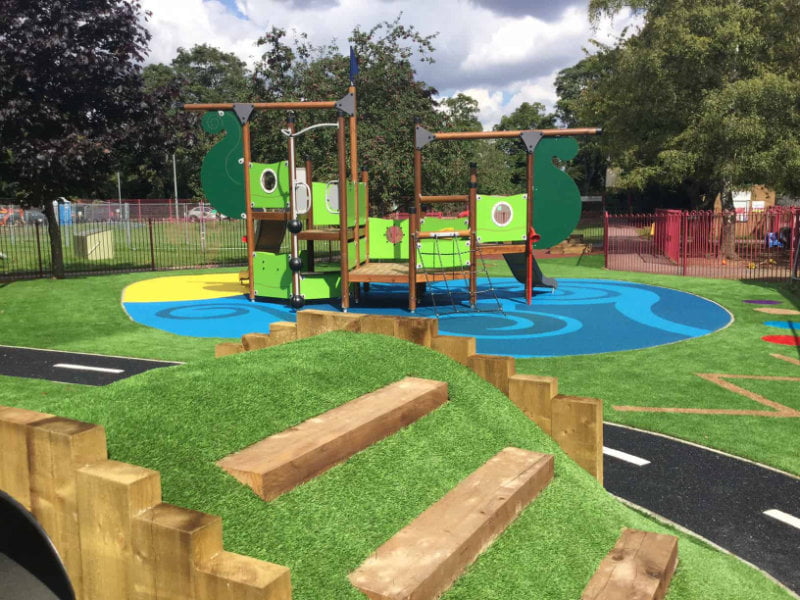
Playground refurbishment is the middle-ground renewal that resurfaces, re-marks, re-coats and swaps selected equipment in an existing area for a fraction of a full rebuild. We keep the frames, posts and fixed structures that are still sound, and renew only the worn parts: surfacing, thermoplastic markings, steel coatings and any items past their best.
This is the smart step between patching a fault and starting again. Where a full early-years rebuild runs from about 30,000 pounds and a Key Stage 2 area reaches 70,000 pounds or more, a refurbishment renews the same space for far less by reusing what still works. See our repairs and maintenance range for the smaller fixes that sit below a full refurbishment.
A Commercial Play refurbishment starts with a site walk that grades every element against BS EN 1176 and BS EN 1177, then sets a costed plan for what we keep, repair or replace. We measure the wear on your wet pour, the state of the markings, the condition of steelwork and the Critical Fall Height under each item, so the renewal is specified against real condition rather than a house template.
From there we resurface worn zones, re-lay thermoplastic markings, shot-blast and re-coat sound frames, and replace only the equipment that is genuinely finished. Noisier stages such as resurfacing and equipment changes are booked for the school holidays, so pupils return to a finished, ready-to-use playground. Book an inspection to set the plan.
Yes, a Commercial Play refurbishment splits into phases across terms or budget years, so you might resurface one area this summer, refresh markings the next, and replace equipment when funds allow. Phasing lets a school spread the cost over two or three financial years while still working to one costed plan, rather than finding a full five-figure sum in a single budget round.
We sequence the work so each phase leaves a safe, usable playground behind it, and we prioritise anything the inspection graded as a safety issue first. Fresh wet pour surfacing is often phase one, with thermoplastic playground markings and equipment changes following in later phases.
A playground refurbishment costs around 3,000 to 50,000 pounds, from a low-thousands early-years refresh to a mid-five-figure multi-zone primary rebuild, which is well below the 30,000 to 70,000 pounds and up of a comparable new build. The saving comes from reusing sound frames, posts and sub-bases rather than stripping the site back to bare ground.
Within that, resurfacing is the biggest line: wet pour rubber costs around 29 to 90 pounds per square metre installed, with sub-base repair adding roughly 18 to 30 pounds per square metre only where the existing base has failed. Re-coating existing steelwork and re-laying markings cost far less than replacing them. For a firm figure, book an inspection and we will price your exact site.
| Refurbishment element | What we do | Indicative cost | Renews vs replaces |
|---|---|---|---|
| Wet pour resurfacing | Overlay or renew the worn wearing course | £29 to £90 per m² installed | Renews the safety surface, keeps the sub-base where sound |
| Sub-base repair | New MOT Type 1 only where the base has failed | £18 to £30 per m² where needed | Repairs the failed section, not the whole area |
| Thermoplastic markings | Re-lay games, tracks and number grids | Priced per design and area on survey | New graphics on the existing surface |
| Steelwork re-coating | Shot-blast and re-coat sound frames and posts | Confirmed on survey | Extends existing structures rather than replacing |
| Selected equipment | Replace only items past their best | Per item on survey | Keeps sound equipment, swaps the worn |
Indicative UK market ranges to confirm against your own pricing at a site survey. Markings, re-coating and equipment lines are quoted per design, area and condition.
A playground refurbishment is governed by BS EN 1176 for the play equipment and BS EN 1177 for the impact-absorbing surfacing beneath it, and every renewed element must still meet the Critical Fall Height it protects. When we resurface, the renewed surface must equal or exceed the free height of fall of the equipment above it, so a refurbishment cannot quietly drop a fall rating that a worn surface used to hold.
We work re-coated frames, replacement items and resurfaced zones back to those two standards as a set, and can arrange independent RPII or RoSPA inspection to sign the finished playground off. See how the two standards work together on our EN 1176 and EN 1177 page.
In most playground refurbishments the steel frames, posts and fixed structures have years of life left once repaired, shot-blasted and re-coated, so the reusable share is usually the structures rather than the surfacing. Wet pour and rubber mulch surfacing wears in 8 to 12 years and often needs renewing, while galvanised or powder-coated steelwork can carry on for a decade or more after a re-coat.
We assess every element on site and keep whatever is sound, replacing only the items that are genuinely past their best. Loose fittings, worn bearings and split surfacing come out; solid frames, level sub-bases and serviceable equipment stay. That judgement is what separates a refurbishment from a rebuild, and it is set by the on-site inspection.
A playground refurbishment resets the clock on each renewed element to its own service life: renewed wet pour runs around 10 years or more, re-coated steelwork a decade or more, and re-laid thermoplastic markings roughly 5 to 8 years under school footfall. Because a refurbishment renews parts at different times, the whole area does not age as one, which is what makes phased upkeep affordable year on year.
Routine care extends every figure. We recommend an annual RPII or RoSPA inspection plus regular in-house checks so small splits, worn coatings and faded markings are caught and repaired before they spread. That upkeep is the difference between a surface reaching 10 years and one failing early; see our repairs and maintenance service for the ongoing checks.
A playground refurbishment renews how an area looks and plays for a fraction of a full rebuild, cutting both cost and waste by keeping sound frames, posts and sub-bases in place. Resurfacing, new thermoplastic markings and re-coated steelwork make a tired playground feel new, while reusing what still works keeps material out of skips and money in the school budget.
The bigger practical wins are budget control and timing. A refurbishment phases across two or three budget years so a school never needs the full sum at once, and the messier stages are timed for the holidays so lessons are barely interrupted. Renewing to BS EN 1176 and BS EN 1177 also brings an ageing area back to current safety standards without a full playground surfacing and equipment replacement.
Commercial Play designs, surfaces, coats and installs playground refurbishments in-house across England and Wales, so one team grades the site, sets the phased plan and delivers every stage from survey to handover. We survey each area against BS EN 1176 and BS EN 1177, work out what is worth keeping and what needs renewing, and give you a costed plan you can phase across budget years.
Because we fit surfacing, markings, coatings and equipment ourselves, our recommendation follows your site rather than the one product we happen to sell, and we renew what is sound instead of defaulting to full replacement. Book an inspection and we will tell you honestly what your playground needs, or see all repairs and maintenance.
Almost always, yes. Because we keep the frames, posts and sub-bases that are still sound and renew only what is worn, a refurbishment typically runs from the low thousands to the mid five figures, well below the 30,000 to 70,000 pounds and up of a comparable new build, while still transforming how the area looks and plays.
It runs from the low thousands for an early-years refresh to the mid five figures for a full multi-zone primary playground. Resurfacing is the biggest line, with wet pour around 29 to 90 pounds per square metre installed and sub-base repair adding roughly 18 to 30 pounds per square metre only where the base has failed. We price your exact site on survey.
Yes, and we recommend it for the noisier or messier stages. Scheduling resurfacing and equipment changes for the holidays means pupils come back to a finished, ready-to-use playground with minimal disruption to lessons, and each phase leaves a safe, usable area behind it.
Yes. A refurbishment phases across terms or budget years, so you might tackle wet pour resurfacing one summer, refresh thermoplastic markings the next, and replace equipment when funds allow. We give you one costed plan you can work through at a pace that suits your finances, prioritising any safety issues first.
It depends on condition, but steel frames, posts and many fixed structures often have years of life left once repaired, shot-blasted and re-coated. We assess everything on site and keep whatever is sound, replacing only the items that are genuinely past their best. Worn surfacing and split fittings come out; solid structures stay.
Yes. We renew every element back to BS EN 1176 for equipment and BS EN 1177 for surfacing, and each resurfaced zone must still meet or exceed the Critical Fall Height of the equipment above it. We can arrange independent RPII or RoSPA inspection to sign the finished playground off.
Each renewed element resets to its own service life: renewed wet pour lasts around 10 years or more, re-coated steelwork a decade or more, and re-laid thermoplastic markings roughly 5 to 8 years under school use. An annual inspection plus routine checks keeps every figure on track.
Usually not. We phase the work so part of the space stays open, fence off only the zone we are working in, and time the noisier stages for the holidays. Larger jobs are sequenced so pupils keep a usable, safe area throughout the programme.
Yes, re-laying thermoplastic markings is a core part of most refurbishments. We lift faded games, tracks and number grids and re-lay fresh designs on the renewed surface, which is one of the lowest-cost ways to make a tired playground feel new. See our thermoplastic playground markings service for the full range.
Part of our full repairs & maintenance range, explore the other surfaces below.
An RPII playground inspection is an independent, expert check of your equipment and surfacing against BS EN 1176, giving you a clear, risk-rated report and evidence of your duty of care.
View playground inspections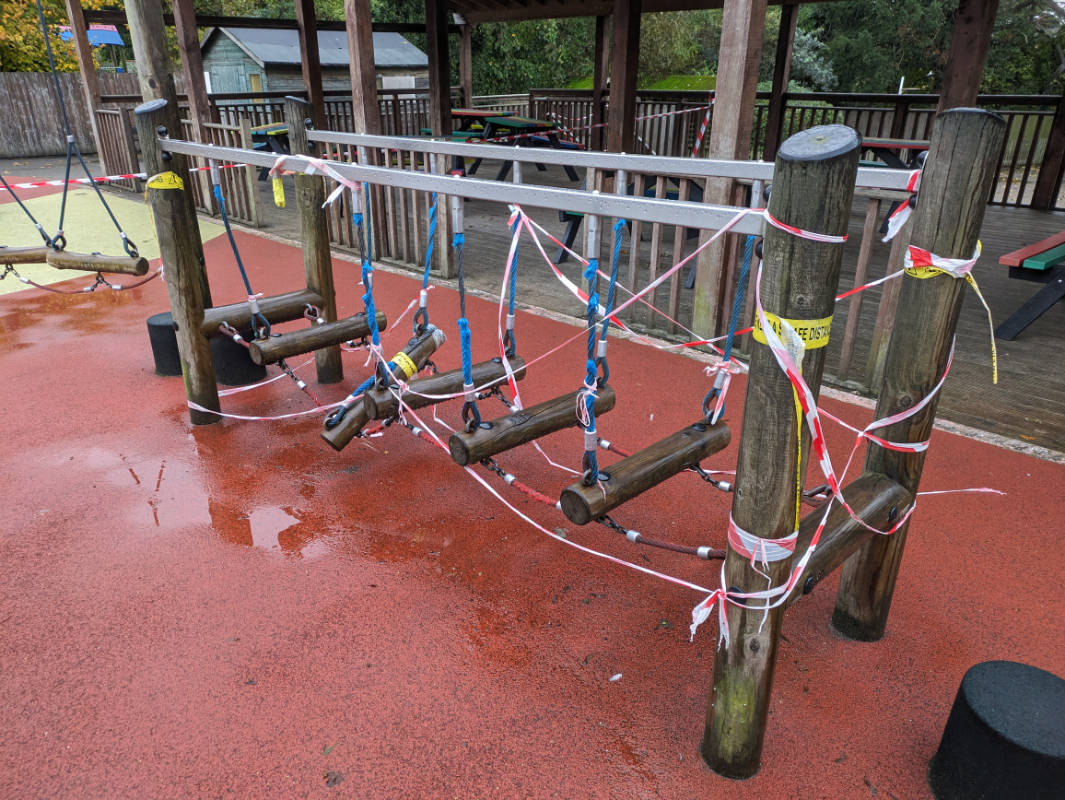
Spotted a broken swing, a trip hazard or a damaged gate? A playground repair puts it right quickly, so the area stays open, safe and ready for pupils to use.
View request a repairBS EN 1176 and BS EN 1177 are the British and European standards for playground safety: one covers the equipment, the other the impact-absorbing surfacing and the fall heights it must protect against.
View en 1176 & en 1177Book a free site visit and we'll measure up, recommend the right surface and send a clear, fixed quote.