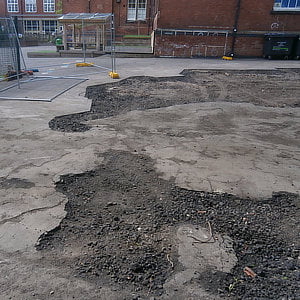
Playground Inspections
An RPII playground inspection is an independent, expert check of your equipment and surfacing against BS EN 1176, giving you a clear, risk-rated report and evidence of your duty of care.
View playground inspectionsBS EN 1176 and BS EN 1177 are the British and European standards for playground safety: one covers the equipment, the other the impact-absorbing surfacing and the fall heights it must protect against.
The EN 1176 and EN 1177 playground safety standards are the British and European benchmarks published as BS EN 1176 for play equipment and BS EN 1177 for impact-absorbing surfacing. BS EN 1176 sets requirements for structural strength, guarding, finger and head entrapment and safe distances around moving parts, while BS EN 1177 governs the Critical Fall Height the surface must protect against.
We design, install and maintain to both across England and Wales, so the equipment and the surface below it are specified as one system. Get one standard wrong and the other cannot do its job, which is why we work to the pair from survey through to handover and annual inspection.
The EN 1176 and EN 1177 standards are read side by side: BS EN 1176 defines how tall a piece of equipment can be and the free height of fall from it, then BS EN 1177 sets how much impact-absorbing surfacing sits underneath to soften that fall. BS EN 1177 proves the surface with a headform drop test that must return a Head Injury Criterion (HIC) below 1000 and a Gmax, the peak deceleration, below 200g.
Critical Fall Height is the link between the two: it is the greatest height from which a fall onto a given surface has tested as acceptable, measured across at least four drops in one session. The surface Critical Fall Height must equal or exceed the free height of fall of the equipment above it, so we specify wet pour, rubber mulch or a shock pad to match the tower, swing or trim trail it protects.
The EN 1176 and EN 1177 standards apply to every fixed play area in a UK school, nursery, early-years setting or public park, and they are the shared reference for designers, installers, RPII inspectors and repairers. Any equipment with a free height of fall above 0.6m needs impact-absorbing surfacing under BS EN 1177, up to the 3m playground maximum.
For a headteacher, site manager or grounds team the standards are the plain evidence that play safety has been taken seriously. We build and maintain playgrounds to them so the setting can show an inspector or auditor that both the equipment and its surfacing meet the recognised benchmark, which supports the wider duty of care and health-and-safety responsibilities.
An annual main inspection to BS EN 1176 and BS EN 1177 costs around 60 to 150 pounds per play area for a single visit by an RPII-registered inspector, with post-installation inspection on a new scheme priced from roughly 150 pounds. These are indicative UK ranges to confirm at survey, not fixed prices, as the number of items, site size and travel all move the figure.
The larger cost sits in the surfacing that keeps a playground compliant: wet pour rubber runs around 29 to 90 pounds per square metre installed and rubber mulch around 40 to 100 pounds, both specified to the Critical Fall Height they must cover. Independent HIC drop testing of an existing surface is a separate, occasional cost. We survey each site and price the exact work, whether that is fresh playground surfacing or an inspection to plan it.
BS EN 1176 and BS EN 1177 sit within a family of parts: BS EN 1176-1 covers general equipment requirements, BS EN 1176-7 covers installation, inspection, maintenance and operation, and BS EN 1177 covers impact-attenuating surfacing test methods. They are standards rather than laws, but the Health and Safety Executive treats them as the accepted way to meet duty of care under health-and-safety legislation.
BS EN 1176-7 defines the inspection regime we work to, and independent bodies such as RoSPA and the Register of Play Inspectors International (RPII) certify against it. Meeting BS EN 1176 and BS EN 1177 is what an inspector, insurer or auditor assesses when they check a school playground, so we keep the design, installation and inspection records that evidence it.
BS EN 1176-7 sets three inspection frequencies: a routine visual inspection every 1 to 7 days by site staff, an operational inspection every 1 to 3 months, and an annual main inspection at least every 12 months by a competent, RPII-registered person. A post-installation inspection is also carried out before a new play area opens.
On top of the visual and operational checks, HIC drop testing of an impact-absorbing surface is usually repeated every 2 to 3 years to confirm the Critical Fall Height still holds, and more often on intensively used areas. We run the routine and annual inspection programme and log every item, and where a fault appears we repair splits, worn surfacing and loose fixings so a small issue does not fail the standard.
| Inspection type | Frequency | Carried out by | What it checks |
|---|---|---|---|
| Routine visual | Every 1 to 7 days | Site or grounds staff | Visible hazards from wear, vandalism or weather |
| Operational | Every 1 to 3 months | Trained operator or contractor | Wear, stability and moving-part function |
| Annual main | At least every 12 months | RPII-registered inspector | Full BS EN 1176 and BS EN 1177 compliance |
| Post-installation | Once, before opening | RPII-registered inspector | New scheme built and surfaced to standard |
| HIC surface re-test | Every 2 to 3 years | Accredited surfacing tester | Critical Fall Height still met by the surface |
Indicative UK inspection intervals set by BS EN 1176-7; exact programme confirmed against your site and usage at survey.
Critical Fall Height under BS EN 1177 is the greatest height, up to the 3m playground maximum, from which a fall onto a given surface has tested as acceptable, meaning the headform stays below a HIC of 1000 and a Gmax of 200g. Surfacing is required wherever the equipment free height of fall exceeds 0.6m.
The depth of the surface sets the fall height it can cover: as an indicative guide, roughly 25mm of wet pour suits a 0.6m fall, about 50mm suits 1.5m and about 100mm reaches the 3m maximum, while bonded rubber mulch is typically laid 250mm to 300mm deep once compacted. The BS EN 1177 safety zone must also extend around the equipment, usually at least 1.5m around static items and about 1.75m to the front and back of swings. We measure the tallest item first, then build the surface up to match it.
EN 1176 and EN 1177 compliance is maintained continuously through the inspection cycle, not fixed at a date, but the impact-absorbing surfacing that underpins it typically lasts 8 to 12 years with routine care. A well-maintained wet pour surface holds its Critical Fall Height for 10 years or more before the wearing course needs refreshing.
Play equipment covered by BS EN 1176 commonly serves 15 to 20 years when guarding, fixings and moving parts are inspected and repaired on the BS EN 1176-7 schedule. We refresh worn surfacing and replace failed components rather than rip and replace, which keeps a playground inside the standard for longer; see our repairs and maintenance.
EN 1176 and EN 1177 compliance protects children by tying tested equipment to impact-absorbing surfacing proven with a BS EN 1177 headform drop test below a HIC of 1000. Building to both standards gives a school measured fall protection, entrapment-free equipment and a documented inspection record rather than an assumption that the playground is safe.
That record carries real weight: it evidences duty of care for insurers and auditors, it catches wear early through the BS EN 1176-7 routine and annual inspections, and it keeps the Critical Fall Height matched to the equipment as both age. A playground built and inspected to BS EN 1176 and BS EN 1177 stays usable and defensible year after year, which is what a headteacher and a site manager need it to do.
Commercial Play designs, installs, inspects and repairs playgrounds to BS EN 1176 and BS EN 1177 in-house across England and Wales, so one team owns compliance from survey to annual inspection. We calculate the Critical Fall Height your equipment needs, specify the surfacing and depth to match, and log every check against the BS EN 1176-7 schedule.
Because we fit all the main safety surfaces and repair worn ones, our recommendation follows your site and your fall heights rather than a single product, and we can extend a compliant surface instead of defaulting to full replacement. Book an inspection to plan it, or see how the standards shape our playground surfacing.
BS EN 1176 covers the play equipment itself, including its design, structural strength, guarding and entrapment safety features. BS EN 1177 covers the impact-absorbing surfacing beneath it and the Critical Fall Height that surfacing must protect against. The two are always used together, with the surface rated to the equipment above it.
Critical Fall Height is the greatest height, up to the 3m playground maximum, from which a fall onto a given surface has tested as acceptable, meaning it keeps the Head Injury Criterion below 1000 and Gmax below 200g. Your surfacing must be chosen and maintained so its Critical Fall Height matches or exceeds the free height of fall of the equipment above it.
BS EN 1176 and BS EN 1177 are standards rather than laws, but they are the recognised benchmark for safe play and the Health and Safety Executive treats meeting them as the accepted way to satisfy duty of care. Inspectors, insurers and auditors assess a school playground against them, so in practice they are the standard to build and maintain to.
BS EN 1176-7 sets a routine visual inspection every 1 to 7 days by site staff, an operational inspection every 1 to 3 months, and an annual main inspection at least every 12 months by an RPII-registered inspector. A post-installation inspection is also carried out before a new play area opens.
Indicatively, an annual main inspection to BS EN 1176 and BS EN 1177 is around 60 to 150 pounds per play area for a single RPII-registered visit, with post-installation inspection from roughly 150 pounds. These are UK ranges to confirm at survey, as the number of items, site size and travel all move the figure.
Impact-absorbing surfacing to BS EN 1177 is required wherever the equipment free height of fall exceeds 0.6m, up to the 3m playground maximum. The surface is laid deeper for taller equipment, and a BS EN 1177 safety zone of at least 1.5m around static items, and about 1.75m front and back of swings, must be surfaced too.
Keep the records: the design and installation details, your routine, operational and annual inspection reports, any HIC surface test results, and evidence of repairs. Together these show the equipment and surfacing are built and maintained to BS EN 1176 and BS EN 1177, which is exactly what an inspector or auditor will look for.
HIC drop testing of an impact-absorbing surface is usually repeated every 2 to 3 years to confirm the Critical Fall Height still holds, and more often on intensively used areas. It is separate from the visual and operational checks and confirms the surface still keeps the Head Injury Criterion below 1000 as it ages.
Wet pour and rubber mulch surfacing installed to BS EN 1177 typically last 8 to 12 years with routine care, and a well-maintained wet pour surface holds its Critical Fall Height for 10 years or more. We refresh the wearing course and repair splits as they appear rather than rip and replace, which keeps the surface inside the standard for longer.
Part of our full repairs & maintenance range, explore the other surfaces below.
An RPII playground inspection is an independent, expert check of your equipment and surfacing against BS EN 1176, giving you a clear, risk-rated report and evidence of your duty of care.
View playground inspections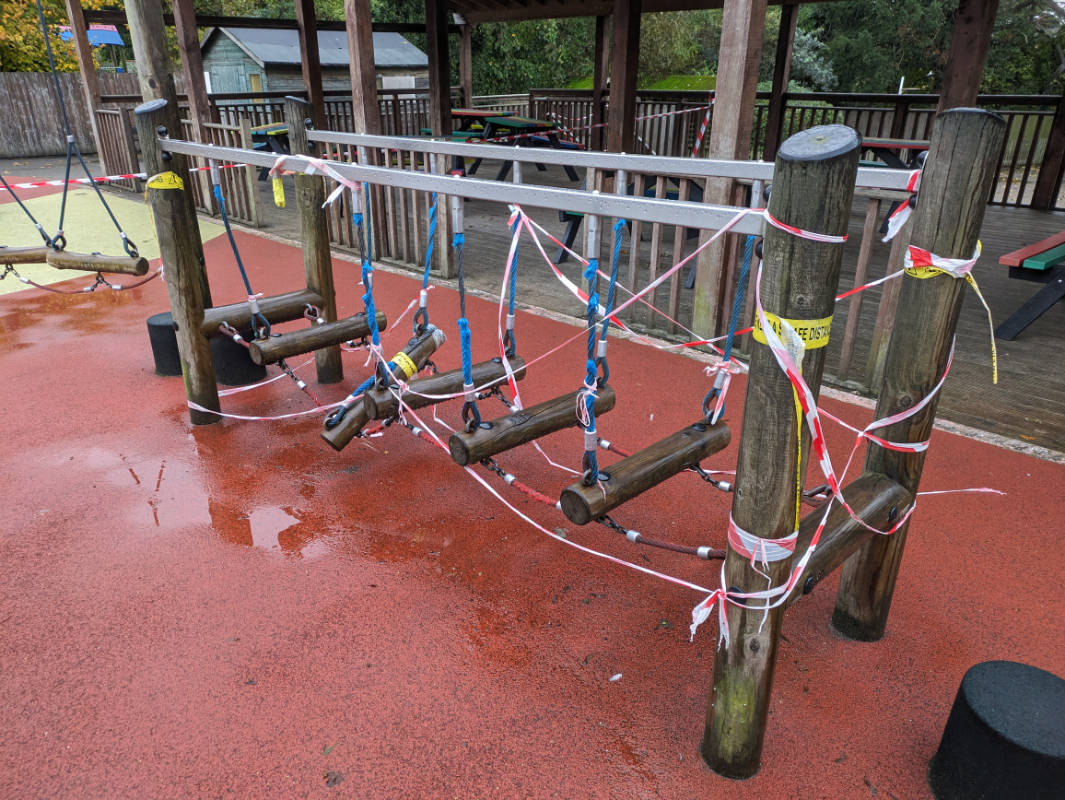
Spotted a broken swing, a trip hazard or a damaged gate? A playground repair puts it right quickly, so the area stays open, safe and ready for pupils to use.
View request a repair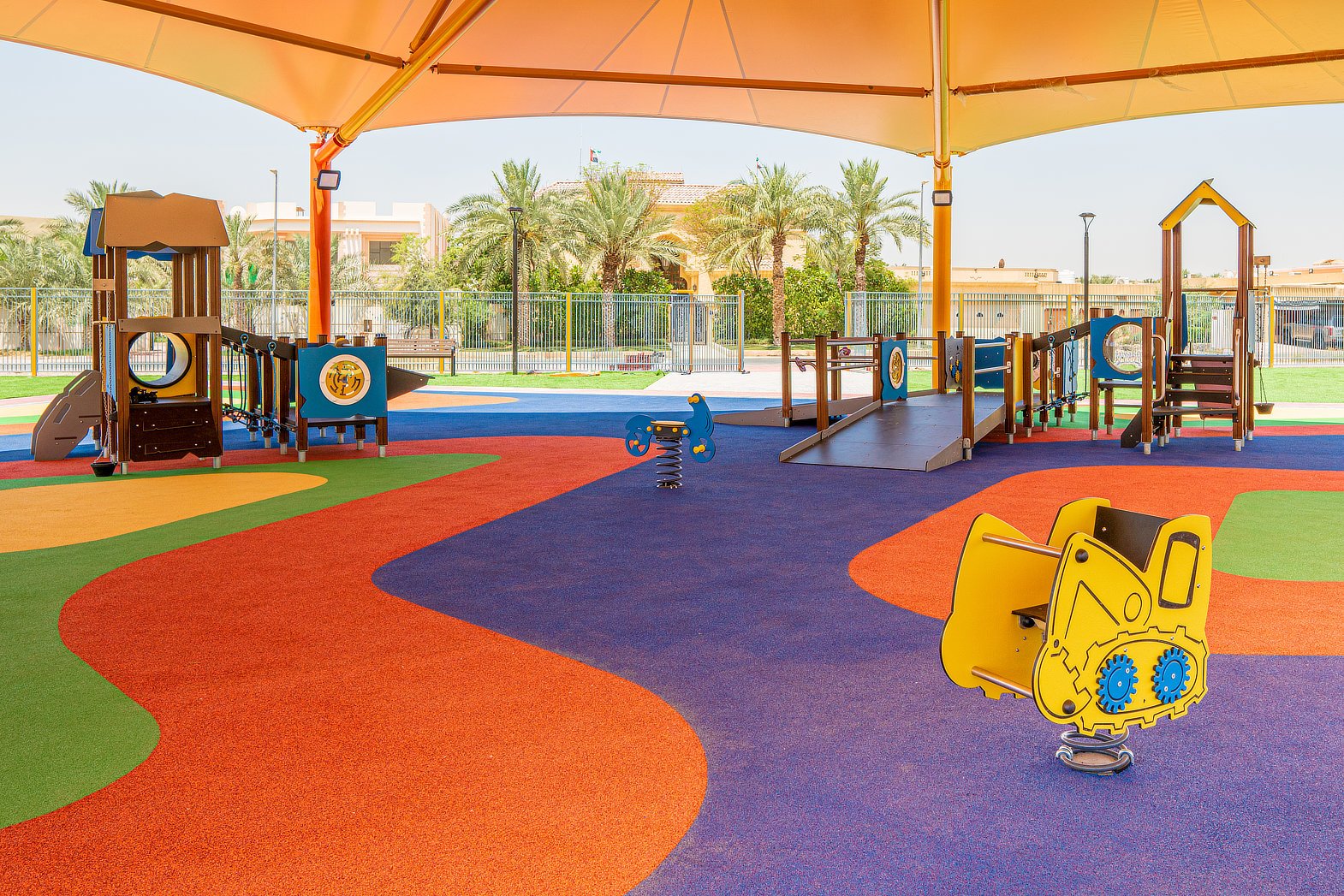
A playground refurbishment refreshes a tired area, resurfacing, re-marking, re-coating and replacing selected equipment, to transform how it looks and plays for a fraction of a full rebuild.
View playground refurbishmentBook a free site visit and we'll measure up, recommend the right surface and send a clear, fixed quote.