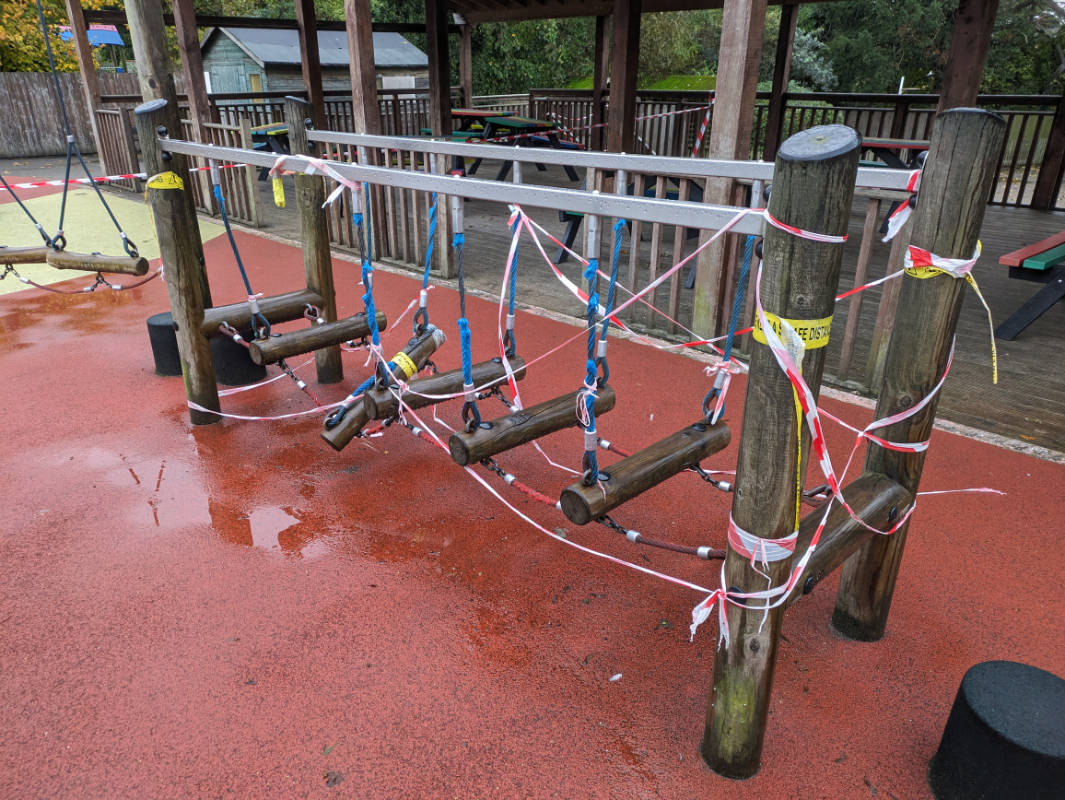
Request a Repair
Spotted a broken swing, a trip hazard or a damaged gate? A playground repair puts it right quickly, so the area stays open, safe and ready for pupils to use.
View request a repairAn RPII playground inspection is an independent, expert check of your equipment and surfacing against BS EN 1176, giving you a clear, risk-rated report and evidence of your duty of care.
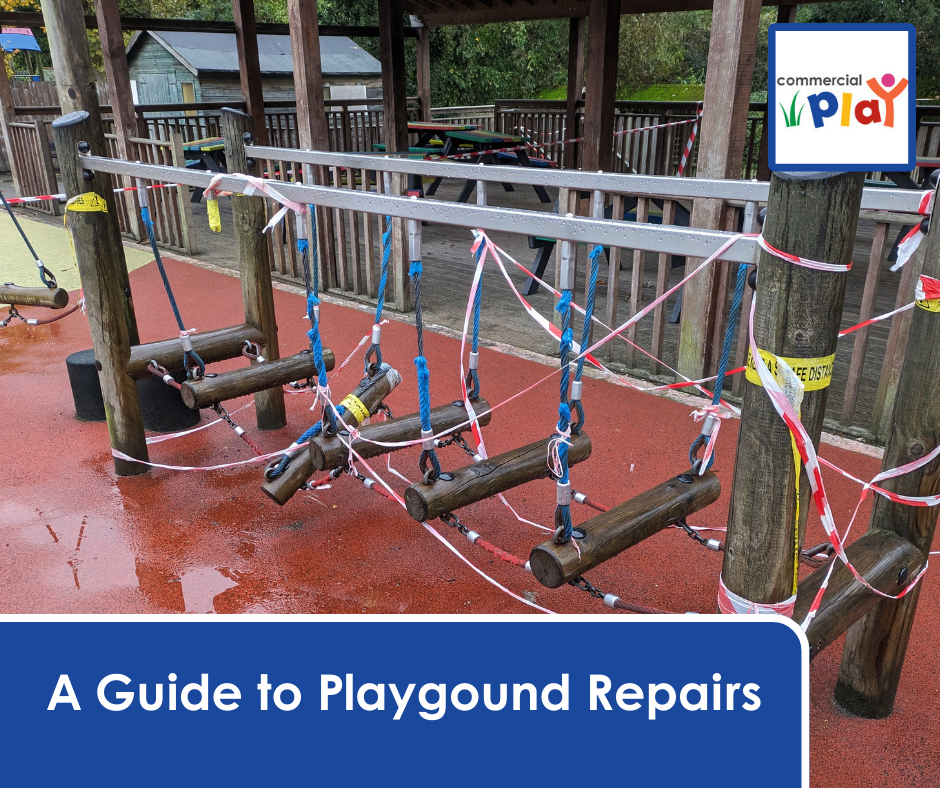
An annual RPII playground inspection is an independent main inspection of your play equipment and impact-absorbing surfacing against BS EN 1176, carried out once every 12 months by an inspector on the Register of Play Inspectors International. It produces a written, risk-rated report that stands as evidence of your duty of care.
This is the top tier of a three-level regime set out in BS EN 1176-7. Routine visual checks and termly operational inspections are done by your own trained staff, while the annual main inspection is carried out by someone with no stake in the equipment. That independence is what makes the report an honest picture of what is safe, what is wearing and what needs attention before it becomes a hazard.
An annual RPII playground inspection works as a structured on-site assessment against BS EN 1176 and the surfacing standard BS EN 1177, item by item, covering every piece of equipment, its foundations, moving parts, fixings and the safety surfacing beneath it. The inspector records each finding, risk-rates it and photographs it, then issues a written report you can act on.
We assess equipment condition, long-term wear, weathering, vandalism and entrapment or finger-trap risks, and we check the surfacing still meets the Critical Fall Height of the equipment above it. Every issue is graded so urgent hazards are never lost among minor wear, and the prioritised action list doubles as a maintenance plan you can budget from. Findings feed directly into a request a repair where a fault needs fixing.
An annual RPII playground inspection is for any operator of a public play area under BS EN 1176: schools, nurseries and early-years settings, academies, parish and town councils, and holiday parks. Anyone who owns or runs play equipment carries a duty of care, and the independent annual inspection is how you evidence that you have identified and acted on risk.
For a school or nursery the annual main inspection is the one that really counts, because it is carried out by someone with no commercial stake in the equipment. We inspect any make and age of equipment, whether or not we installed it, so the report covers your whole play area including surfacing, fencing and gates rather than a single supplier's kit.
An annual RPII playground inspection typically costs around 100 to 450 pounds per site, driven mainly by the number of play items and the travel to your location. As an indicative guide, a small site of up to five items sits near the lower end, while a larger primary or nursery playground with many items and safety surfacing reaches roughly 395 to 450 pounds. These are market ranges to confirm at booking, not fixed prices.
The final figure is set by the item count, the size and complexity of the surfacing, and whether you want a face-to-face handover of the findings rather than an unaccompanied visit. A single annual inspection is modest against the cost of a fenced-off area or an avoidable injury, and the prioritised report tells you exactly where to spend your maintenance budget. Book an inspection and we will price your exact site.
| Inspection tier | Who carries it out | Frequency | RPII required | Indicative cost |
|---|---|---|---|---|
| Routine visual check | Your own trained staff | Daily to weekly | No | In-house time |
| Operational inspection | Trained staff or contractor | Every 1 to 3 months (termly typical) | No | In-house or contract rate |
| Annual main inspection | Independent RPII-qualified inspector | At least every 12 months | Yes | Around £100 to £450 per site |
Indicative UK market ranges to confirm at booking. Cost is driven by item count, surfacing complexity, travel and whether the handover is accompanied.
An annual RPII playground inspection is carried out against BS EN 1176, the playground equipment standard, and BS EN 1177, the impact-attenuation standard for the surfacing beneath it. BS EN 1176-7 specifically sets out the three-tier inspection regime, and the qualification recognised across the UK is RPII, the Register of Play Inspectors International.
The inspector checks equipment against BS EN 1176 parts 1 to 11 and confirms the surfacing still passes its BS EN 1177 Critical Fall Height, the surface being required wherever the free height of fall exceeds 0.6m up to the 3m playground maximum. Kept on file alongside your routine and operational records, the annual report is strong evidence you meet the duty of care that the Health and Safety at Work Act and RoSPA guidance expect of a play area operator.
An annual RPII playground inspection should be carried out at least once every 12 months, and it sits on top of two more frequent tiers under BS EN 1176-7: routine visual checks daily to weekly, and operational inspections every one to three months, with termly the norm for schools. Only the annual main inspection needs an RPII-registered inspector.
A single yearly inspection is the minimum, not the ceiling. Heavily used sites, coastal or exposed locations and older equipment often warrant a mid-year operational check by your staff or by us, and any equipment newly installed or altered should have a post-installation inspection before it opens. We can set the interval to match how hard your play area is used rather than defaulting to bare minimum.
An annual RPII playground inspection remains the current record for 12 months, at which point BS EN 1176-7 expects a fresh main inspection. The report itself stays useful the whole year as a live maintenance plan, because each risk-rated action tells you what to fix now, what to plan for this year and what simply to keep watching.
Because play equipment wears, weathers and gets used hard, a report older than 12 months no longer reflects the site and stops serving as evidence of ongoing duty of care. We hold your inspection history so year-on-year wear is visible, which makes it easier to see when a piece of equipment is heading towards replacement rather than repair. Findings that need action route straight into a request a repair.
An annual RPII playground inspection gives you independent, risk-rated evidence that your play area meets BS EN 1176, from an inspector with no stake in the equipment. Every finding is photographed and graded, so urgent hazards stand out clearly and minor wear is logged rather than acted on in a panic.
The report does three more things well: it prioritises actions into an order of work you can cost and schedule, it doubles as a budgetable maintenance plan for the year, and it stands on file as proof of duty of care for governors, insurers or an HSE query. Because we inspect any make of equipment and surfacing, one visit covers your whole playground rather than a single supplier's kit, and anything flagged can go straight to a repairs and maintenance booking.
Commercial Play carries out independent annual inspections against BS EN 1176 and BS EN 1177 across England and Wales, on any make and age of equipment, whether or not we installed it. You get an RPII-qualified inspector, a written risk-rated report, a photograph of every issue and a prioritised, budgetable action list, not a vague checklist.
Because we also install and repair playground surfacing, equipment, fencing and canopies, we can turn a finding into a fix in the same relationship rather than handing you a report and walking away. If the inspection flags a worn surface or a broken item, we can price the remedy and book it in. Book an inspection and we will assess your exact site honestly and tell you what it needs.
Best practice under BS EN 1176-7 is a three-tier routine: brief visual checks by staff daily to weekly, a more detailed operational inspection each term or every one to three months, and one independent annual main inspection at least every 12 months. Only the annual inspection needs to be carried out by an RPII-qualified inspector.
The recognised qualification is RPII, the Register of Play Inspectors International. An RPII-registered inspector is trained to assess equipment and surfacing against BS EN 1176, which is why the independent annual main inspection should be carried out by one. Routine and operational checks can be done by your own suitably trained staff.
Indicatively, a single-site annual RPII inspection runs around 100 to 450 pounds, driven mainly by the number of play items, the surfacing complexity and the travel involved. A small site of up to five items sits near the lower end, while a larger school or nursery playground reaches roughly 395 to 450 pounds. These are market ranges to confirm at booking.
It covers the condition of your equipment and impact-absorbing surfacing, its foundations, fixings and moving parts, any faults or wear, and the level of risk each one presents. Every issue is risk-rated and photographed, with a prioritised list of actions so you know what to tackle first and what simply to keep watching.
An independent annual inspection, kept on file with your routine and termly operational checks and any repairs, is strong evidence that you take play safety seriously under BS EN 1176. It shows you have identified risks and acted on them, which is exactly what a duty of care and RoSPA guidance ask of a play area operator.
The equipment is assessed against BS EN 1176, the playground equipment standard, and the surfacing against BS EN 1177, the impact-attenuation standard, with BS EN 1176-7 setting out the three-tier inspection regime. The inspector confirms the surface still meets the Critical Fall Height of the equipment above it, required wherever the free height of fall exceeds 0.6m up to the 3m maximum.
Yes. We carry out annual RPII inspections on any make and age of equipment and surfacing, regardless of who originally installed it, so a single visit covers your whole play area including fencing and gates. Where a fault is found, we can price and book the repair rather than just reporting it.
It is the current record for 12 months, after which BS EN 1176-7 expects a fresh main inspection. The report stays useful all year as a live maintenance plan you can budget from, but a report older than 12 months no longer reflects the worn, weathered state of the site or serves as evidence of ongoing duty of care.
Every fault is risk-rated so you can see what needs fixing now, what to plan for this year and what simply needs watching. Because we also repair and install playground equipment and surfacing, anything flagged can go straight to a repair booking; see repairs and maintenance, where we can price and schedule the remedy for you.
Part of our full repairs & maintenance range, explore the other surfaces below.
Spotted a broken swing, a trip hazard or a damaged gate? A playground repair puts it right quickly, so the area stays open, safe and ready for pupils to use.
View request a repair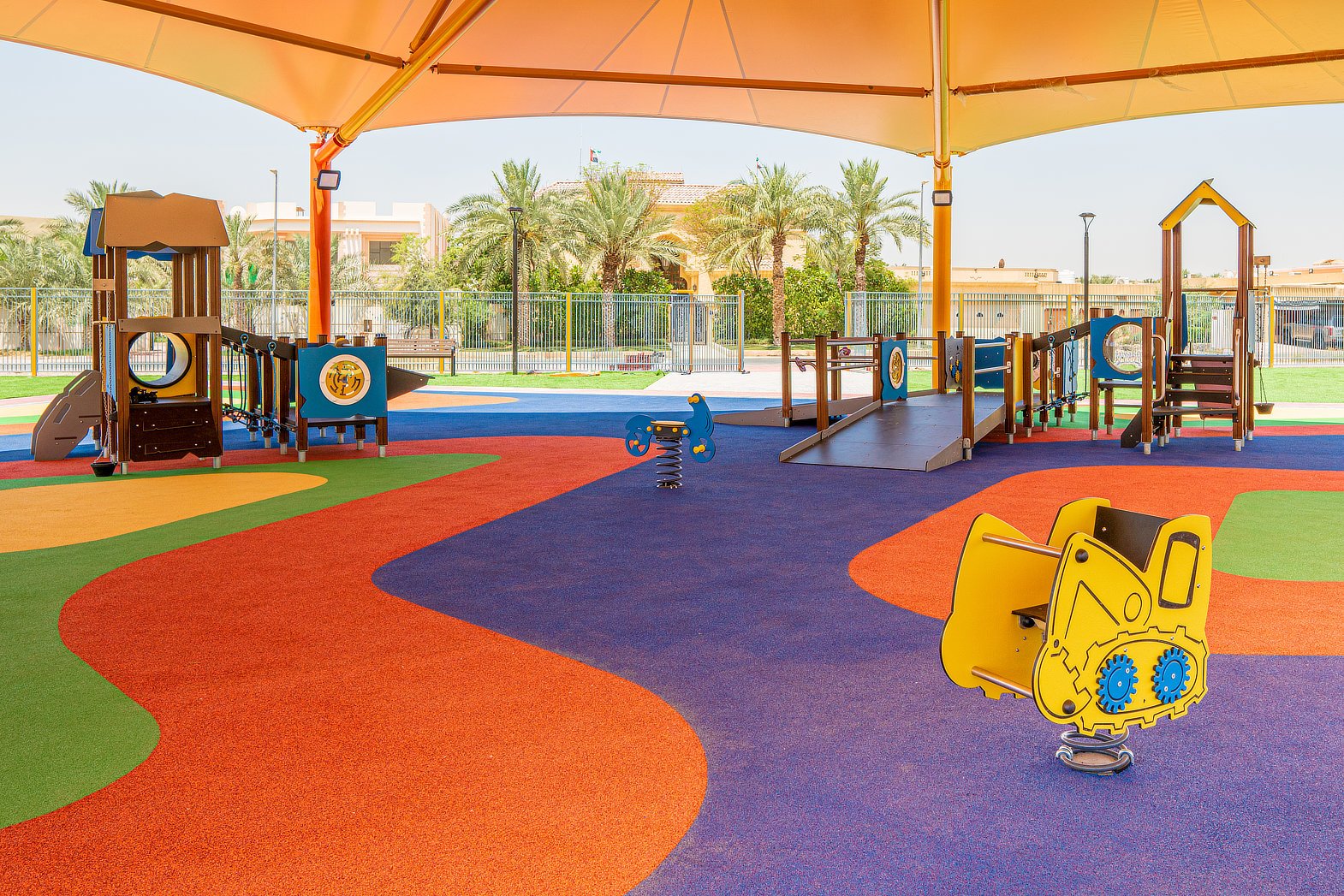
A playground refurbishment refreshes a tired area, resurfacing, re-marking, re-coating and replacing selected equipment, to transform how it looks and plays for a fraction of a full rebuild.
View playground refurbishment
BS EN 1176 and BS EN 1177 are the British and European standards for playground safety: one covers the equipment, the other the impact-absorbing surfacing and the fall heights it must protect against.
View en 1176 & en 1177Book a free site visit and we'll measure up, recommend the right surface and send a clear, fixed quote.