Wet Pour vs Rubber Mulch: Which Playground Surface Is Best?
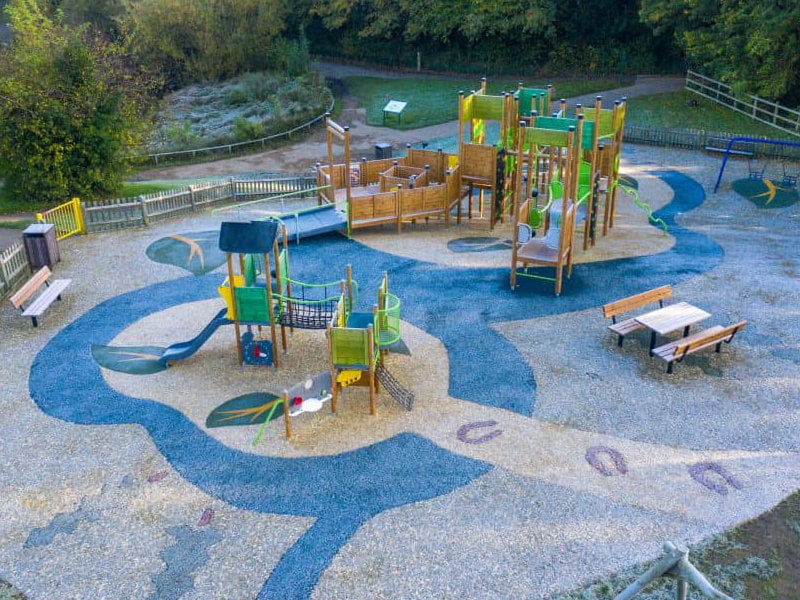
Wet pour and rubber mulch are the two most popular safety surfaces for school playgrounds, and they are often shortlisted against each other. Both are made from recycled rubber, both are tested to BS EN 1177 for impact protection, and both beat loose bark or bare grass. But they look and behave differently, and the right choice depends on your space and your priorities.
The quick answer
Choose wet pour if you want a smooth, colourful, wheelchair-friendly finish you can build markings into. Choose rubber mulch if you want a natural, bark-effect look, high fall-height protection and a lower cost, especially on trails and natural areas.
Look and feel
Wet pour is a continuous, poured-in-place surface with a smooth finish, available in almost any colour and with graphics or markings mixed straight in. Rubber mulch has a soft, textured, woodland appearance, the look of bark chippings without the rot, scattering or splinters.
Accessibility
This is where wet pour wins. Its smooth, level finish gives wheelchairs, walking frames and buggies clear access across the whole area, which makes it the go-to for inclusive and SEN settings and the early years. Rubber mulch is firm and stable but has a more textured surface.
Fall height and cost
Both can be laid to protect against falls from tall equipment, but rubber mulch achieves high critical fall heights cost-effectively, which is why it is popular under climbing frames and along trim trails. Wet pour is usually the higher-cost option, with the trade-off being its finish and design freedom.
Drainage and maintenance
Both are fully porous and free-draining, so neither puddles, and both are low-maintenance next to loose fill. Wet pour can be patched or resurfaced; rubber mulch can be topped up and re-bonded.
Where each one suits best
- Wet pour: early-years areas, wheelchair-accessible routes, and anywhere you want colour, logos or number and games markings built in.
- Rubber mulch: under tall equipment, forest-school and nature areas, trails and tree surrounds, and where budget matters most.
Many schools use both, wet pour for equipment bays and accessible paths, rubber mulch for trails and natural zones. If you are not sure, that is exactly what a site visit is for. See the full playground surfacing range, or read our wider guide to choosing a safety surface. When you are ready, book a free site visit and we will recommend the right mix for your space.
Related questions
Is wet pour or rubber mulch better?
Neither is universally better. Wet pour gives a smooth, colourful, wheelchair-friendly finish you can build markings into; rubber mulch gives a natural bark-effect look, high fall protection and a lower cost. The best choice depends on your space, budget and how accessible the area needs to be.
Is rubber mulch cheaper than wet pour?
Usually, yes. Rubber mulch tends to cost less than wet pour and achieves high critical fall heights cost-effectively, which is why it is popular under tall equipment and on trails. Wet pour costs more but offers a smoother finish and full design freedom.
Can you use both surfaces in one playground?
Yes, and many schools do. Wet pour works well for equipment bays and accessible routes, while rubber mulch suits trails and natural areas. We can specify the right surface for each zone in a single scheme.
More from the blog
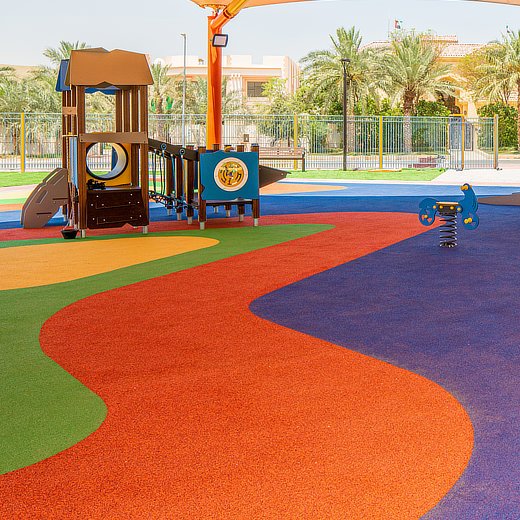
Playground Safety Surfacing Explained: How to Choose
Choosing safe playground surfacing means matching it to equipment fall height under BS EN 1177. Compare wet pour, rubber mulch, grass mats and bark.
Read article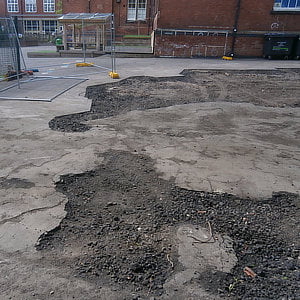
Playground Risk Assessment Checklist for Schools
A plain-English checklist your staff can use to spot playground hazards early, and where a professional RPII inspection takes over.
Read article
Nursery Playground Hazards: 7 Risks and How to Fix Them
The seven most common nursery playground hazards, from unsafe surfacing to gate safety, with the practical fix for each and the standards that apply.
Read article