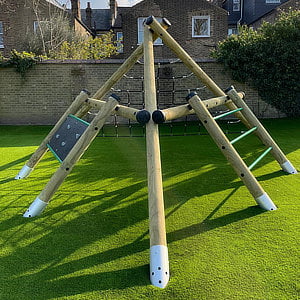
Climbing Frames
Climbing frames give children the height, challenge and problem-solving that build strength and confidence, multi-activity structures with climbers, nets, walls and slides, all tested to BS EN 1176.
View climbing framesA traverse wall is a low climbing wall you move across rather than up, children work sideways along the holds, close to the ground, building grip and problem-solving with minimal fall risk.
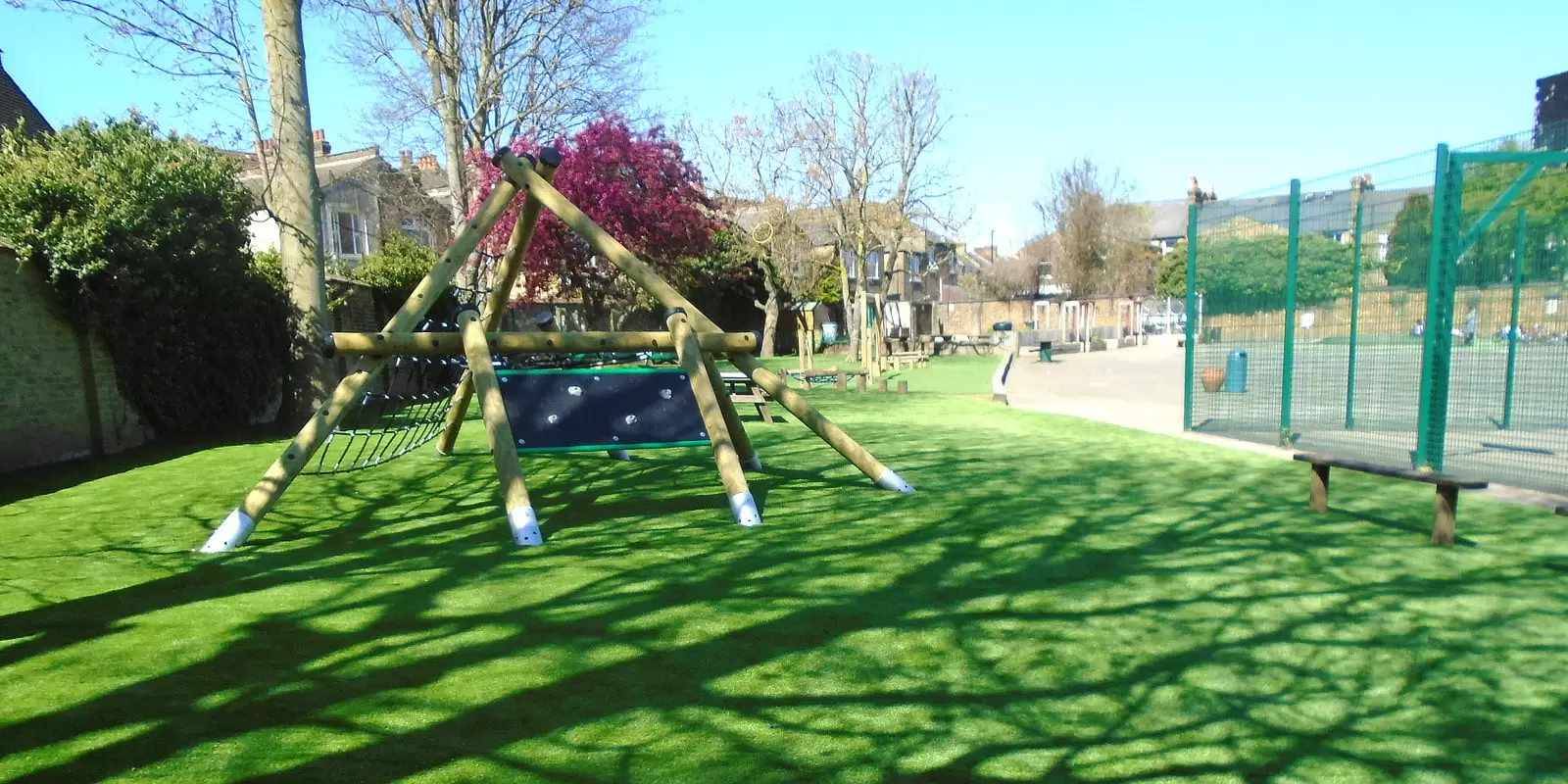
A traverse wall is a low climbing wall that children move across sideways rather than up, built to BS EN 1176 and typically kept under 0.6m of free fall so a tall safety zone and impact surfacing are often not needed. We fix the panels to an existing external wall or a free-standing frame, set coloured poly-resin holds along the route, and keep the footholds low to the ground.
Because the climbing is horizontal, a traverse wall delivers the grip and problem-solving of climbing with very little height. Sit it along a wall, a fence line or the side of a building and a narrow strip becomes active play, which is why it pairs so well with climbing frames and play towers.
We build a traverse wall from 19mm HDPE, plywood or GRP panels supplied in 1.2m multiples, mounted either onto sound masonry or onto a galvanised free-standing frame, with poly-resin holds in red, green, yellow and blue bolted through metal washer inserts. HDPE panels do not rot or rust, which suits an outdoor school setting exposed to frost and rain all year.
We survey the wall or ground first, confirm the fixing substrate, then set the holds so the footholds stay below 0.5m and leave a 1035mm gap between the foot rail and the lowest hand grip, as BS EN 1176 requires. Every wall is installed over the correct fall-safe ground where the free height of fall calls for it, working alongside our playground surfacing team.
Traverse walls suit primary and secondary schools, nurseries and early-years settings, with hold layouts set for ages 6 and up as standard and adjustable down to early years or up to secondary. We route them along boundaries, external walls and fence lines where a full climbing frame would not fit, turning dead space into a climbing challenge.
Staff set easier or harder routes using the coloured holds, building turn-taking, grip strength and problem-solving across a whole class through the day. The narrow footprint makes a traverse wall one of the best-value additions to a tight playground, and it works beside inclusive and SEN play equipment for mixed-ability groups.
A wall-mounted traverse wall costs around 1,360 to 1,900 pounds per 1.5m section installed, while a free-standing single-sided 3.6m wall starts at roughly 1,875 pounds and a double-sided 3.6m wall from about 3,025 pounds. These are indicative UK ranges to confirm at survey, not fixed prices: the panel material, the run length in 1.2m multiples, single or double sided, and whether we fix to existing masonry or supply a frame all move the figure.
Fixing direct to sound brickwork is the lower-cost route because it skips the frame and groundworks; a free-standing frame and any fall-safe surfacing add to it. For a firm number, get a traverse wall quote and we will price your exact wall or fence line.
| Type | Typical run | Panel material | Indicative cost installed | Best for |
|---|---|---|---|---|
| Wall-mounted (direct to masonry) | 1.5m to 7m | HDPE, plywood or GRP | £1,360 to £1,900 per 1.5m section | Sound external walls and boundary brickwork |
| Free-standing single-sided | 3.6m and up | HDPE or GRP on a frame | From £1,875 | Fence lines and open sides of a playground |
| Free-standing double-sided | 3.6m and up | HDPE or GRP on a frame | From £3,025 | Central runs where two groups climb at once |
Indicative UK market ranges to confirm against your own pricing at survey. Frame and any fall-safe surfacing are priced on a site survey.
A traverse wall is governed by BS EN 1176, the European playground equipment standard, which sets the spacing, the 1035mm gap between the foot rail and the lowest hand grip, and the foothold height limit that keeps the free fall low. We install every wall to BS EN 1176, and where the free height of fall exceeds 0.6m we lay impact-attenuating surfacing tested to BS EN 1177 beneath it.
Once installed, BS EN 1176-7 sets the inspection regime: daily or weekly routine checks by staff, quarterly operational checks, and a full annual inspection by an independent RPII-certified inspector. We can arrange that independent RPII or RoSPA sign-off for insurance and audit where you want it.
A traverse wall is typically built about 2.3m tall on a board width of 1.2m, extended in 1.2m multiples to suit the run, with 8 to 12 holds per linear metre spaced roughly 30cm apart. Footholds sit no higher than 0.5m off the ground so the free fall stays under the 0.6m threshold, and the hand holds run above the 1035mm BS EN 1176 gap.
We specify the panel material to the setting: 19mm HDPE for a hard-wearing, rot-free and rust-free outdoor finish, plywood with a textured coating where budget leads, or GRP where a moulded rock face is wanted. Hold shapes are made for younger hands rather than the abrasive texture of an adult climbing wall, and route length is set to your available wall or fence.
A traverse wall built from 19mm HDPE panels lasts around 15 years or more because HDPE does not rot, rust or split in the weather, and the poly-resin holds are replaceable as they wear. A plywood wall sits nearer 10 to 15 years depending on its coating and exposure, and a galvanised free-standing frame outlasts the panels it carries.
We keep the run serviceable by replacing individual holds and re-torquing fixings rather than replacing whole panels, so a wall stays in use for its full life. Worn or damaged sections are repaired in place through our playground repairs and maintenance service instead of full replacement.
A traverse wall gives children real climbing challenge with minimal fall risk, because the sideways, low-level design keeps footholds under 0.5m and the free fall under the 0.6m BS EN 1176 threshold. It packs grip work, problem-solving and turn-taking into a narrow footprint, so a strip along a wall or fence line earns its place where a tall structure could not go.
Coloured poly-resin holds let staff set graded routes and games for a whole class, from early years to secondary, and HDPE panels shrug off frost and rain without rot or rust. The low height also cuts the supervision demand and the large safety zone a tall climbing frame needs, which makes a traverse wall one of the best-value ways to add active play per metre.
Commercial Play designs, supplies and installs traverse walls in-house across England and Wales, so one team surveys the wall, confirms the fixing substrate and installs to BS EN 1176 from start to handover. We fit HDPE, plywood and GRP panels and both wall-mounted and free-standing frames, so our recommendation follows your site rather than one product we happen to stock.
We set the holds, route length and any fall-safe surfacing to your exact wall or fence line, and we repair and re-hold existing walls rather than defaulting to replacement. For height and slides alongside the climbing challenge, we also install climbing frames and play towers. Talk to us about your play area and we will tell you honestly what it needs.
A traverse wall is a low climbing wall children move across sideways rather than climb up, built to BS EN 1176. It gives the grip and problem-solving of climbing while keeping footholds under 0.5m off the ground, so the free fall stays under 0.6m and the safety-zone demands are far lower than a tall structure.
Yes. Because climbing is horizontal and low, the fall risk is minimal, with footholds kept below 0.5m and a 1035mm gap between the foot rail and the lowest hand grip as BS EN 1176 requires. We install fall-safe surfacing tested to BS EN 1177 wherever the free height of fall exceeds 0.6m.
Indicatively, a wall-mounted traverse wall runs around 1,360 to 1,900 pounds per 1.5m section installed, a free-standing single-sided 3.6m wall from about 1,875 pounds and a double-sided 3.6m wall from roughly 3,025 pounds. These are UK market ranges to confirm at survey, as run length, panel material and frame versus direct-to-masonry all move the figure.
Traverse walls fix to a sound existing external wall or to a free-standing frame, so they suit boundaries, fence lines and the sides of buildings where a full climbing frame would not fit. Fixing direct to brickwork is the lower-cost route; a free-standing frame suits open sides of a playground.
We build traverse walls from 19mm HDPE, plywood or GRP panels in 1.2m multiples, with poly-resin holds in red, green, yellow and blue fixed through metal washer inserts. HDPE is the hard-wearing outdoor choice because it does not rot or rust; plywood suits tighter budgets and GRP gives a moulded rock face.
Hold layouts and heights can be set for ages 6 and up as standard, and adjusted down to early years or up to secondary. Staff set easier or harder routes using the coloured holds to suit the group, and the hold shapes are made for younger hands rather than the abrasive texture of an adult climbing wall.
A traverse wall carries around 8 to 12 holds per linear metre, spaced roughly 30cm apart, on a board about 2.3m tall and 1.2m wide extended in 1.2m multiples. Footholds are kept no higher than 0.5m off the ground so the free fall stays under the 0.6m BS EN 1176 threshold.
An HDPE traverse wall lasts around 15 years or more because the panels do not rot, rust or split in the weather, while a plywood wall sits nearer 10 to 15 years depending on its coating. Poly-resin holds are replaceable as they wear, so the run stays serviceable for its full life.
BS EN 1176-7 sets daily or weekly routine checks by staff, quarterly operational checks, and a full annual inspection by an independent RPII-certified inspector. We can arrange that independent RPII or RoSPA sign-off for insurance and audit, and repair worn holds or fixings in place through our repairs and maintenance service.
Part of our full play equipment range, explore the other surfaces below.
Climbing frames give children the height, challenge and problem-solving that build strength and confidence, multi-activity structures with climbers, nets, walls and slides, all tested to BS EN 1176.
View climbing frames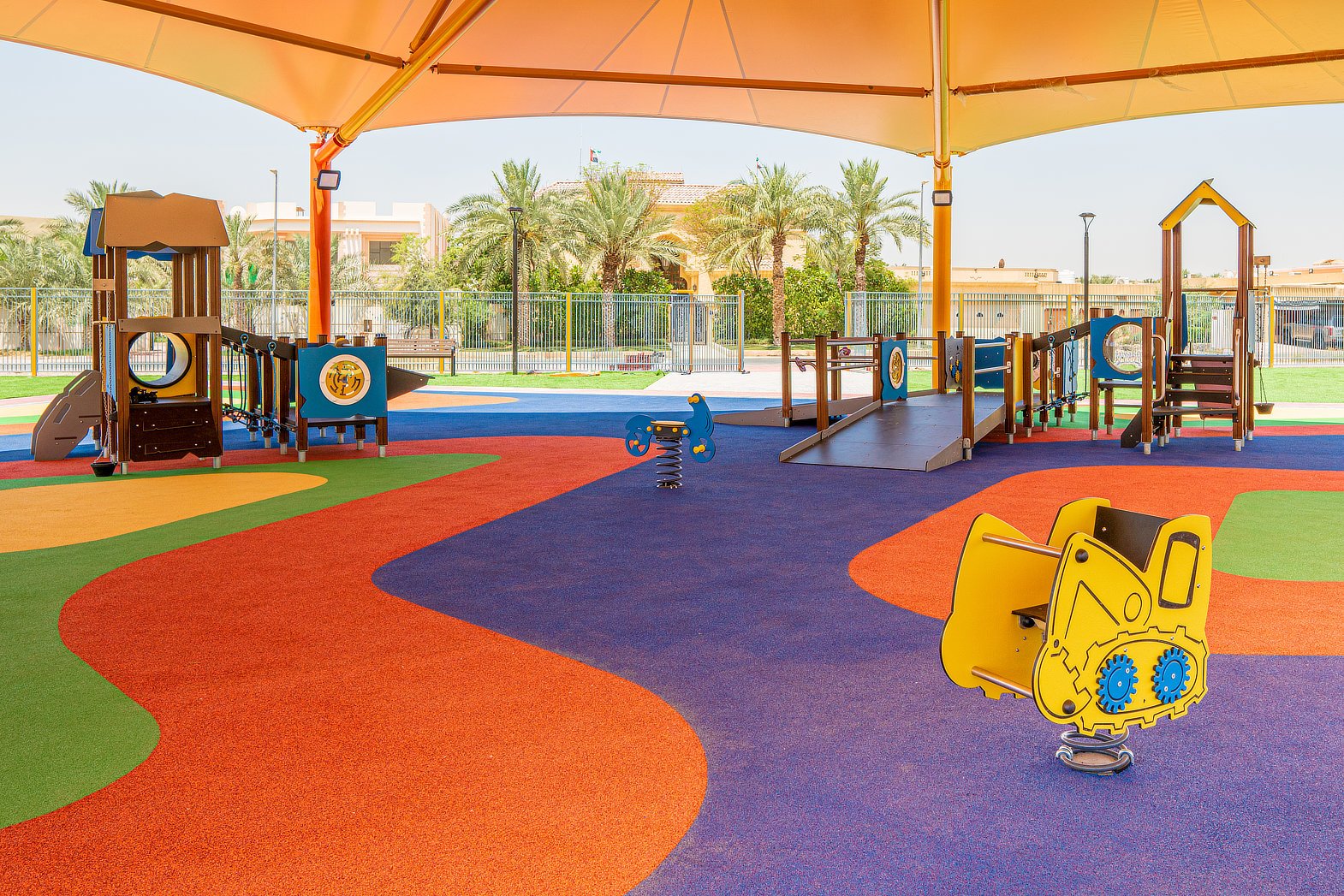
Play towers are the centrepiece of a playground, raised platforms linked by bridges, slides, climbers and dens that pack a whole adventure into one multi-play structure.
View play towers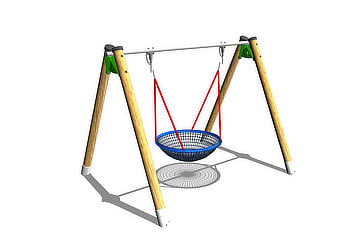
Swings, springers and spinners deliver the movement children love, the swing of a nest, the bounce of a springer and the spin of a roundabout, building balance, core strength and coordination.
View swings, springers & spinners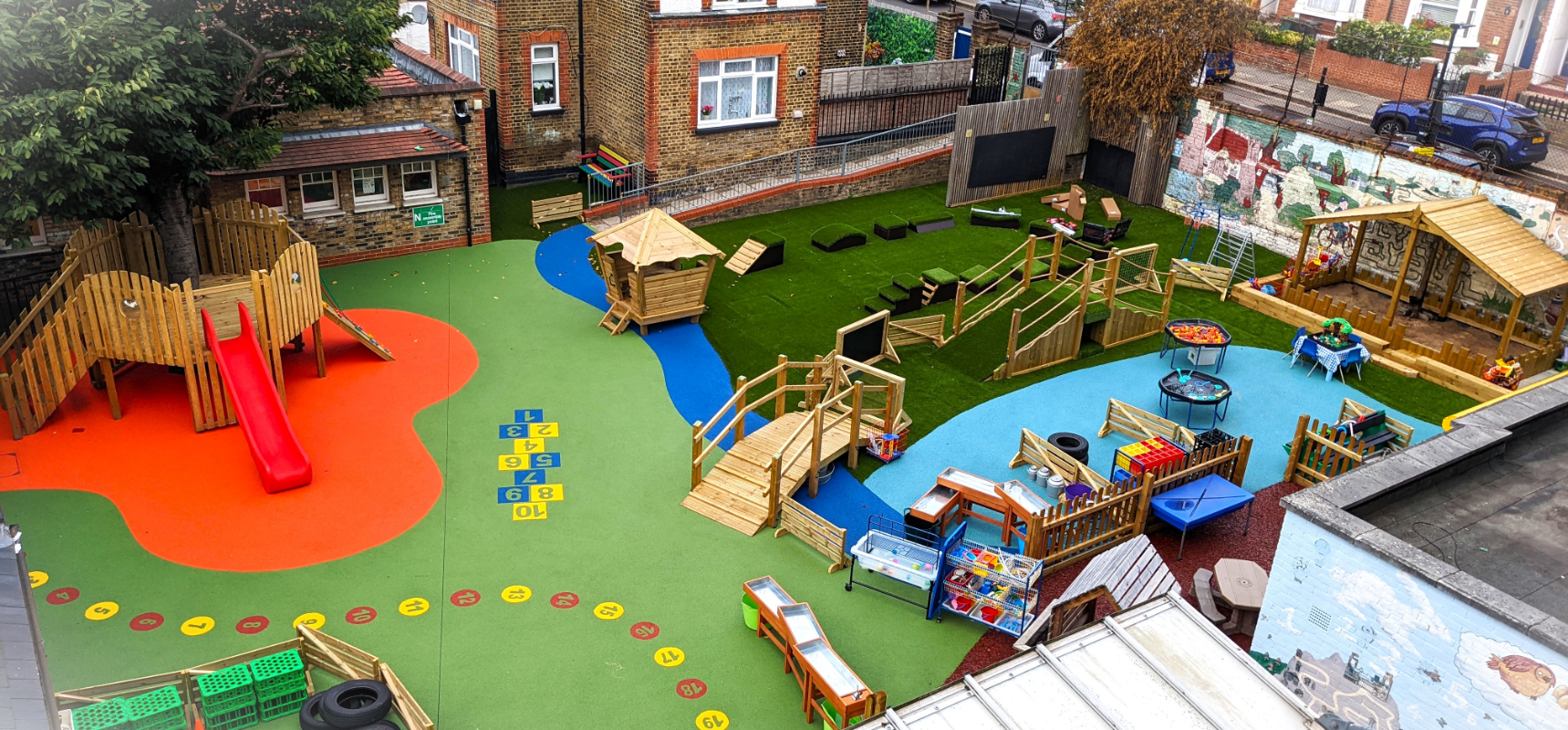
An aerial runway, the playground zip wire, is the biggest thrill in the play area: children grab the seat or handle and ride the cable from end to end, building grip strength and nerve.
View aerial runways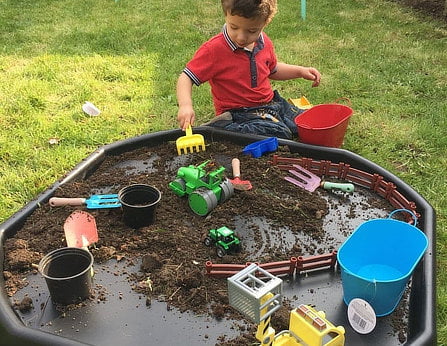
A mud kitchen is where the best early-years learning happens, a sturdy outdoor kitchen with sink, hob and worktop where children mix, pour, stir and make-believe, building language, science and fine motor skills.
View mud kitchens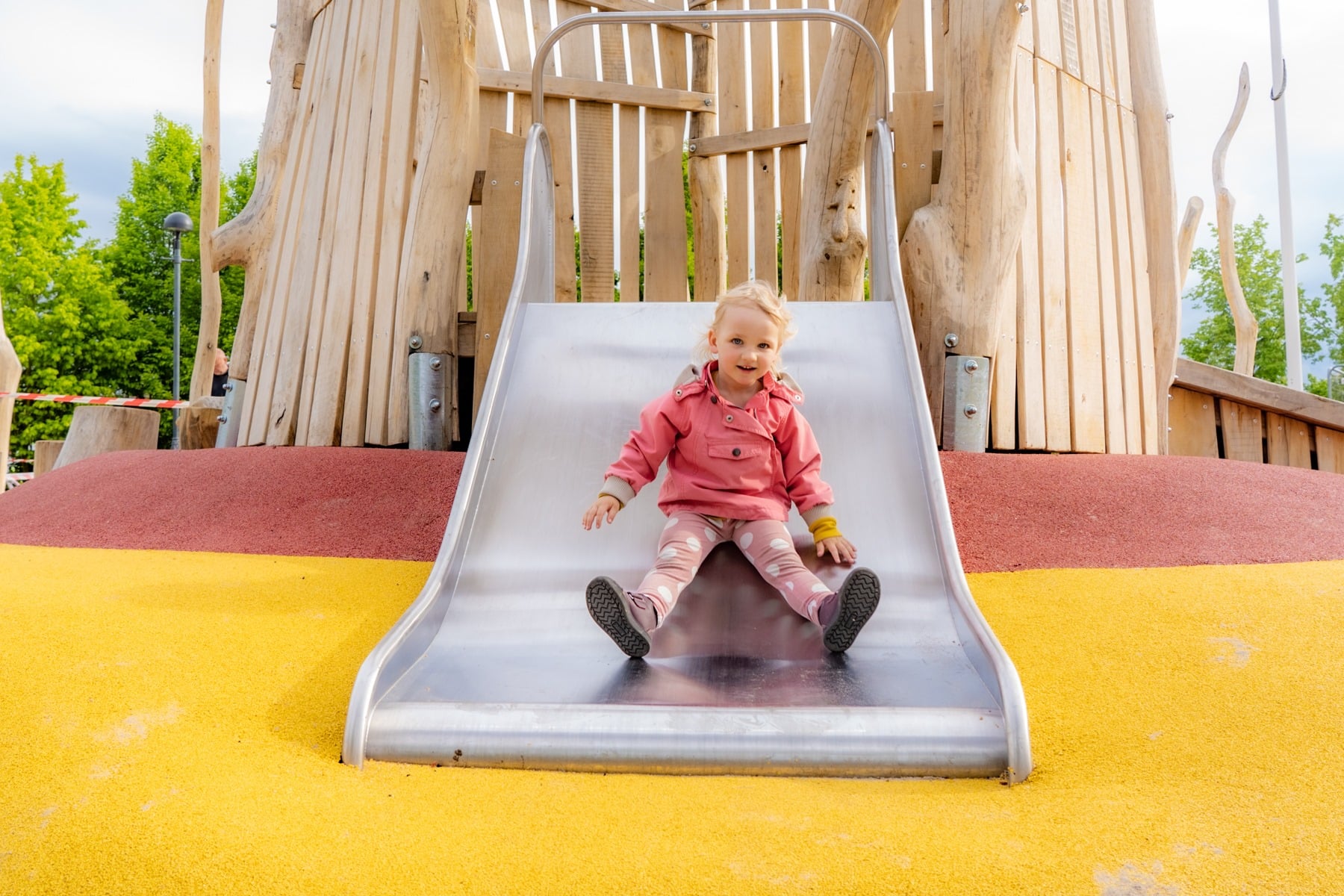
Metal playground equipment is built for the long haul, powder-coated steel frames, slides and climbers that shrug off heavy use and weather, ideal for high-traffic and public play areas.
View metal play equipmentBook a free site visit and we'll measure up, recommend the right surface and send a clear, fixed quote.