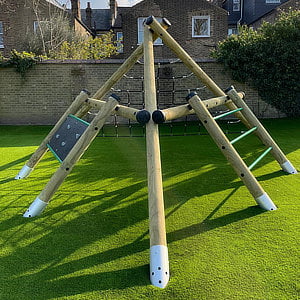
Climbing Frames
Climbing frames give children the height, challenge and problem-solving that build strength and confidence, multi-activity structures with climbers, nets, walls and slides, all tested to BS EN 1176.
View climbing framesA mud kitchen is where the best early-years learning happens, a sturdy outdoor kitchen with sink, hob and worktop where children mix, pour, stir and make-believe, building language, science and fine motor skills.
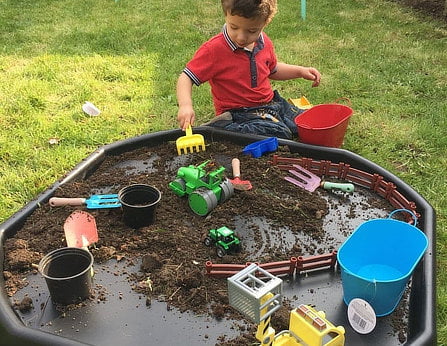
A mud kitchen is an outdoor play kitchen with a worktop, a sink or bowls, a hob and storage where children mix mud, water, sand and natural materials in open-ended, imaginative play. We build it as a cornerstone of the Early Years Foundation Stage (EYFS) and forest-school outdoor area, pairing it with a water tray, sand and planting to widen the play.
There is no single right way to use one, so children return to it again and again and lead their own learning. That open-ended quality is why a mud kitchen sits at the heart of a messy-play zone rather than to one side of it, feeding into role-play, water play and sensory work.
We build our mud kitchens from hardwood, using naturally durable timbers such as larch, cedar or FSC redwood that stand up to constant water, mud and weather without rotting. A unit carries a worktop, a sink or removable rubber tubs, a hob, shelves and hooks for pots and utensils, manufactured to the principles of BS EN 1176 for outdoor play equipment.
We site each kitchen on a surface that copes with the mess, whether grass, bark or wet-pour rubber, and level the ground so the unit sits square and stable. Fixed and free-standing layouts both work; we set the position within a dedicated early-years zone alongside planters, playhouses and role-play units, and can add a water tray and sand pit next to it.
A mud kitchen suits children from roughly 18 months to 8 years, which covers the whole Early Years Foundation Stage (EYFS) through to Key Stage 1 messy play. We install them in nursery gardens, school early-years areas, forest-school sites and childminder settings across England and Wales, wherever open-ended outdoor learning has a place.
Worktop height is set to the group: around 50cm suits toddlers and up to 70cm suits older children, so we specify by the age of the children using it. A mud kitchen works best in a zone built around it, next to a sensory play area and a themed and role-play setup for a joined-up early-years space.
A school-grade mud kitchen costs around 300 to 900 pounds supplied, with compact single units from about 150 pounds and larger multi-station kitchens with a sink, hob and storage reaching 600 to 900 pounds or more. These are indicative ranges to confirm at survey, not fixed prices: the timber, the size, the number of stations and any water tray or sand pit alongside all move the figure.
Installation and groundworks are separate where the ground needs levelling or a surface laid to cope with the mess. Adding a water tray, sand and a set of real pots, pans and utensils adds roughly 50 to 200 pounds. For a firm number, get a mud kitchen quote and we will price your exact area.
Our mud kitchens are manufactured to the principles of BS EN 1176, the European standard for playground equipment, covering entrapment gaps, finger and head traps, sharp edges and stable construction. Because a mud kitchen is low-level and free-standing, it carries no free height of fall to attenuate, so BS EN 1177 safety surfacing is not required beneath it as it is under climbing equipment.
We use timber free of splinters and finish it so there are no sharp fixings within a child's reach, and we recommend routine visual checks in line with the RoSPA and RPII inspection regimes schools already run. Where you want it, we can arrange independent inspection alongside the rest of your play area to keep one record for the whole site.
A mud kitchen runs from about 80cm wide for a single unit up to 180cm for a multi-station kitchen, with a worktop set between 50cm and 70cm high and a depth of roughly 40cm to 50cm. We build in naturally durable hardwood, larch, cedar, robinia or FSC redwood, chosen because it resists rot under daily water and weather without chemical treatment.
The table below sets out how the main sizes compare on footprint, worktop height, the age group they suit and indicative cost, so you can match a unit to your space and children.
| Unit | Footprint (W x D) | Worktop height | Age group | Indicative cost | Best for |
|---|---|---|---|---|---|
| Single mud kitchen | ~80cm x 40cm | ~50cm | 18 months to 4 years | £150 to £350 | Toddler rooms and compact early-years corners |
| Double mud kitchen | ~120cm x 45cm | ~50cm to 60cm | 2 to 6 years | £350 to £600 | Nursery gardens and busy EYFS areas |
| Multi-station kitchen with sink and hob | ~150cm to 180cm x 50cm | ~60cm to 70cm | 3 to 8 years | £600 to £900+ | School early-years zones and forest school |
Indicative UK ranges to confirm on a site survey. Dimensions vary by model; water tray and sand pit are priced separately.
A hardwood mud kitchen lasts around 8 to 15 years in daily school use, with naturally durable larch reaching the upper end of that band and longer again where the unit dries between sessions rather than sitting permanently wet. We build in timber that resists rot so the frame holds up under constant mud, water and weather.
Removable rubber tubs and utensils are the parts that wear first, and those are cheap to replace, so the kitchen itself keeps going well past them. An annual oil or check of the timber and fixings keeps it sound; we also repair and refresh units rather than replace them where the frame is still good.
A mud kitchen builds language, early science and fine motor skills through play children choose and lead themselves. Role-play grows vocabulary as they run a mud cafe or serve soup; measuring, mixing and pouring build early maths and science; stirring and scooping develop hand-eye coordination and grip strength.
Because the play is open-ended, a mud kitchen is one of the most-used items in any early-years outdoor area, drawing children back day after day. It supports the EYFS characteristics of effective learning, works in all weather, and connects naturally to sensory play, water and sand for a fuller messy-play offer. Sitting it in an early-years zone alongside planting and role-play turns a single unit into a learning space.
Commercial Play designs, supplies and installs mud kitchens and full early-years areas in-house across England and Wales, so one team owns the job from survey to handover. We build in naturally durable hardwood to the principles of BS EN 1176, and site each unit on ground and surfacing that copes with the mess rather than dropping a kitchen onto whatever is there.
We plan the whole zone, not just the kitchen, pairing it with a water tray, sand, planting and themed and role-play units so the space works as one. See the full range on our play equipment page, then talk to us about your early-years area and we will tell you honestly what it needs.
A mud kitchen is an outdoor play kitchen with a worktop, a sink or bowls, a hob and storage, where children mix mud, water, sand and natural materials in imaginative, open-ended play. It is a staple of the Early Years Foundation Stage (EYFS) and forest-school outdoor learning, and works best in a messy-play zone alongside water and sand play.
A great deal: language and vocabulary through role-play, early maths and science through measuring, mixing and pouring, and fine motor skills through stirring and scooping. All of it comes through play children choose and lead themselves, which is why a mud kitchen supports the EYFS characteristics of effective learning.
We build mud kitchens from naturally durable hardwood such as larch, cedar, robinia or FSC redwood, chosen because it resists rot under constant water, mud and weather. The timber is finished free of splinters and sharp fixings, and removable rubber tubs and utensils are easy to clean and cheap to replace.
A school-grade mud kitchen costs around 300 to 900 pounds supplied, with compact single units from about 150 pounds and larger multi-station kitchens reaching 600 to 900 pounds or more. Adding a water tray, sand and real pots and utensils adds roughly 50 to 200 pounds. These are indicative ranges to confirm on a site survey.
A mud kitchen suits children from roughly 18 months to 8 years, covering the whole EYFS through to Key Stage 1. We set the worktop height to the group, around 50cm for toddlers and up to 70cm for older children, so the unit fits the children using it.
We manufacture mud kitchens to the principles of BS EN 1176, the European playground equipment standard, covering entrapment gaps, finger and head traps, sharp edges and stable construction. As a low, free-standing unit it has no fall height, so BS EN 1177 safety surfacing is not required beneath it as it is under climbing equipment.
A hardwood mud kitchen lasts around 8 to 15 years in daily school use, with naturally durable larch reaching the upper end and longer again where it dries between sessions rather than sitting permanently wet. An annual oil and a check of the timber and fixings keeps it sound, and we repair units rather than replace them where the frame is still good.
A water tray, sand, planting and a few real pots, pans and utensils extend the play. A mud kitchen also works well alongside playhouses and role-play units, so we usually build a dedicated early-years zone around it rather than siting the kitchen on its own.
Yes. We level the ground so the unit sits square and stable, and site it on a surface that copes with the mess, whether grass, bark or wet-pour rubber. We plan the whole early-years zone, so the kitchen, its surfacing and the water and sand play are set out together as one space.
Part of our full play equipment range, explore the other surfaces below.
Climbing frames give children the height, challenge and problem-solving that build strength and confidence, multi-activity structures with climbers, nets, walls and slides, all tested to BS EN 1176.
View climbing frames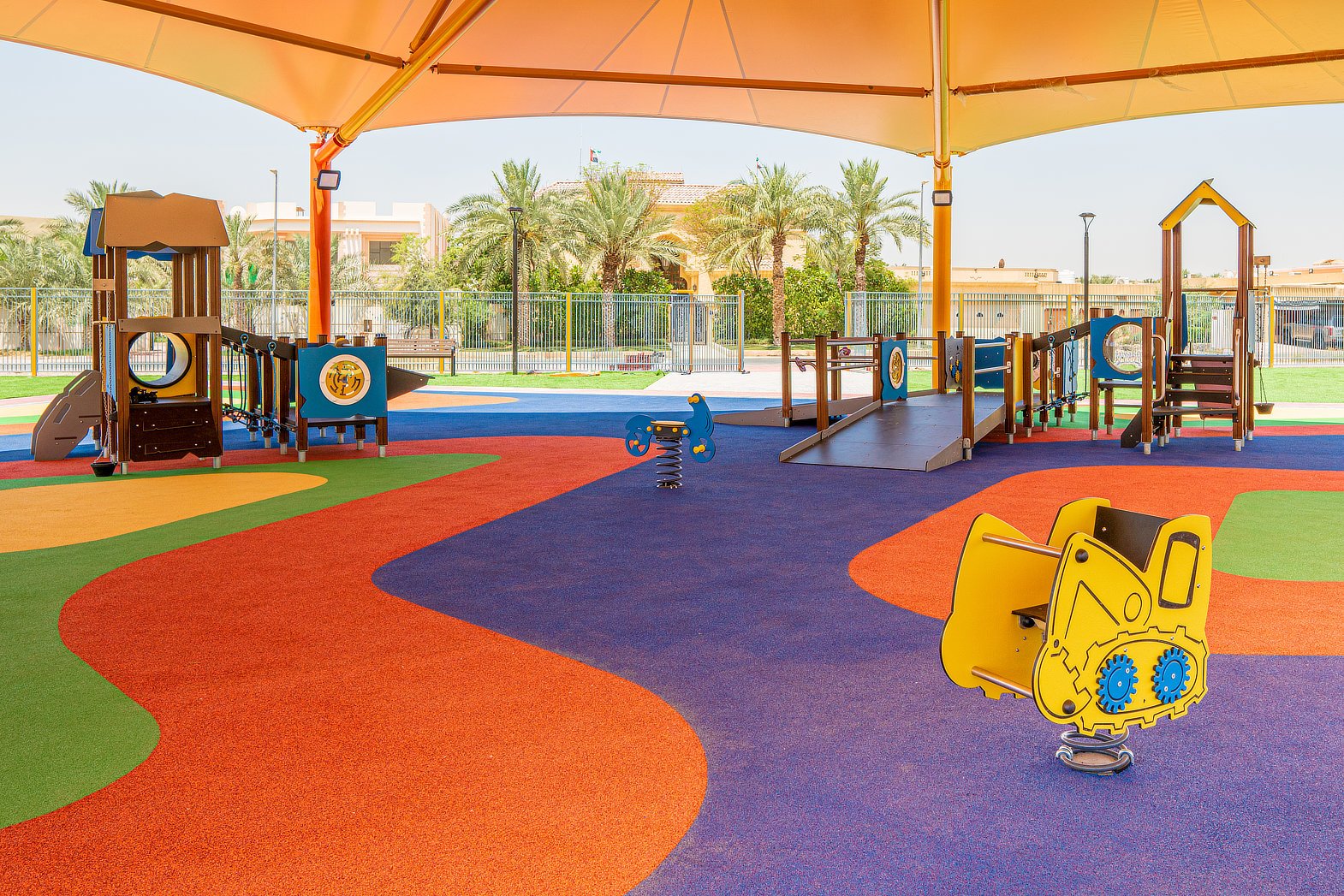
Play towers are the centrepiece of a playground, raised platforms linked by bridges, slides, climbers and dens that pack a whole adventure into one multi-play structure.
View play towers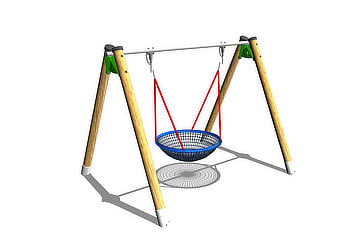
Swings, springers and spinners deliver the movement children love, the swing of a nest, the bounce of a springer and the spin of a roundabout, building balance, core strength and coordination.
View swings, springers & spinners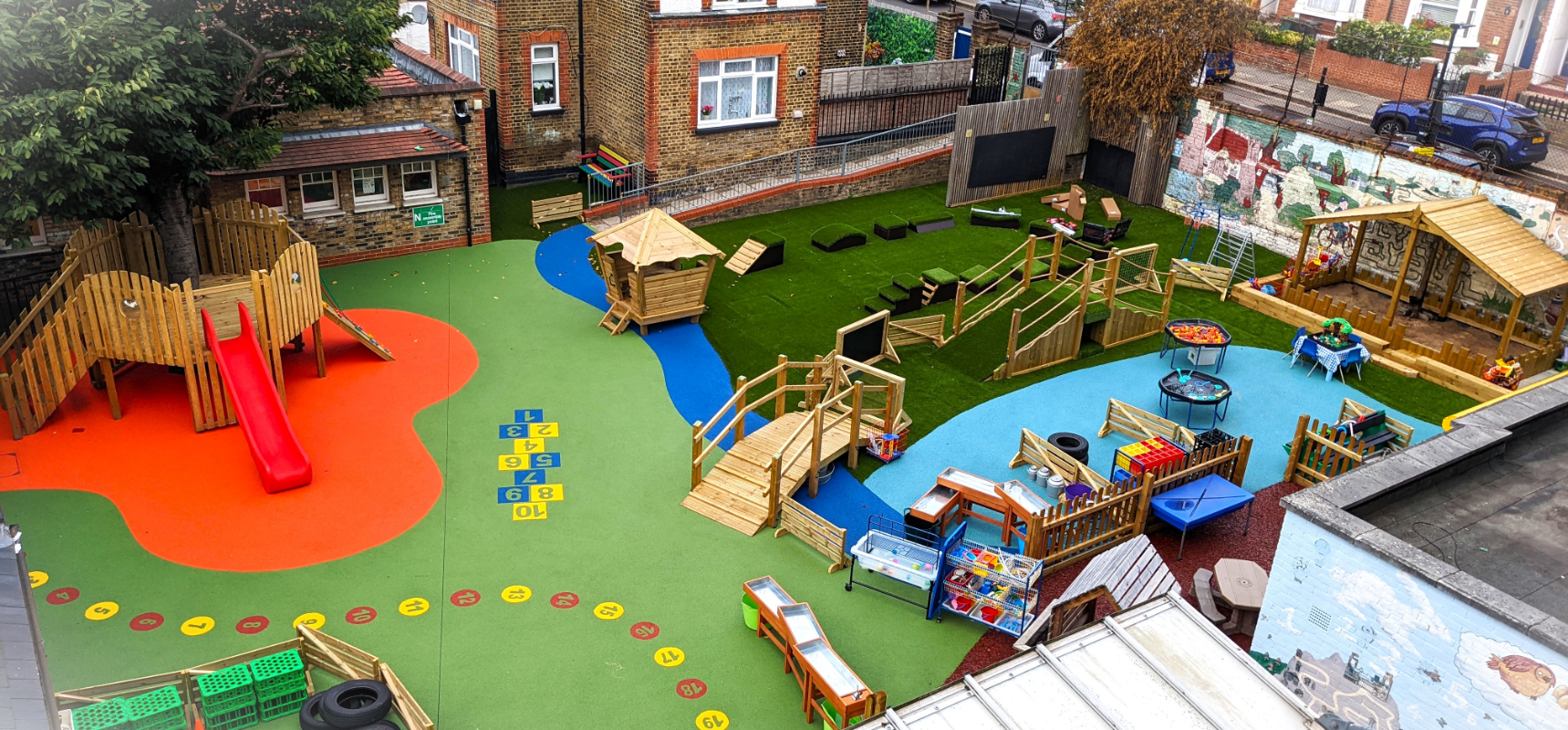
An aerial runway, the playground zip wire, is the biggest thrill in the play area: children grab the seat or handle and ride the cable from end to end, building grip strength and nerve.
View aerial runways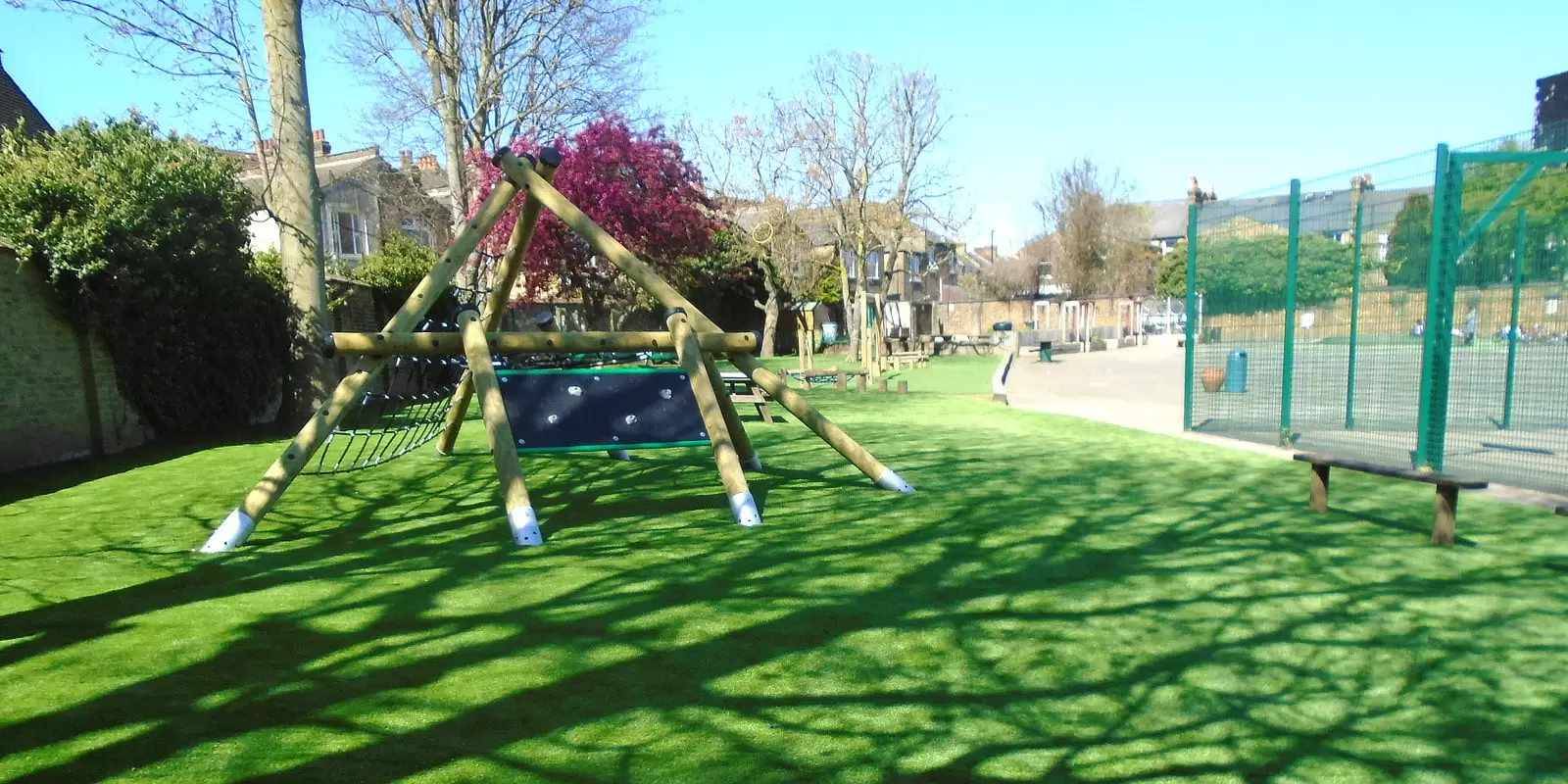
A traverse wall is a low climbing wall you move across rather than up, children work sideways along the holds, close to the ground, building grip and problem-solving with minimal fall risk.
View traverse walls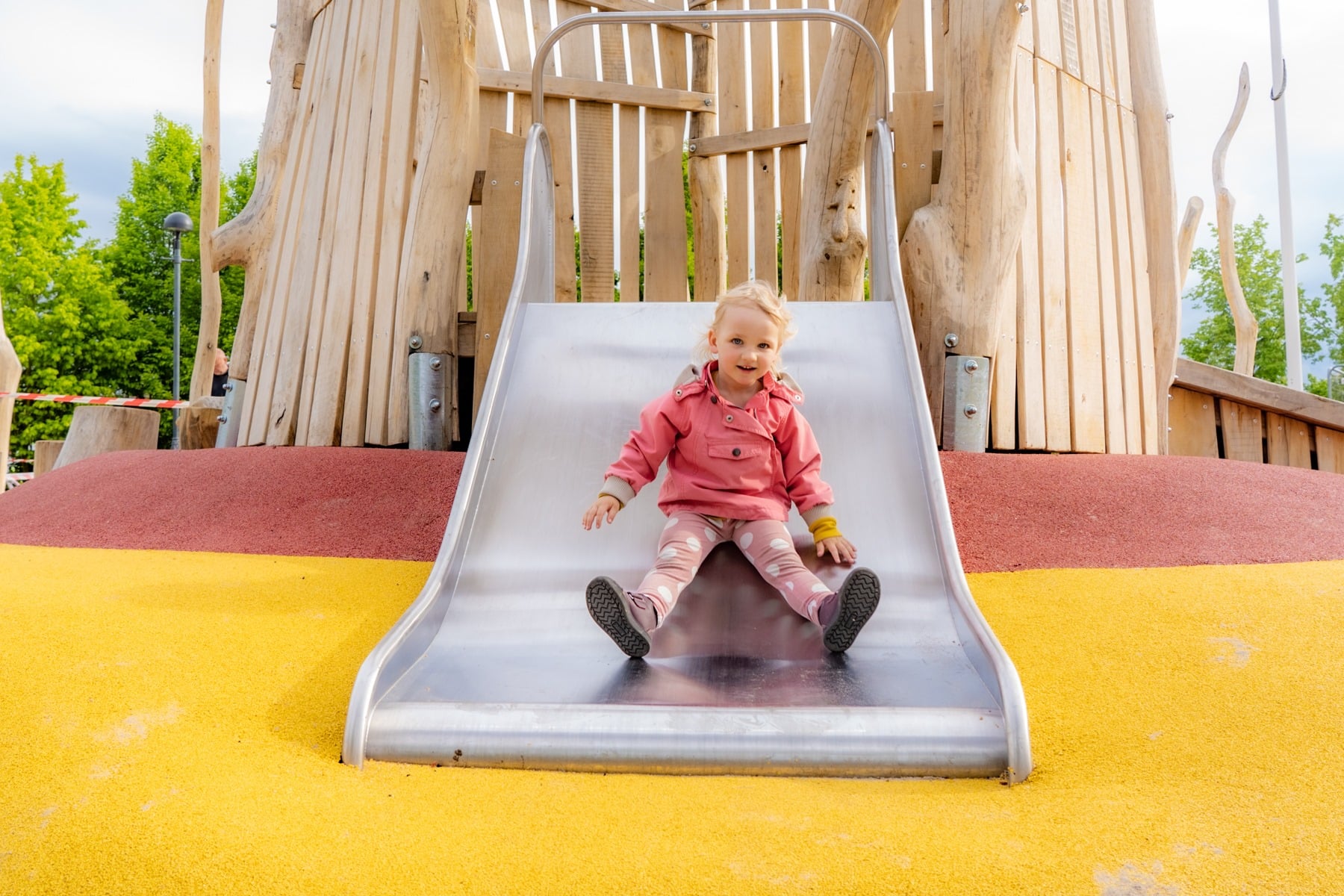
Metal playground equipment is built for the long haul, powder-coated steel frames, slides and climbers that shrug off heavy use and weather, ideal for high-traffic and public play areas.
View metal play equipmentBook a free site visit and we'll measure up, recommend the right surface and send a clear, fixed quote.