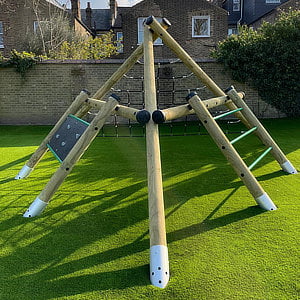
Climbing Frames
Climbing frames give children the height, challenge and problem-solving that build strength and confidence, multi-activity structures with climbers, nets, walls and slides, all tested to BS EN 1176.
View climbing framesSwings, springers and spinners deliver the movement children love, the swing of a nest, the bounce of a springer and the spin of a roundabout, building balance, core strength and coordination.
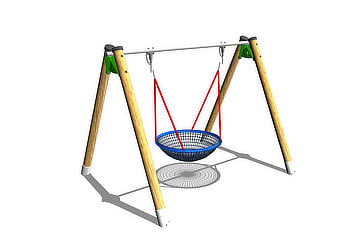
Swings, springers and spinners are the moving items in a playground, and we install them to BS EN 1176 as three families: swings that travel to and fro, spring rockers that bounce, and roundabouts and spinners that turn. Swings cover flat-seat, cradle (bucket), basket and nest types; springers are seats mounted on a heavy coil spring; spinners and roundabouts rotate for the vestibular input children seek out.
Movement play develops balance, core strength and the vestibular sense that underpins coordination, which is why we treat these items as one set rather than a single product. We supply inclusive options across all three, from basket and nest swings a group can share to low cradle swings and wheelchair-accessible roundabouts, so children of all abilities move together. Pair them with climbing frames and play towers to build a complete play area.
We build swings, springers and spinners on hot-dip galvanised steel frames with HDPE panels and calibrated stainless-steel chains, set into concrete foundations to BS EN 1176. The galvanising resists corrosion outdoors for years, the HDPE holds its colour, and the calibrated chain link sizing is designed to stop finger entrapment on the swinging seats.
Installation is a groundworks job first: we excavate and cast the foundations, set the frame or centre column plumb, then fit the seats, spring units or rotating deck. Because moving items sweep a large arc, we plan their position within the wider layout so the safety zone stays clear of paths and other equipment, then lay the correct fall-height safety surfacing to BS EN 1177 beneath. A flat swing needs roughly 1.75m of clear space to the front and back of its arc, and a roundabout needs a clear sweep around its full diameter.
Swings, springers and spinners suit every age from early years to KS2 and secondary, with the type graded to the age group under BS EN 1176. Low spring rockers and cradle (bucket) swings suit the early years; flat-seat and nest swings suit primary; and basket swings and roundabouts let several children ride together, including wheelchair users on accessible units.
A nest swing is a firm favourite for schools because a group can share it and children can lie back and relax on it, which also makes it one of the most inclusive moving items we fit. We specify the mix to your pupils and your space, then link the inclusive versions into the wider inclusive and SEN play range so movement play is open to all abilities, not a separate add-on.
A spring rocker costs around 400 to 900 pounds supplied, a single flat or cradle swing bay around 900 to 2,000 pounds, a nest or basket swing around 1,500 to 3,500 pounds, and a roundabout or inclusive spinner around 2,500 to 8,000 pounds, before installation. These are indicative UK supply ranges to confirm at survey, not fixed prices, and inclusive wheelchair-accessible roundabouts sit at the top of the range.
Installation adds the groundworks, concrete foundations and the fall-height surfacing beneath, which the moving arc makes larger than for a static item. Your final figure is driven by the number of bays, whether the unit is inclusive, the ground conditions and access, and the safety surfacing type. For a firm number, get a play equipment quote and we will price your exact site.
| Item | Typical age range | Indicative supply cost | Safety zone / space | Standard |
|---|---|---|---|---|
| Spring rocker (springer) | 2 to 6 years | £400 to £900 | ~2m clear around the seat | BS EN 1176-6 |
| Cradle / flat-seat swing bay | 2 to 11 years | £900 to £2,000 | ~1.75m front and back of arc | BS EN 1176-2 |
| Nest / basket swing | 3 to 14 years | £1,500 to £3,500 | ~1.75m front and back of arc | BS EN 1176-2 |
| Roundabout / inclusive spinner | 4 to 14 years | £2,500 to £8,000 | Clear sweep around full diameter | BS EN 1176-5 |
Indicative UK supply ranges to confirm against your own pricing at survey. Installation, foundations and fall-height surfacing are additional. Inclusive wheelchair-accessible roundabouts sit at the top of the range.
Swings, springers and spinners are governed by BS EN 1176, the playground equipment standard, split by item type: Part 2 covers swings, Part 5 covers roundabouts and carousels, and Part 6 covers rocking equipment such as springers. The safety surfacing beneath them is governed separately by BS EN 1177, matched to each item's free height of fall.
Safety surfacing is required wherever the free height of fall exceeds 0.6m, up to the 3m playground maximum, and swings sit at the demanding end because the seat travels through an arc rather than staying still. That is why the safety zone extends about 1.75m to the front and back of a swing and around the full sweep of a roundabout. We specify and install to both standards, and can arrange independent RPII or RoSPA post-installation inspection where you want the job signed off.
Swings need a safety zone extending about 1.75m to the front and back of the seat's arc, which is the single largest space demand of any moving item, while roundabouts need a clear sweep around their full diameter and spring rockers need roughly 2m of clear space around the seat. These impact areas must be surfaced to BS EN 1177 for the item's free height of fall.
Getting the zone right is why we plan moving items into the layout early rather than fitting them last. We keep the swing arc and roundabout sweep clear of paths, fences and other equipment, deepen the fall-height surfacing to match the seat height, and confirm the free height of fall on survey. A nest swing carries a larger frame and arc than a single flat swing, so it needs a correspondingly wider clear zone, which we allow for at the design stage.
Swings, springers and spinners typically last 10 to 15 years on a hot-dip galvanised steel frame with routine care, with the galvanising and paint finish often warranted against significant corrosion for around 7 years and HDPE panels lasting longer still. The steel frame and centre columns are the long-life parts; the wearing items are the seats, chains, bearings and spring units.
We service and refresh moving items rather than default to full replacement: swing seats and calibrated chains, roundabout bearings and springer springs are all replaceable parts, so a frame installed a decade ago can be brought back to a fully compliant condition. Regular RPII inspection catches wear on these moving parts early, which is one reason moving equipment benefits most from a routine inspection schedule.
Swings, springers and spinners give children the vestibular movement they naturally seek, building balance, core strength and coordination in a way static equipment cannot, all installed to BS EN 1176 over fall-height surfacing to BS EN 1177. Movement is the draw, and a nest swing or roundabout adds a social element because a group rides together.
Beyond the physical development, these items widen access and shared play. Basket and nest swings and wheelchair-accessible roundabouts let children of different abilities move side by side, the calibrated chains and HDPE seats are designed for safe, hard-wearing outdoor use, and the hot-dip galvanised frames stand up to British weather for years. We match the type to each age group, from cradle swings and low springers for the early years up to nest swings and spinners for older pupils.
Commercial Play designs, supplies and installs swings, springers and spinners in-house across England and Wales, so one team owns the job from survey to handover, including the concrete foundations and the fall-height surfacing beneath. We plan the swing arc and roundabout sweep into the wider layout so the safety zones stay clear, then install to BS EN 1176 and BS EN 1177.
We fit the full range of moving items, including inclusive basket and nest swings and wheelchair-accessible roundabouts, so our recommendation follows your pupils and your site rather than one product. We also service and refresh worn seats, chains, bearings and springs instead of defaulting to replacement, extending the life of what you already have. Talk to us about your play area and we will tell you honestly what it needs.
We install flat-seat swings, cradle (bucket) swings for younger children, and basket or nest swings that a group can share, all to BS EN 1176 Part 2. Inclusive and wheelchair-accessible movement options are available across the range, and a nest swing is one of the most popular because several children can ride it at once.
A springer, or spring rocker, is a seat mounted on a heavy coil spring that children rock and bounce on, governed by BS EN 1176 Part 6. Scaled for the early years at around 2 to 6 years, springers are a low, hard-wearing way to add movement play for younger children, costing roughly 400 to 900 pounds supplied.
Yes, when correctly specified, installed and surfaced. Modern roundabouts and spinners are designed to BS EN 1176 Part 5 with controlled speed and a clear sweep around their full diameter, over fall-height surfacing to BS EN 1177, and inclusive versions let wheelchair users join in.
Indicatively, a single flat or cradle swing bay is around 900 to 2,000 pounds supplied, a nest or basket swing around 1,500 to 3,500 pounds, and a roundabout or inclusive spinner around 2,500 to 8,000 pounds, before installation and surfacing. These are UK supply ranges to confirm at survey, as bay count, inclusivity and access all move the figure.
Swings need a safety zone of about 1.75m to the front and back of the seat's arc, roundabouts need a clear sweep around their full diameter, and spring rockers need roughly 2m of clear space, all surfaced to BS EN 1177. We plan moving items into the layout early so their zones stay clear of paths and other equipment.
Fall-height safety surfacing to BS EN 1177 is required wherever the free height of fall exceeds 0.6m, up to the 3m maximum, and it must cover the full swing arc and roundabout sweep. We install wet pour, rubber mulch or grass mats to match the seat height; see our playground surfacing options.
On a hot-dip galvanised steel frame they typically last 10 to 15 years with routine care, with the galvanising often warranted against significant corrosion for around 7 years. Seats, chains, bearings and springs are replaceable wearing parts, so we service and refresh moving items rather than default to full replacement.
Yes. We fit basket and nest swings that a group can share and wheelchair-accessible roundabouts so children of all abilities move together, all to BS EN 1176. These link into our wider inclusive and SEN play range rather than being a separate add-on.
Part of our full play equipment range, explore the other surfaces below.
Climbing frames give children the height, challenge and problem-solving that build strength and confidence, multi-activity structures with climbers, nets, walls and slides, all tested to BS EN 1176.
View climbing frames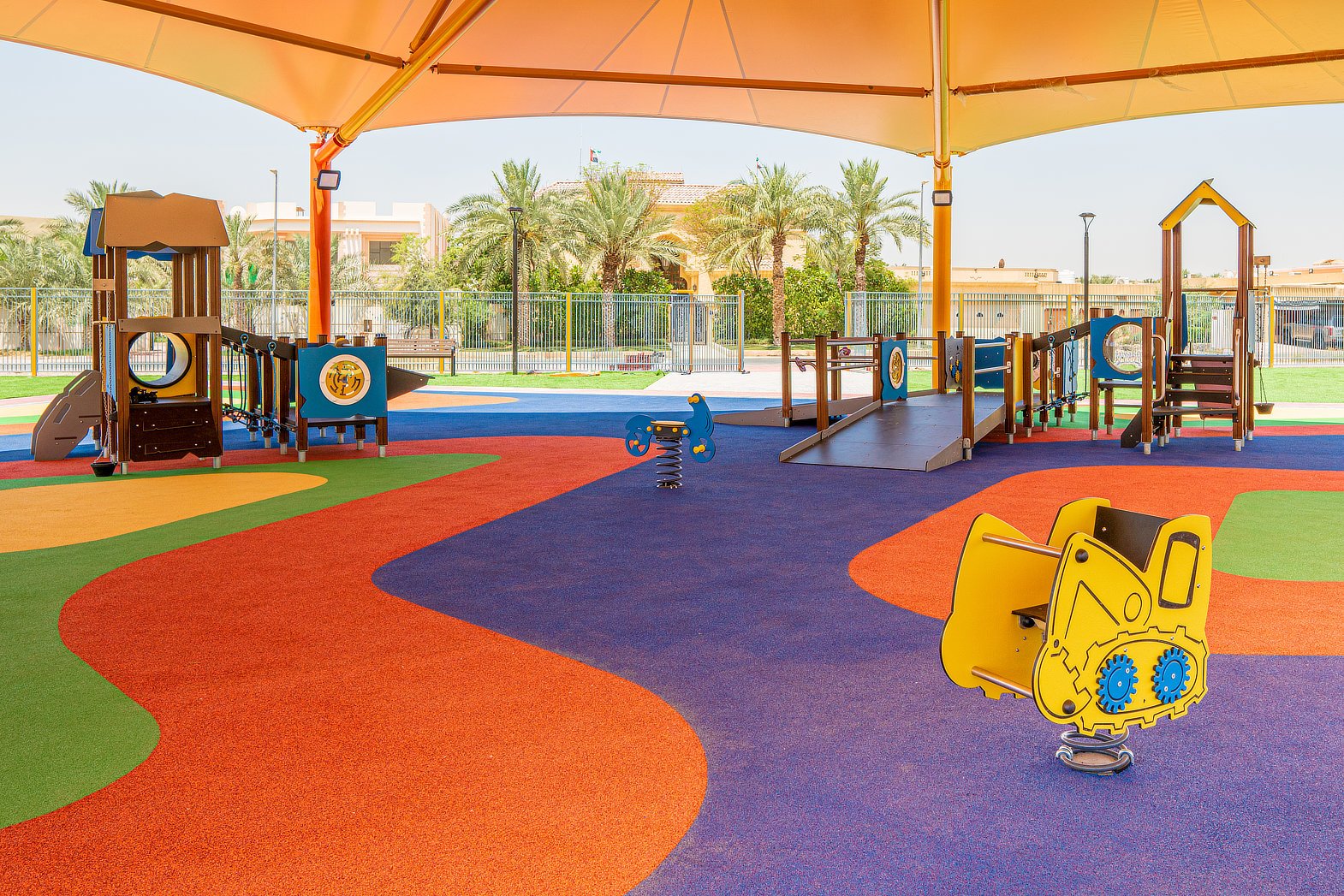
Play towers are the centrepiece of a playground, raised platforms linked by bridges, slides, climbers and dens that pack a whole adventure into one multi-play structure.
View play towers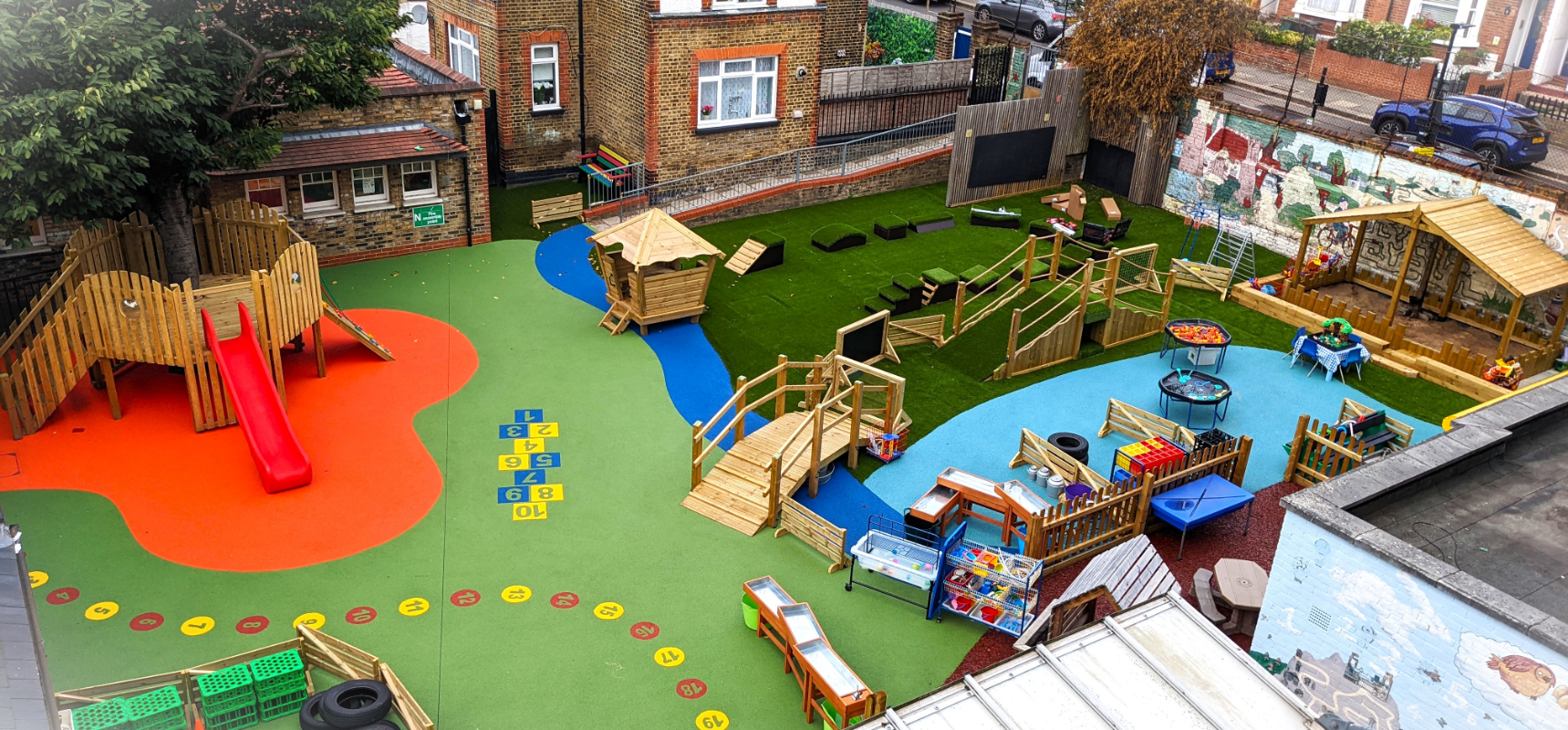
An aerial runway, the playground zip wire, is the biggest thrill in the play area: children grab the seat or handle and ride the cable from end to end, building grip strength and nerve.
View aerial runways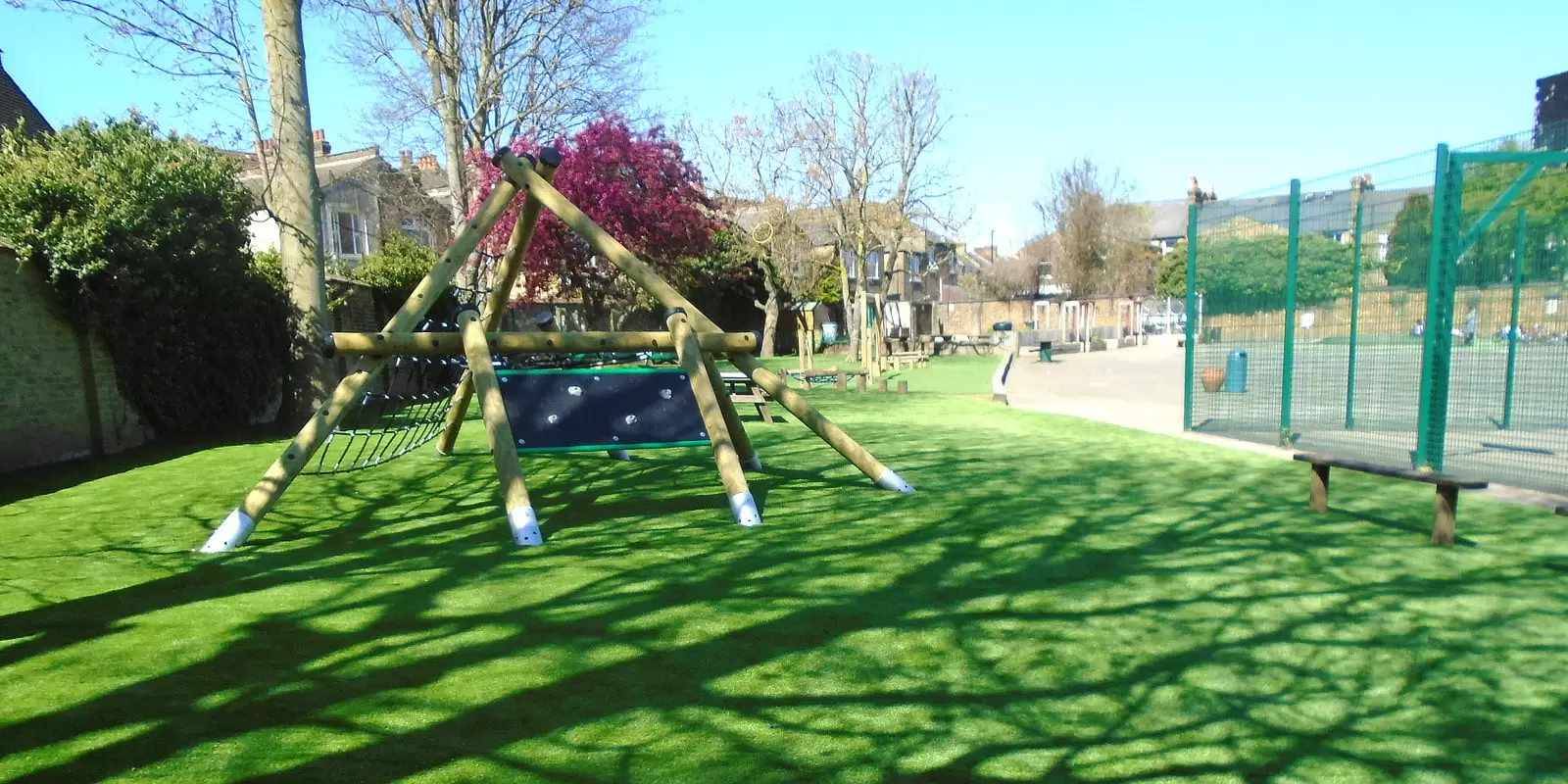
A traverse wall is a low climbing wall you move across rather than up, children work sideways along the holds, close to the ground, building grip and problem-solving with minimal fall risk.
View traverse walls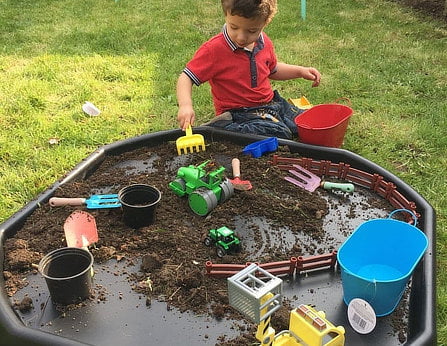
A mud kitchen is where the best early-years learning happens, a sturdy outdoor kitchen with sink, hob and worktop where children mix, pour, stir and make-believe, building language, science and fine motor skills.
View mud kitchens
Metal playground equipment is built for the long haul, powder-coated steel frames, slides and climbers that shrug off heavy use and weather, ideal for high-traffic and public play areas.
View metal play equipmentBook a free site visit and we'll measure up, recommend the right surface and send a clear, fixed quote.