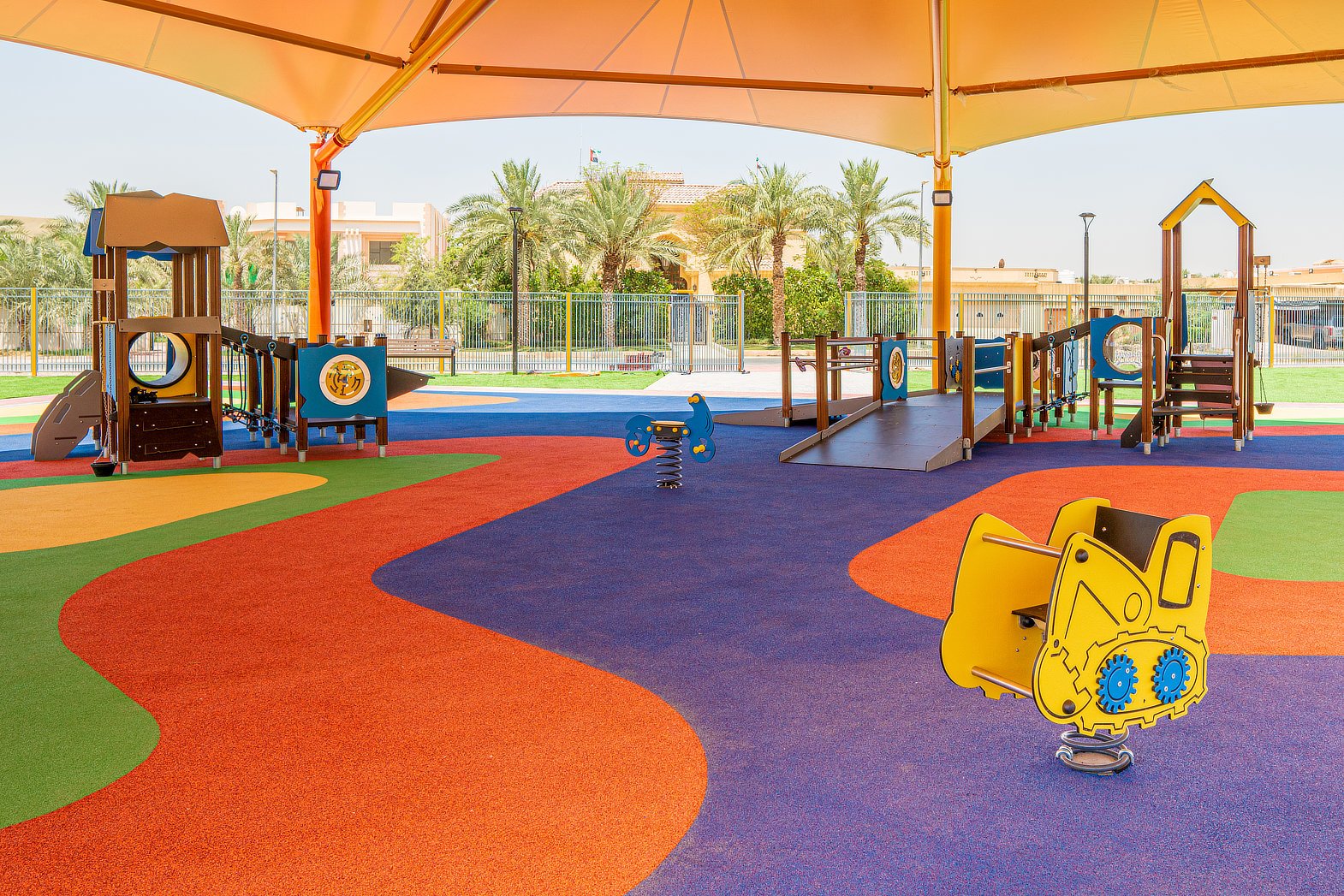
Play Towers
Play towers are the centrepiece of a playground, raised platforms linked by bridges, slides, climbers and dens that pack a whole adventure into one multi-play structure.
View play towersClimbing frames give children the height, challenge and problem-solving that build strength and confidence, multi-activity structures with climbers, nets, walls and slides, all tested to BS EN 1176.
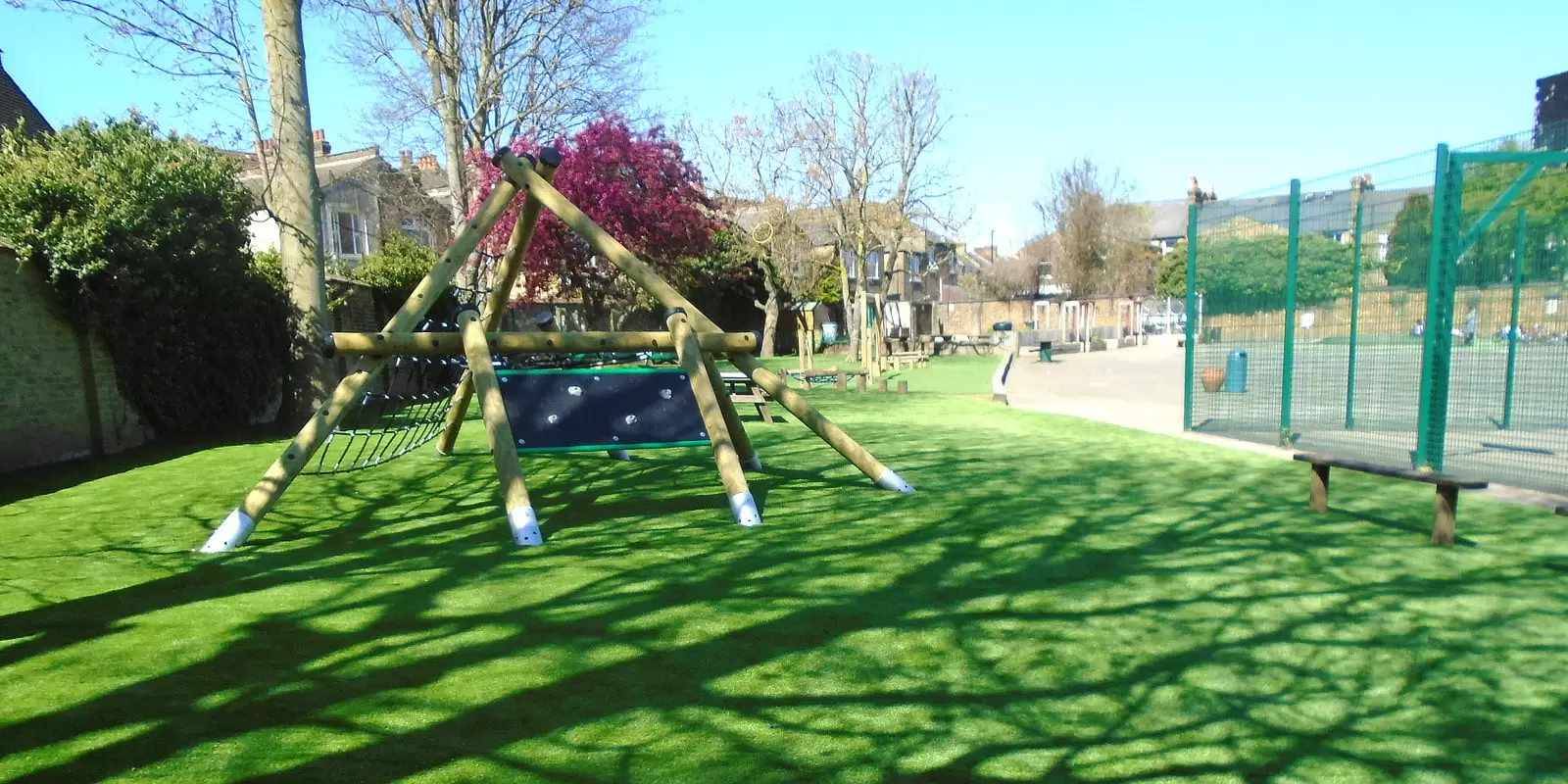
A playground climbing frame is a multi-activity play structure that combines climbers, scramble nets, rock walls, bridges and often a slide into one unit, manufactured and installed to BS EN 1176. Children pick their own route up, over and through it, building upper-body strength, coordination and the confidence to take on a challenge.
We design each frame around three inputs: the age group using it, the footprint you have, and the Critical Fall Height its surfacing must protect. Multiple entry points let a whole group climb at once, and a mix of easy and harder routes keeps every ability engaged.
We build playground climbing frames from four material families: Scandinavian Redwood timber pressure-treated with Tanalith E, galvanised and powder-coated steel, moulded HDPE panels, and steel-reinforced rope for nets and traverses. Fixings are zinc-plated, timber posts sit in galvanised post shoes, and every component is specified for outdoor school use.
We install the frame to BS EN 1176 over safety surfacing to BS EN 1177, then complete a post-installation inspection report on handover. Ground works set out the footings, the frame is assembled and anchored, and the fall-safe surface (wet pour, rubber mulch, grass mats or artificial grass over a shockpad) is laid to the frame's Critical Fall Height before the area reopens.
Playground climbing frames are graded by age across the 3 to 13 range, from EYFS and KS1 up to KS2 and secondary. Low, simple units with wide steps and platforms around 0.6m suit the early years, while taller frames with nets, rock walls and free heights of fall up to 3m keep older pupils challenged.
We match the height and difficulty to the children who will use it, so a nursery gets a low, tactile unit and a junior school gets a taller multi-route structure. Pair a frame with a play tower for extra height, a traverse wall for low-level climbing, or an aerial runway for a thrill.
A commercial playground climbing frame costs from around 2,500 to 3,000 pounds for a standard unit, with larger multi-activity structures and custom designs running higher. This is the equipment figure to confirm at survey; the installed project cost rises once safety surfacing, ground works and the post-installation inspection are added.
Your final price is driven by the number of activities, the frame height, the material (timber, steel, HDPE or rope), and the Critical Fall Height the surfacing has to protect. Installing over sound existing surfacing can save on ground works, while a new fall-safe surface to BS EN 1177 adds to the total. For a firm number, get a climbing frame quote and we will price your exact site.
| Material | Typical age fit | Free height of fall | Indicative unit cost | Service life |
|---|---|---|---|---|
| Timber (Scandinavian Redwood, Tanalith E) | EYFS to KS2 | Up to 2.0m | From 2,500 to 6,000 pounds | 15 to 20 years |
| Galvanised & powder-coated steel | KS1 to secondary | Up to 3.0m | From 3,000 to 8,000 pounds | 15 to 25 years |
| HDPE panel & steel-reinforced rope | EYFS to secondary | Up to 3.0m | From 3,000 to 9,000 pounds | 10 to 15 years |
Indicative UK market ranges for the equipment only, to confirm against your own pricing at survey. Safety surfacing, ground works and inspection are quoted separately.
Playground climbing frames are governed by BS EN 1176, the European playground equipment standard, while the safety surfacing beneath them is governed by BS EN 1177. Part 1 covers general safety and test methods, Part 7 covers installation, inspection and maintenance, and Part 11 covers spatial networks such as climbing nets.
The surfacing beneath the frame must carry a Critical Fall Height equal to or above the frame's free height of fall, and a safety zone extends around the unit, typically at least 1.5m clear of static climbing elements. We design, install and inspect to these standards and issue a post-installation report; we can also arrange independent RPII or RoSPA sign-off where you want it.
A playground climbing frame follows the BS EN 1176 Part 7 inspection regime: daily or routine visual checks, weekly or monthly operational checks, and one annual main inspection by an RPII-qualified inspector. The annual inspection covers wear, foundations, fixings and the surfacing beneath.
Daily checks catch litter, vandalism and obvious damage; operational checks test moving parts, net tension and wear points; the annual RPII inspection is the formal structural sign-off. We provide the post-installation report at handover and can set up an ongoing annual inspection so the frame stays compliant year on year; see our full play equipment range for the wider provision we maintain.
A playground climbing frame lasts around 10 to 20 years depending on material and care, with pressure-treated timber frames often carrying a 15 to 20 year structural warranty and galvanised steel frames lasting longest. Timber in direct ground contact is warranted for a shorter period, which is why we use galvanised post shoes to keep the timber off the soil.
HDPE panels and steel-reinforced rope elements sit toward the 10 to 15 year end and are the parts most likely to need replacing first, which is why we design frames so single components can be swapped rather than the whole unit scrapped. We repair and refresh worn frames and re-tension nets rather than default to full replacement, extending the life of what you already have.
A playground climbing frame packs climbers, nets, walls and slides into one footprint, so a whole group stays active and challenged at once while you use less ground than several separate items. Climbing develops upper-body strength, balance, spatial judgement and the confidence to attempt a graded challenge.
Multiple entry points and mixed-difficulty routes let children of different abilities play side by side, which supports inclusive and mixed-age playtimes. Every frame is tested to BS EN 1176 with a post-installation inspection, and it is set over surfacing matched to its Critical Fall Height, so the impact protection is measured against the free height of fall rather than assumed.
Commercial Play designs, supplies and installs playground climbing frames in-house across England and Wales, so one team owns the job from survey to handover, inspection report included. We plan the layout around your footprint, age groups and sightlines for supervision, then match the frame to the children who will use it.
We fit every surface beneath the frame ourselves, so the equipment and its BS EN 1177 surfacing arrive as one coordinated installation with the Critical Fall Height protected from day one. We also repair and re-tension worn frames instead of defaulting to replacement. Talk to us about your play area and we will tell you honestly what it needs.
Climbing frames are graded across the 3 to 13 age range and specified by group: low, simple units with wide steps for EYFS and KS1, and taller frames with nets and rock walls for KS2 and secondary. We match the height and challenge to the children who will use it.
A standard commercial climbing frame costs from around 2,500 to 3,000 pounds for the equipment, with larger multi-activity and custom units running higher. The installed project cost rises once safety surfacing, ground works and the post-installation inspection are added, so we price your exact site at survey.
Commercial climbing frames are designed and installed to BS EN 1176, with the surfacing beneath them to BS EN 1177. Parts 1, 7 and 11 cover general safety, inspection and climbing nets, and we provide a post-installation inspection report on completion.
The surfacing is matched to the frame's Critical Fall Height, usually wet pour, rubber mulch, grass mats or artificial grass over a shockpad. We specify and install the equipment and surfacing together so the fall protection meets the free height of fall, which can reach up to 3m.
As well as the frame's own footprint, it needs a safety zone all around it set by its height, typically at least 1.5m clear of static climbing elements. We design the layout to fit your space with the correct safety zones and sightlines for supervision built in.
We build climbing frames from Scandinavian Redwood timber treated with Tanalith E, galvanised and powder-coated steel, moulded HDPE panels and steel-reinforced rope for nets. Fixings are zinc-plated and timber posts sit in galvanised post shoes to keep the wood off the ground.
Under BS EN 1176 Part 7 a climbing frame needs routine visual checks, regular operational checks of moving and wear parts, and one annual main inspection by an RPII-qualified inspector. We provide the post-installation report at handover and can set up the annual inspection for you.
A climbing frame lasts around 10 to 20 years depending on material and care, with pressure-treated timber often carrying a 15 to 20 year warranty and galvanised steel lasting longest. We repair and re-tension worn frames and nets rather than default to full replacement.
Yes. A slide or fireman's pole is a common way down and is specified to the platform height and age group, from short gentle slides for younger children to taller slides on larger units. We plan it into the frame so children have a clear route up, across and down.
Part of our full play equipment range, explore the other surfaces below.
Play towers are the centrepiece of a playground, raised platforms linked by bridges, slides, climbers and dens that pack a whole adventure into one multi-play structure.
View play towers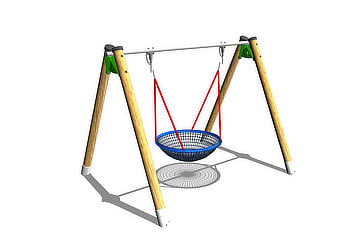
Swings, springers and spinners deliver the movement children love, the swing of a nest, the bounce of a springer and the spin of a roundabout, building balance, core strength and coordination.
View swings, springers & spinners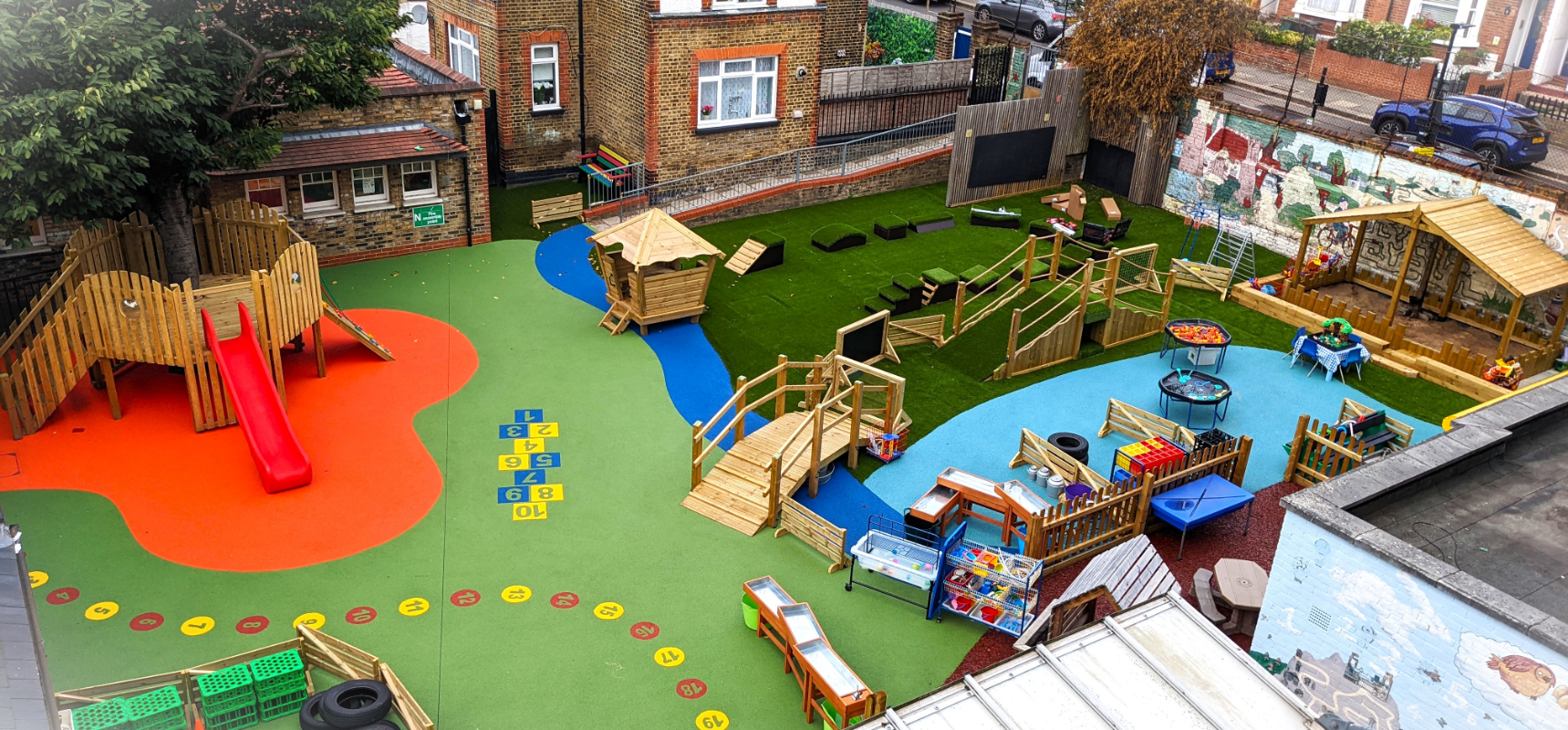
An aerial runway, the playground zip wire, is the biggest thrill in the play area: children grab the seat or handle and ride the cable from end to end, building grip strength and nerve.
View aerial runwaysA traverse wall is a low climbing wall you move across rather than up, children work sideways along the holds, close to the ground, building grip and problem-solving with minimal fall risk.
View traverse walls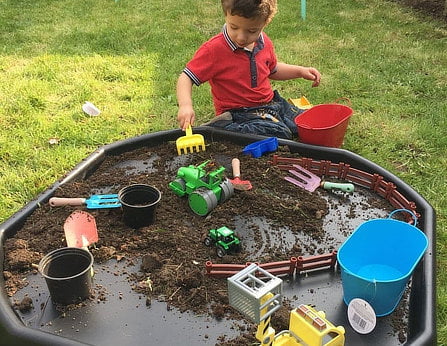
A mud kitchen is where the best early-years learning happens, a sturdy outdoor kitchen with sink, hob and worktop where children mix, pour, stir and make-believe, building language, science and fine motor skills.
View mud kitchens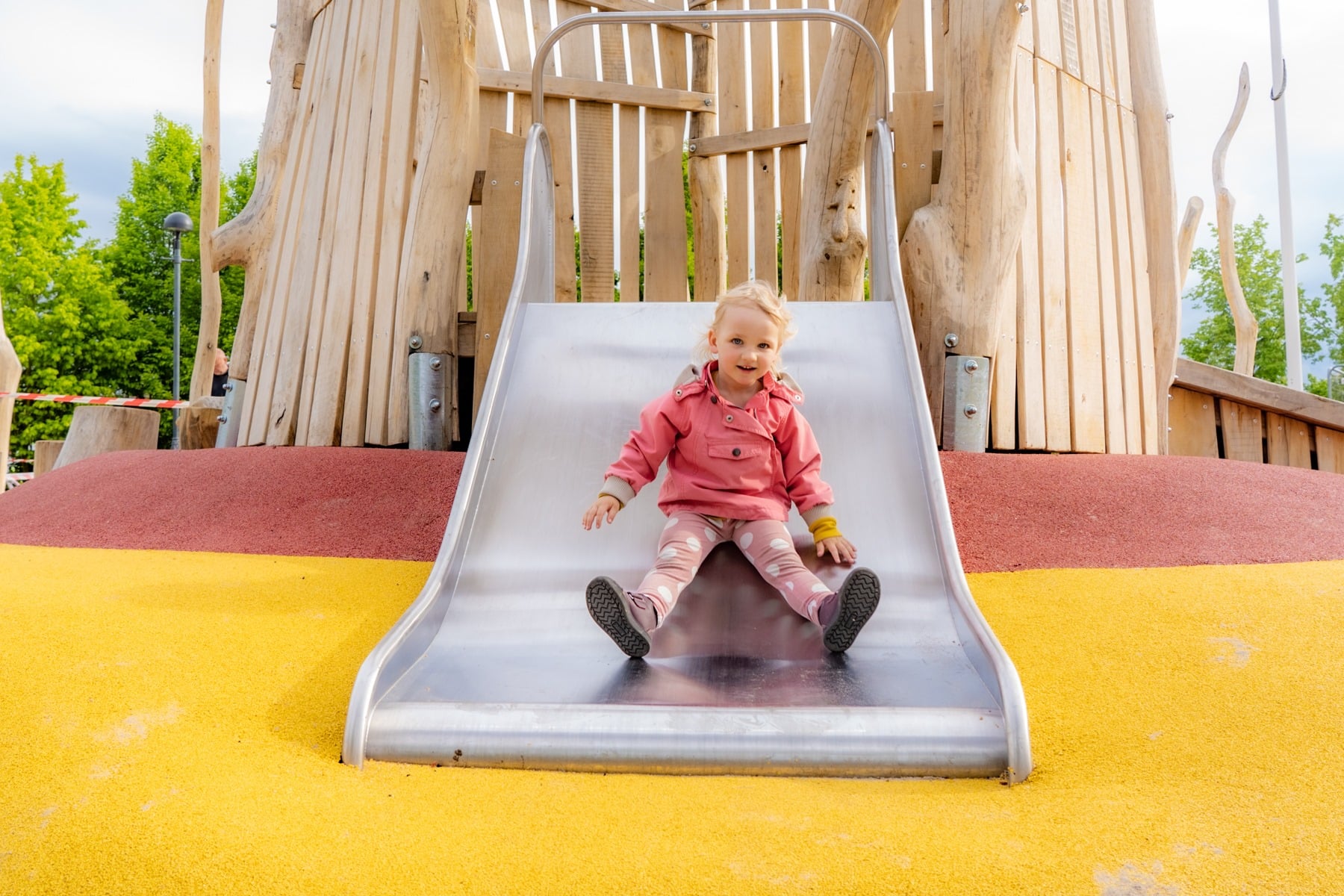
Metal playground equipment is built for the long haul, powder-coated steel frames, slides and climbers that shrug off heavy use and weather, ideal for high-traffic and public play areas.
View metal play equipmentBook a free site visit and we'll measure up, recommend the right surface and send a clear, fixed quote.