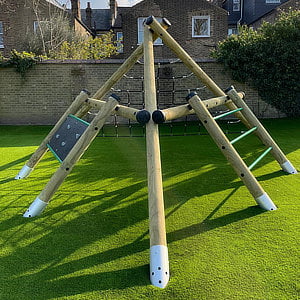
Climbing Frames
Climbing frames give children the height, challenge and problem-solving that build strength and confidence, multi-activity structures with climbers, nets, walls and slides, all tested to BS EN 1176.
View climbing framesMetal playground equipment is built for the long haul, powder-coated steel frames, slides and climbers that shrug off heavy use and weather, ideal for high-traffic and public play areas.
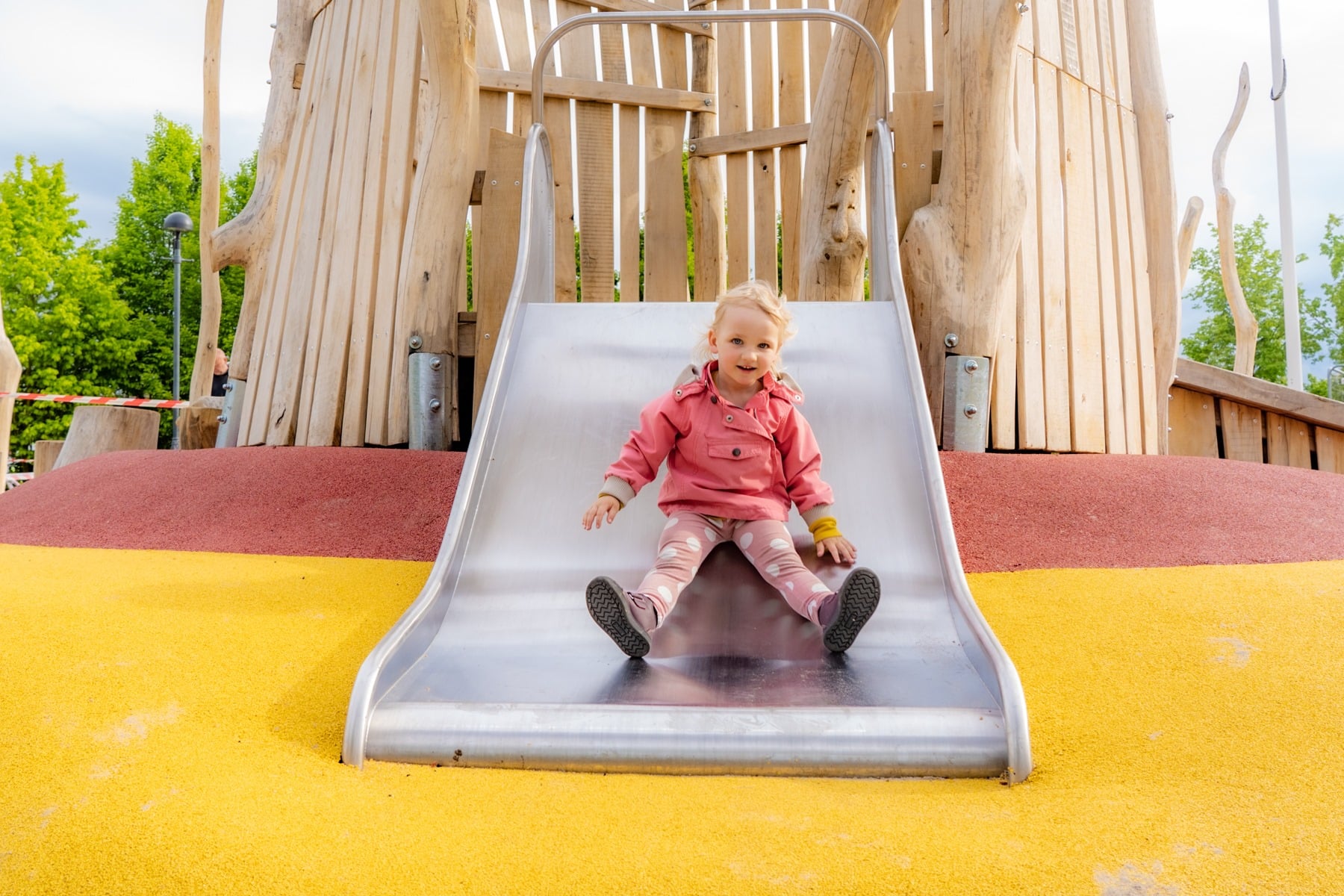
Metal playground equipment is outdoor play equipment whose main structure is powder-coated or galvanised steel rather than timber, manufactured and installed to BS EN 1176. We build the frames, posts, slides, climbers and multi-play units from steel that is shot-blasted, primed against corrosion, then polyester powder-coated and baked to around 200 degrees for a hard-wearing finish.
Steel gives a crisp, modern look that does not rot, warp or splinter, and holds its colour for years of continuous use. Every unit sits over impact-absorbing safety surfacing tested to BS EN 1177, matched to the Critical Fall Height of the item above it, so the material choice and the surface below it are specified together, not separately.
Commercial Play makes metal playground equipment from galvanised or steel tube that is shot-blasted, given an anti-corrosion primer, then polyester powder-coated and oven-baked at around 200 degrees, with the coating typically 60 to 120 microns thick. Galvanising adds a zinc layer beneath the colour for coastal or exposed sites where salt and weather are harsher.
We install every unit to BS EN 1176, setting steel posts into concrete foundations, torquing all fixings and building the impact area up in safety surfacing to BS EN 1177 before the equipment reopens. Slides are usually AISI 304 stainless steel, which resists rust and frost, or rotationally moulded polyethylene where a softer early-years finish suits the age group. On handover we provide a post-installation inspection report against BS EN 1176.
Metal playground equipment suits high-traffic and exposed sites: primary school playgrounds, public parks, housing estates and coastal areas where equipment takes constant use and weather. Powder-coated and galvanised steel resists vandalism, cutting and impact better than most materials, which is why local authorities and parks specify it for open, unsupervised sites.
We match the range to the age group under BS EN 1176: lower platforms, gentle slopes and rounded edges for 2 to 6 year olds in EYFS settings, and taller frames, faster stainless slides and more testing climbers for 7 to 11 year olds. Many schemes mix steel frames and slides for durability with timber for natural features, and we advise on the split by setting, budget and how heavily the area is used. We can coordinate the safety surfacing beneath it as part of the same job; see playground surfacing.
A single steel multi-play unit costs around 8,000 to 16,000 pounds installed, and a full metal playground scheme runs from roughly 15,000 pounds for a small area to more than 100,000 pounds for a large destination park. These are indicative UK ranges to confirm at survey, not fixed prices: a compact steel climber or single slide sits well below a large multi-play tower with bridges and roofs.
Your final cost is driven by the number and size of units, galvanised versus powder-coated finish, the stainless-steel slide count, the safety surfacing type set by the Critical Fall Height, groundworks and site access. Sub-base and surfacing typically add a further 29 to 100 pounds per square metre depending on the surface chosen. For a firm number, get a metal playground equipment quote and we will price your exact site.
| Finish | Coating / build | Best for | Indicative lifespan | Maintenance |
|---|---|---|---|---|
| Powder-coated steel | Shot-blast, primer, polyester powder coat baked at ~200C, 60 to 120 microns | Colourful school and park frames on standard inland sites | 15 to 20 years | Occasional wash, touch-up of chips |
| Galvanised then powder-coated steel | Zinc layer under the powder coat | Coastal, exposed and heavy-vandalism sites | 20 to 25 years or more | Low, zinc resists rust under coating |
| AISI 304 stainless slide bed | Solid stainless, no coating to fail | High-use slides in all weather | 20 years or more | Wipe clean, does not rust or fade |
Indicative UK market figures to confirm against your own pricing and site survey. Coating thickness and post diameter are specified per unit to BS EN 1176.
Metal playground equipment is governed by BS EN 1176, the European standard for playground equipment, and its slides specifically by BS EN 1176-3, while the safety surfacing beneath it is governed by BS EN 1177. Safety surfacing is required wherever the free height of fall exceeds 0.6m, up to the 3m playground maximum, and the surface's Critical Fall Height must equal or exceed that fall.
We manufacture and install every unit to BS EN 1176, checking entrapment gaps, guardrail heights, impact zones and finger-trap points, and lay the surface to BS EN 1177 so a fall is cushioned rather than landing on hard ground. On completion we issue a post-installation inspection report, and we can arrange independent RPII or RoSPA inspection and annual inspection where you want it signed off.
Metal playground equipment uses structural steel tube for frames and posts, with slides in AISI 304 stainless steel, and a polyester powder coat typically 60 to 120 microns thick over an anti-corrosion primer. Posts are commonly 48mm to 60mm diameter steel set into concrete foundations, sized per unit to BS EN 1176 loadings.
For coastal and exposed sites we hot-dip galvanise the steel first, adding a sacrificial zinc layer beneath the colour that keeps rust off long after a scratch would fail plain paint. The powder coat is UV-stable so the colour holds through frost and sun, and stainless slide beds carry no coating to chip at all. We specify the grade, post diameter and finish by the site's exposure, the age group and how heavy the use will be.
Metal playground equipment lasts 15 to 25 years or more, with steelwork on many UK ranges guaranteed for up to 25 years and galvanised structures cited at 40 years or more in life-cycle studies. Powder-coated steel on a standard inland site sits at the 15 to 20 year mark, and galvanised steel on exposed or coastal sites reaches the top of that band.
Stainless-steel slide beds carry no coating to fail, so they stay usable for 20 years or more without rust or fading, where a cheaper painted steel needs attention within 5 to 10 years and repeated repainting. We also repair and refresh worn units, re-coating and replacing parts rather than ripping out a whole frame, which extends the life of what you already have.
Metal playground equipment resists rot, splintering and vandalism, and holds its powder-coated colour for 15 to 25 years, which makes it lower-maintenance over its life than timber on high-traffic sites. Galvanised and powder-coated steel shrugs off constant use, weather and cutting, so it suits public parks and exposed, unsupervised areas.
A stainless-steel slide stays usable in all weather and does not rot or fade, and a colourful powder-coated frame gives a modern look across climbers, slides, frames and multi-play units. Because steel does not warp or splinter, day-to-day upkeep is little more than an occasional wash and a check of fixings, and every unit is manufactured and installed to BS EN 1176 over surfacing to BS EN 1177 so the impact protection is measured, not assumed.
Commercial Play designs, supplies and installs metal playground equipment across England and Wales, so one team owns the job from survey to handover under BS EN 1176. We survey each site, work out the Critical Fall Height of every unit, and specify the steel grade, galvanised or powder-coated finish and matched safety surfacing to suit your exposure, age groups and budget.
We fit both steel and timber, so our recommendation follows your setting rather than one product we happen to sell, and we mix the two where a scheme is better for it. We also repair and re-coat worn units instead of defaulting to full replacement. See the full range of climbing frames, play towers and all play equipment.
Neither is universally better, it depends on the setting. Timber gives a natural look for woodland and forest-school areas, while galvanised or powder-coated steel gives a modern, hard-wearing, low-maintenance finish that lasts 15 to 25 years on high-traffic and public sites. Many schemes mix both, steel frames and slides for durability with timber for natural features.
Indicatively, a single steel multi-play unit costs around 8,000 to 16,000 pounds installed, and a full metal scheme runs from roughly 15,000 pounds to more than 100,000 pounds. Safety surfacing adds a further 29 to 100 pounds per square metre depending on the surface. These are UK market ranges to confirm at survey, as unit count, finish, surfacing and access all move the figure.
Slides are specified to manage heat: AISI 304 stainless-steel beds and shaded siting keep temperatures comfortable, and rotationally moulded polyethylene is used where a cooler early-years finish suits the age group. In UK conditions, correctly positioned metal equipment stays comfortable for normal use, and we advise on orientation at survey.
Yes. Powder-coated and galvanised steel resists impact, cutting and weathering better than most materials and holds its finish, which is why it suits public parks and exposed, high-traffic sites. A scratch on galvanised steel exposes a zinc layer that keeps rust off, rather than the bare steel a painted finish would expose.
Frames and posts use structural steel tube, commonly 48mm to 60mm diameter, with slides in AISI 304 stainless steel. The finish is a polyester powder coat typically 60 to 120 microns thick over an anti-corrosion primer, baked at around 200 degrees. For coastal and exposed sites we hot-dip galvanise the steel first for a zinc layer beneath the colour.
Metal playground equipment lasts 15 to 25 years or more. Powder-coated steel sits at 15 to 20 years on inland sites, galvanised steel reaches 20 to 25 years or more on exposed and coastal sites, and stainless-steel slide beds stay usable for 20 years or more without rust or fading. Steelwork on many UK ranges is guaranteed for up to 25 years.
Yes. Metal playground equipment is manufactured and installed to BS EN 1176, with slides to BS EN 1176-3, over safety surfacing to BS EN 1177. We issue a post-installation inspection report and can arrange independent RPII or RoSPA inspection and annual inspection where you want it signed off.
Little. Because steel does not rot, warp or splinter, upkeep is usually an occasional wash, a check of fixings and touch-up of any coating chips. Stainless slide beds only need wiping clean. We also re-coat and repair worn units rather than replacing a whole frame, which extends the life of what you already have.
Yes, and many schemes do. We combine powder-coated steel frames and stainless slides for durability with timber for natural, forest-school features, all installed to BS EN 1176 over matched safety surfacing to BS EN 1177. We advise on the right split by setting, exposure, age group and budget at survey.
Part of our full play equipment range, explore the other surfaces below.
Climbing frames give children the height, challenge and problem-solving that build strength and confidence, multi-activity structures with climbers, nets, walls and slides, all tested to BS EN 1176.
View climbing frames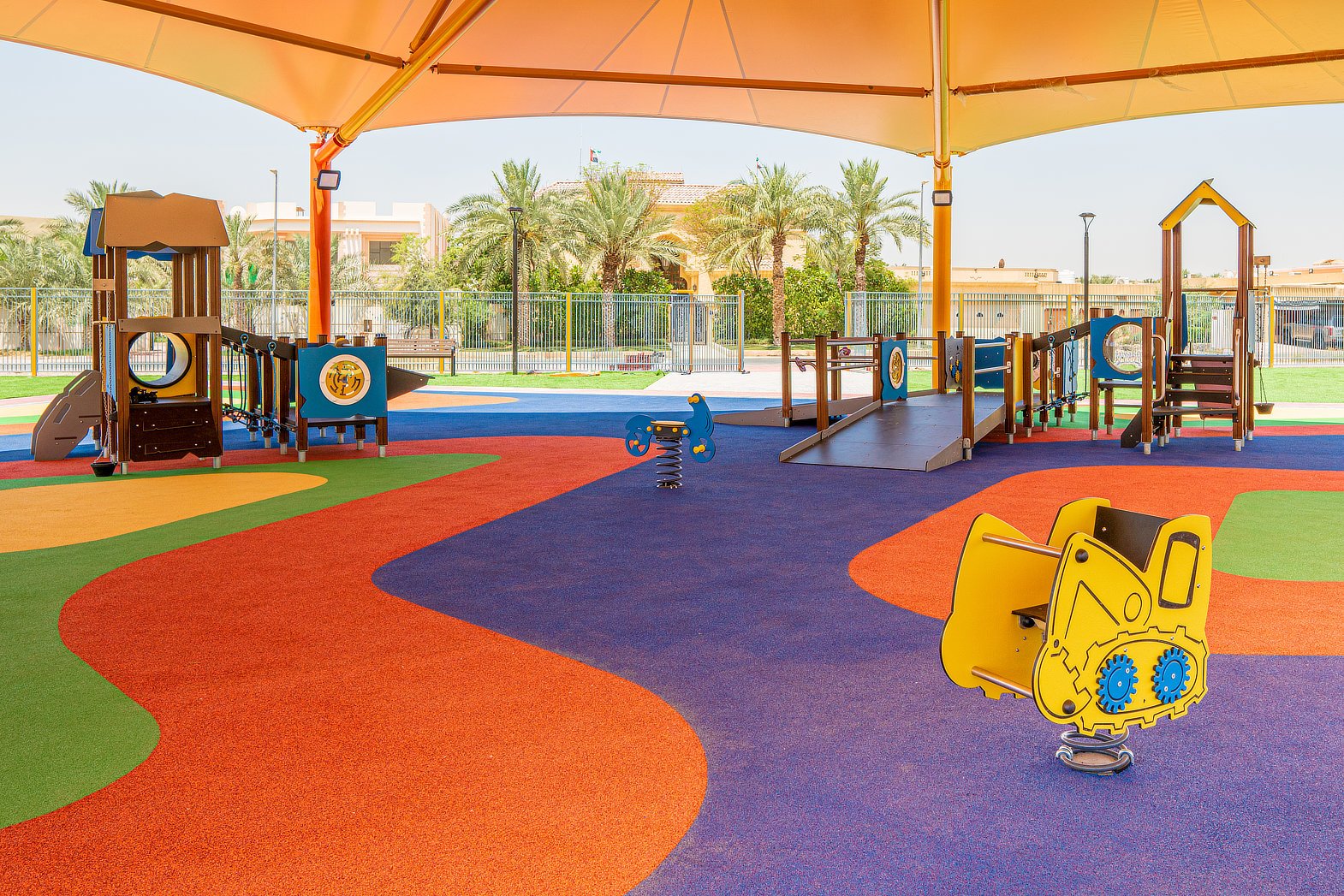
Play towers are the centrepiece of a playground, raised platforms linked by bridges, slides, climbers and dens that pack a whole adventure into one multi-play structure.
View play towers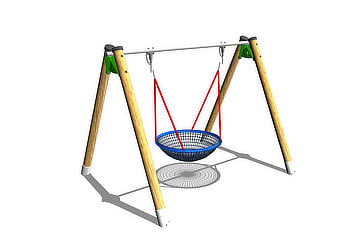
Swings, springers and spinners deliver the movement children love, the swing of a nest, the bounce of a springer and the spin of a roundabout, building balance, core strength and coordination.
View swings, springers & spinners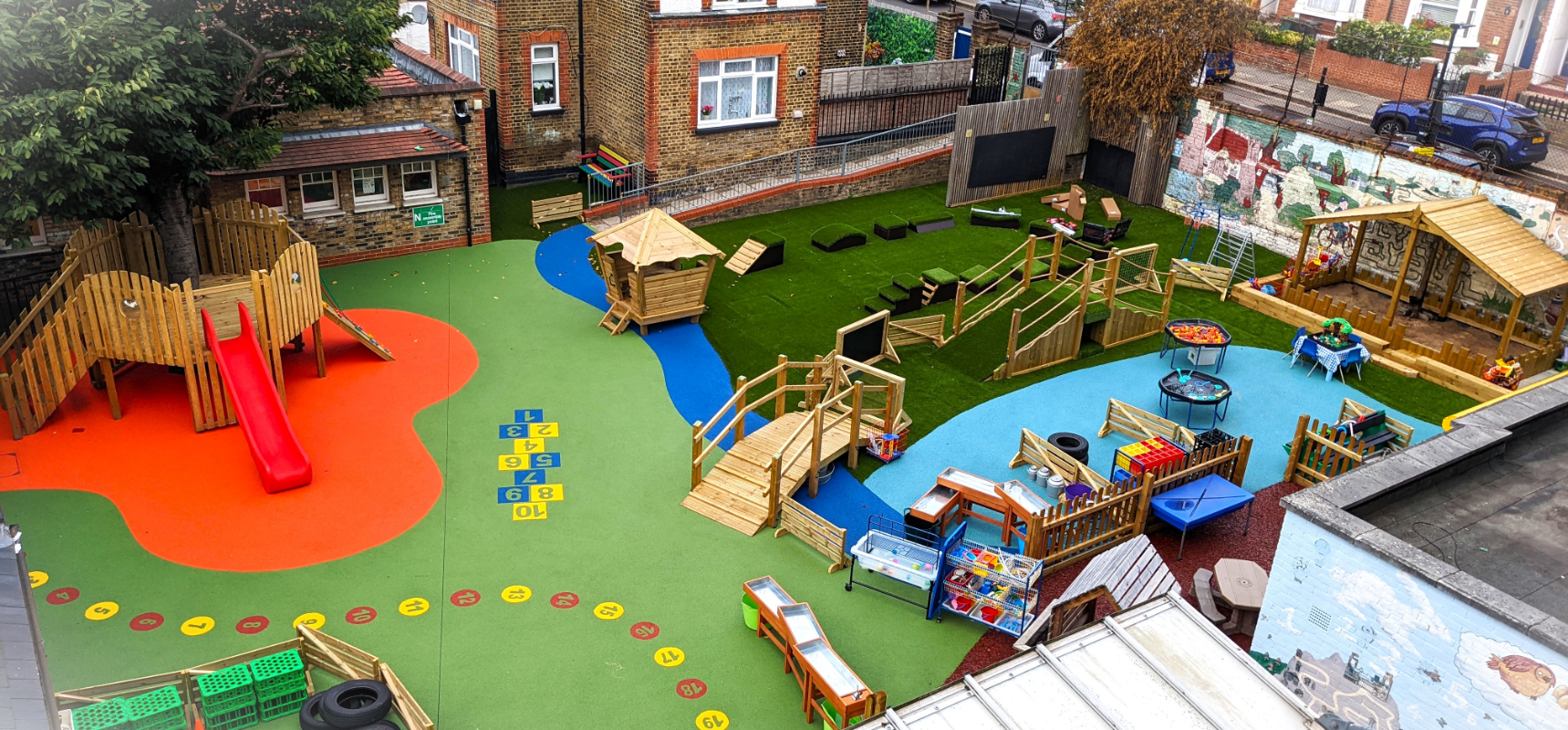
An aerial runway, the playground zip wire, is the biggest thrill in the play area: children grab the seat or handle and ride the cable from end to end, building grip strength and nerve.
View aerial runways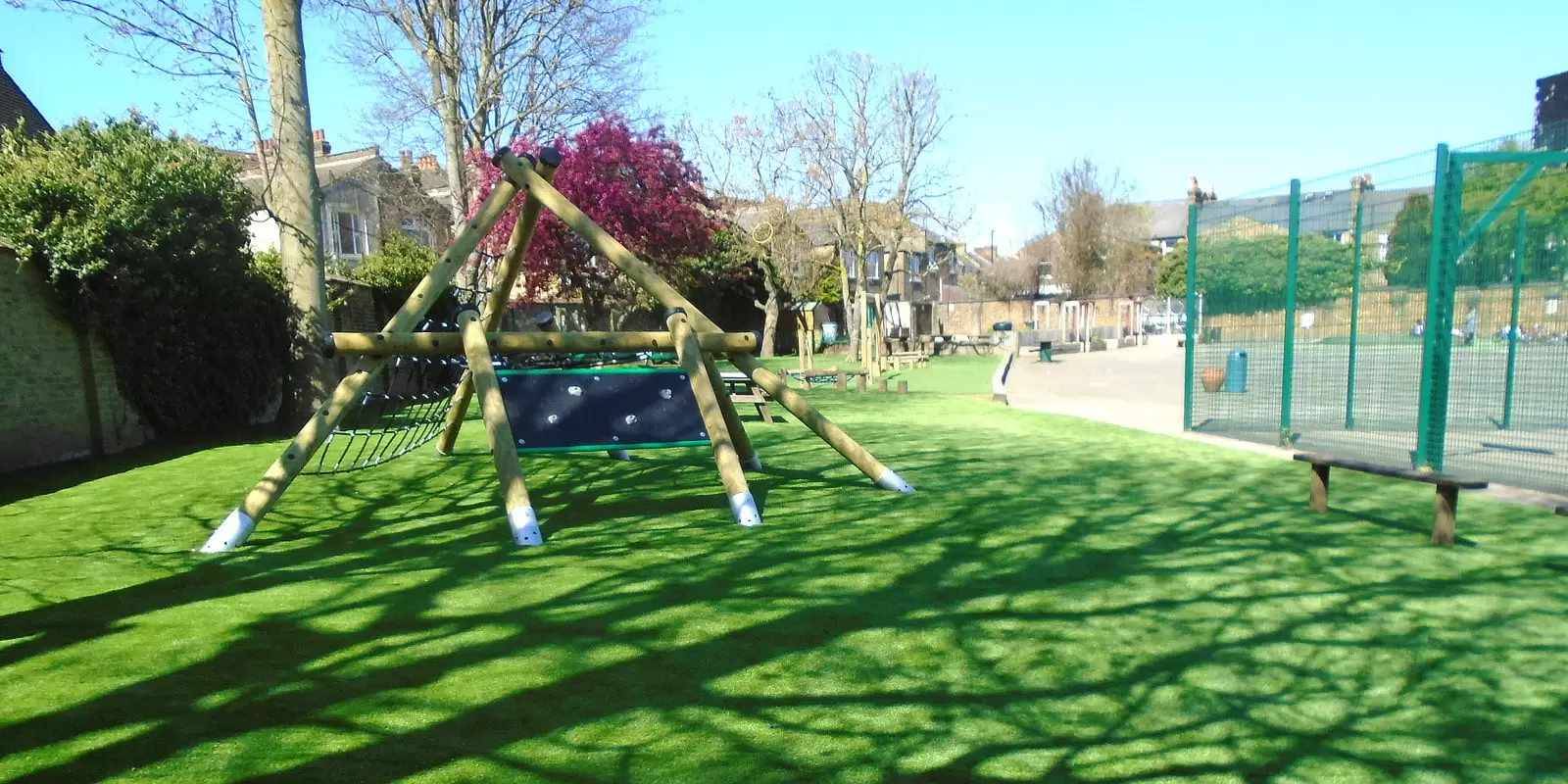
A traverse wall is a low climbing wall you move across rather than up, children work sideways along the holds, close to the ground, building grip and problem-solving with minimal fall risk.
View traverse walls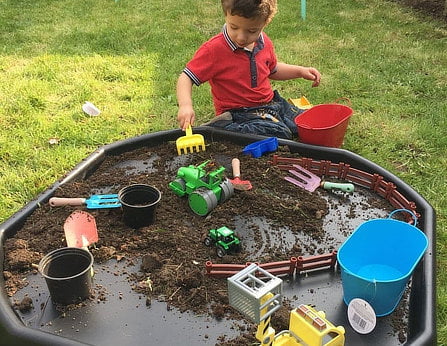
A mud kitchen is where the best early-years learning happens, a sturdy outdoor kitchen with sink, hob and worktop where children mix, pour, stir and make-believe, building language, science and fine motor skills.
View mud kitchensBook a free site visit and we'll measure up, recommend the right surface and send a clear, fixed quote.