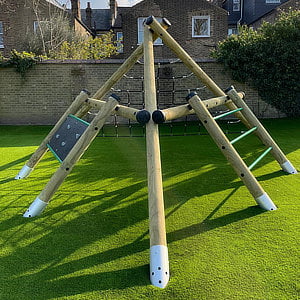
Climbing Frames
Climbing frames give children the height, challenge and problem-solving that build strength and confidence, multi-activity structures with climbers, nets, walls and slides, all tested to BS EN 1176.
View climbing framesPlay towers are the centrepiece of a playground, raised platforms linked by bridges, slides, climbers and dens that pack a whole adventure into one multi-play structure.
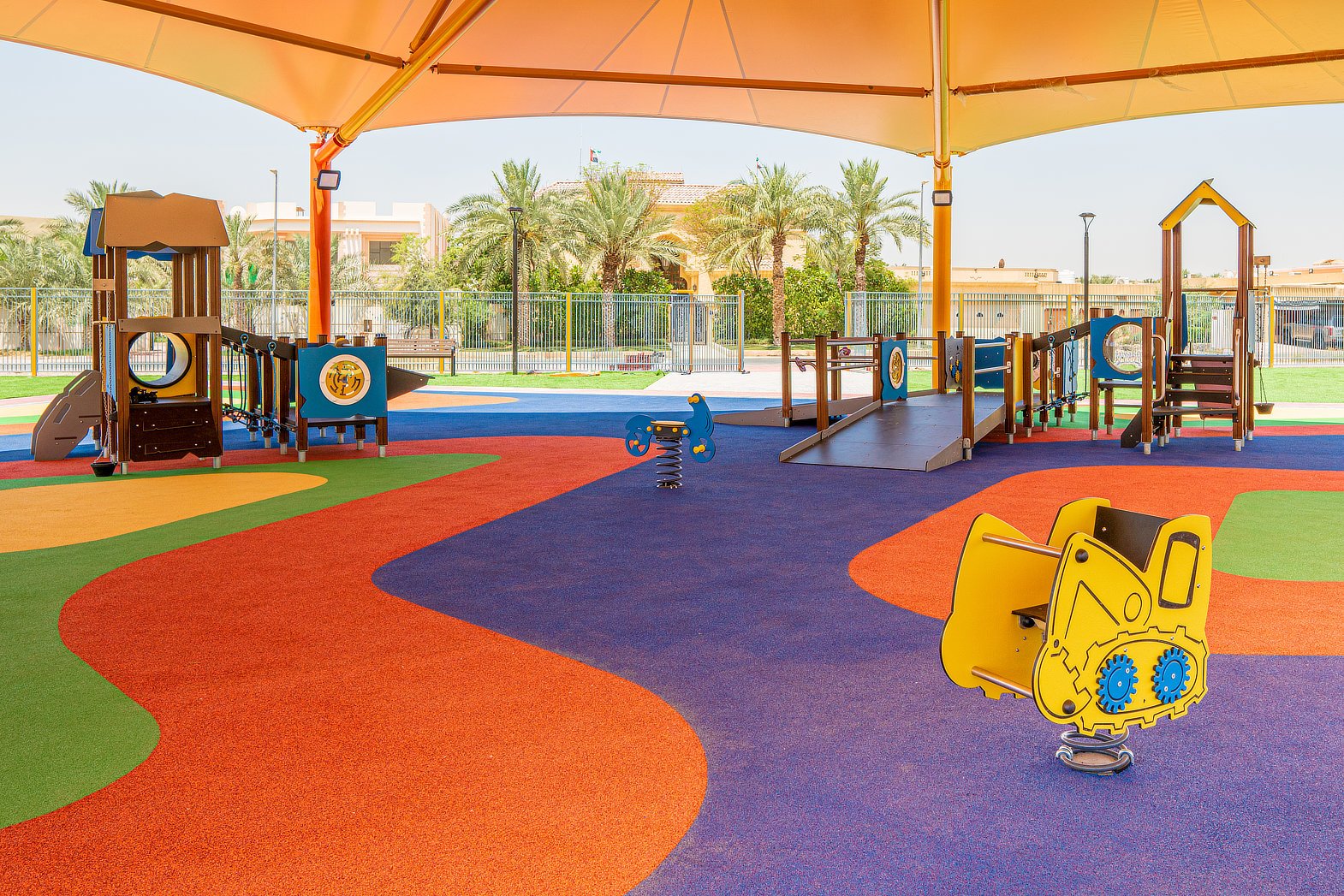
Play towers and multi-play units are structures of one or more raised platforms linked by slides, bridges, climbers, ramps and dens, built and installed to BS EN 1176 over safety surfacing tested to BS EN 1177. We fit them as the centrepiece of a play area, giving children a destination to climb up to, travel across and slide down.
A single tower with a short slide suits a smaller early-years space, while a multi-tower system links several platforms with wobble bridges, scramble nets and tunnels so more children can play at once. Under-deck space adds dens and shade for imaginative play alongside the physical challenge.
We build play towers from HPL panels, HDPE dens and climbers, galvanised or stainless steel fixings and timber uprights, all engineered to BS EN 1176 and anchored into concrete foundations. Platforms link by slides, rope bridges and ramps, and the whole unit sits within measured safety zones over fall-safe surfacing.
On site we set out the safety zones first, excavate and pour the foundations, then assemble the platforms, slides and connectors and lay the surfacing to the tower's Critical Fall Height. Every install finishes with a post-installation RPII inspection report, and the tower works alongside a climbing frame, swings and an aerial runway to build a complete scheme.
Play towers and multi-play units serve nurseries, primary schools and secondary schools across England and Wales, graded by age from a 1.0m early-years platform up to taller KS2 and secondary towers with a fall height near 1.8m. We match the platform height, climber difficulty and slide length to the age group and the space you have.
Early-years settings take a single low tower with a gentle slide and a den beneath; primary schools take mid-height towers with bridges and scramble nets; larger sites take a multi-tower system so a whole class can use it at break. Inclusive access ramps and ground-level dens bring wheelchair users and SEN pupils into the play, tying into our inclusive and SEN play range.
A single play tower with a slide starts at roughly 8,600 pounds supplied and installed, while a multi-tower system with bridges, climbers and long slides runs from about 20,000 pounds up to 50,000 pounds or more as part of a full scheme. These are indicative ranges to confirm at survey, not fixed prices, as the platform count, materials and slide type all move the figure.
Your final cost is driven by the number of towers, the deck heights, the climbers and slides you add, and the safety surfacing beneath, which is priced separately to the Critical Fall Height. Groundworks, drainage and a hard-to-reach site add to the figure, while a level, accessible site keeps it down. For an exact number, get a play tower quote and we will price your site.
| Unit type | Typical platform height | Age range | Indicative installed cost | Best for |
|---|---|---|---|---|
| Single low tower | About 1.0m to 1.3m | 3 to 7 years | From around £8,600 | Early years and infant areas, smaller spaces |
| Mid-height tower with slide | About 1.5m | 5 to 11 years | £12,000 to £20,000 | Primary schools, a high-impact centrepiece |
| Multi-tower system | Up to about 1.8m | 5 to 14 years | £20,000 to £50,000 or more | Larger sites, whole-class use, adventure play |
Indicative UK market ranges to confirm against your own pricing at survey. Safety surfacing to BS EN 1177 is priced separately to the Critical Fall Height.
Play towers and multi-play units are manufactured and installed to BS EN 1176, the European playground equipment standard, and stand over safety surfacing tested to BS EN 1177. The surfacing's Critical Fall Height must equal or exceed the tower's free height of fall, and impact surfacing is required wherever that free fall exceeds 0.6m, up to the 3m playground maximum.
BS EN 1176 governs the platform guarding, gaps, head and finger entrapment and the safety zones around each item, typically at least 1.5m of clear space around static structures and more to the front of a slide exit. We design and install to both standards, provide a post-installation inspection report, and can arrange independent RPII or RoSPA sign-off where you want it.
Play towers cover a free height of fall from about 1.0m on an early-years unit up to roughly 1.8m on a tall multi-tower system, matched to age ranges spanning 3 to 14 years. We set the deck height, guarding and climber difficulty by the age group, then lay surfacing to the Critical Fall Height that height demands.
A 1.0m platform suits ages 3 to 7 over a lighter surfacing depth; a 1.5m deck suits primary; and a 1.8m tower for older pupils needs deeper wet pour or rubber mulch beneath to pass its Critical Fall Height. See our playground surfacing options for how depth is set to the tower above, and combine towers with a climbing frame to extend the challenge.
Play towers and multi-play units typically last 15 to 20 years with routine care, and steel-framed or HPL-panelled units often reach 20 to 25 years, since HPL panels and galvanised steel resist rot and corrosion. Timber uprights need checking for decay at ground level, which is where a well-treated tower earns its life.
Lifespan holds up when the three inspection levels are kept: routine visual checks weekly, operational checks monthly or quarterly, and an annual main inspection by an RPII or RoSPA inspector. We also repair and refurbish worn platforms, slides and fixings rather than replace whole units, extending the life of what you have through our repairs and maintenance service.
Play towers and multi-play units combine climbing, crossing, sliding and imaginative play in one structure built to BS EN 1176, so a single unit does the work of several separate items. They give a play area its natural hub, draw children up to height and reward the physical challenge of getting there.
Beyond the physical play, dens and tunnels beneath the decks support imaginative and quiet play, and grading the towers by age keeps the challenge right for each group. Access ramps and ground-level features bring SEN and wheelchair users into the same structure, and one multi-tower unit lets a whole class play at once, which spreads pupils out and eases the pressure on the rest of the playground.
Commercial Play designs, supplies and installs play towers and multi-play units in-house across England and Wales, working to BS EN 1176 for the tower and BS EN 1177 for the surfacing beneath, so one team owns the job from survey to handover. We survey each site, grade the towers to your age groups, and set the surfacing depth to the Critical Fall Height the units need.
We fit the surfacing as well as the equipment, so the tower and its fall-safe base are specified together rather than by two suppliers who never meet. We also repair and refurbish existing towers, which means we can extend a unit you already have instead of defaulting to full replacement. Talk to us about your play area and we will tell you honestly what it needs.
A multi-play unit is a play tower system that links several raised platforms with slides, bridges, climbers and dens. It combines many types of play in one structure built to BS EN 1176, and becomes the hub of a play area.
Indicatively, a single play tower with a slide starts at roughly 8,600 pounds supplied and installed, while a multi-tower system runs from about 20,000 pounds up to 50,000 pounds or more within a full scheme. These are market ranges to confirm at survey, as platform count, materials and surfacing all move the figure.
Play tower height is set by the age group, running from about a 1.0m platform for the early years up to roughly 1.8m on taller multi-level towers for KS2 and secondary. Each is installed with surfacing laid to the correct Critical Fall Height and with clear safety zones around it.
Play towers span ages 3 to 14 across the range, graded by unit: low towers for ages 3 to 7, mid-height towers for primary, and taller multi-tower systems for ages 5 to 14. We match the deck height, climbers and slide length to your age groups on survey.
Yes. Slides are a standard part of most towers, from short, gentle slides for younger children to tall or double slides on larger units. We specify the slide to the platform height and age group, and set the safety zone at the slide exit to BS EN 1176.
We build play towers from HPL panels, HDPE dens and climbers, galvanised or stainless steel fixings and timber uprights, all engineered to BS EN 1176. HPL and galvanised steel resist rot and corrosion, while treated timber gives the natural look many schools prefer.
Yes. Play towers are manufactured and installed to BS EN 1176, over safety surfacing tested to BS EN 1177, with a post-installation inspection report provided. We can also arrange independent RPII or RoSPA sign-off where you want it.
Play towers typically last 15 to 20 years with routine care, and steel-framed or HPL-panelled units often reach 20 to 25 years. Keeping the three inspection levels, weekly visual, monthly or quarterly operational, and an annual RPII main inspection, protects that life.
A play tower needs routine visual checks weekly, operational checks monthly or quarterly by a competent person, and an annual main inspection by an RPII or RoSPA qualified inspector. The annual inspection is a full independent audit of the equipment, surfacing and layout.
Part of our full play equipment range, explore the other surfaces below.
Climbing frames give children the height, challenge and problem-solving that build strength and confidence, multi-activity structures with climbers, nets, walls and slides, all tested to BS EN 1176.
View climbing frames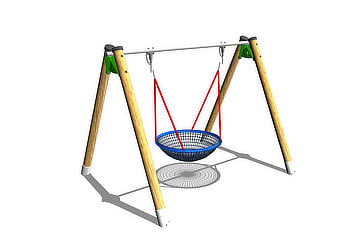
Swings, springers and spinners deliver the movement children love, the swing of a nest, the bounce of a springer and the spin of a roundabout, building balance, core strength and coordination.
View swings, springers & spinners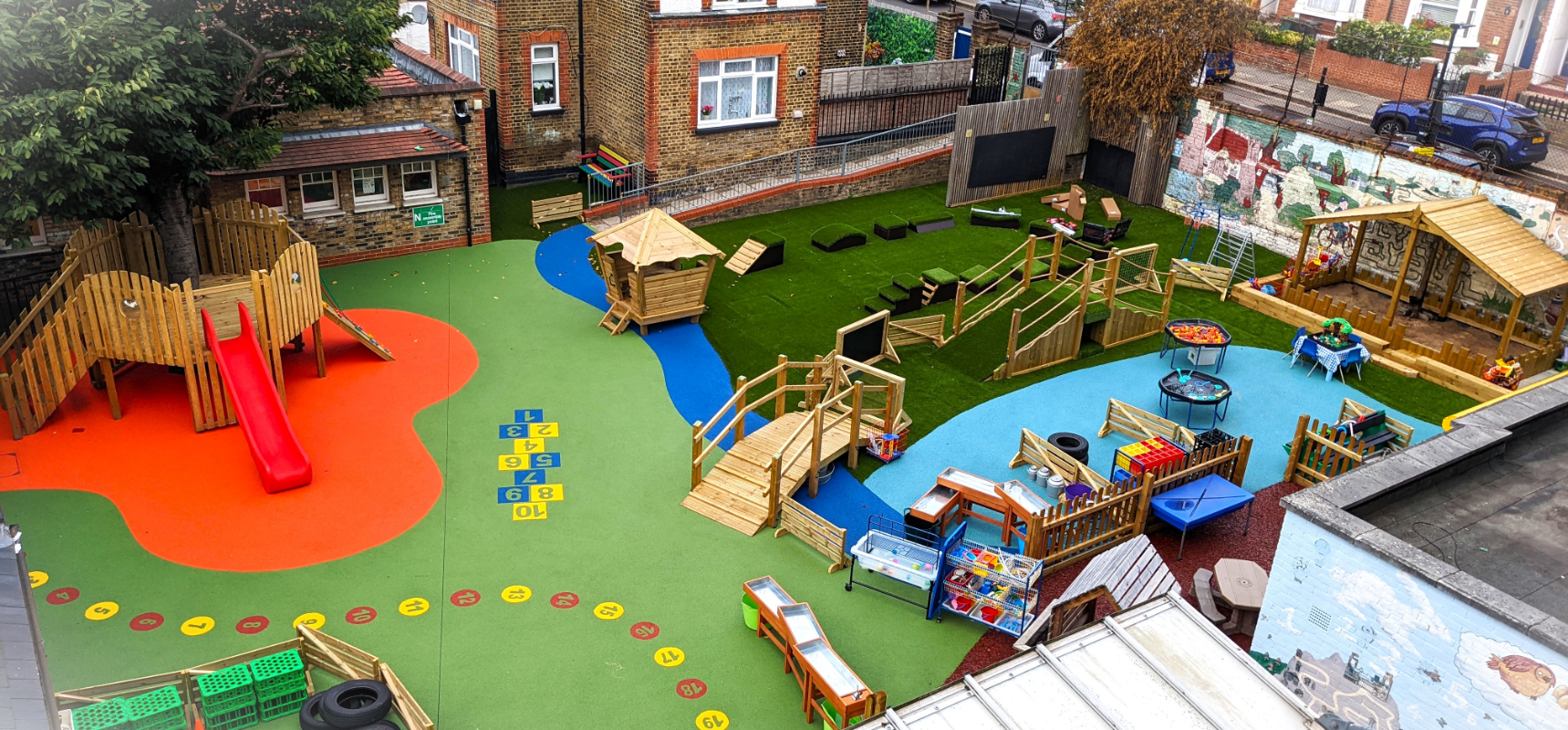
An aerial runway, the playground zip wire, is the biggest thrill in the play area: children grab the seat or handle and ride the cable from end to end, building grip strength and nerve.
View aerial runways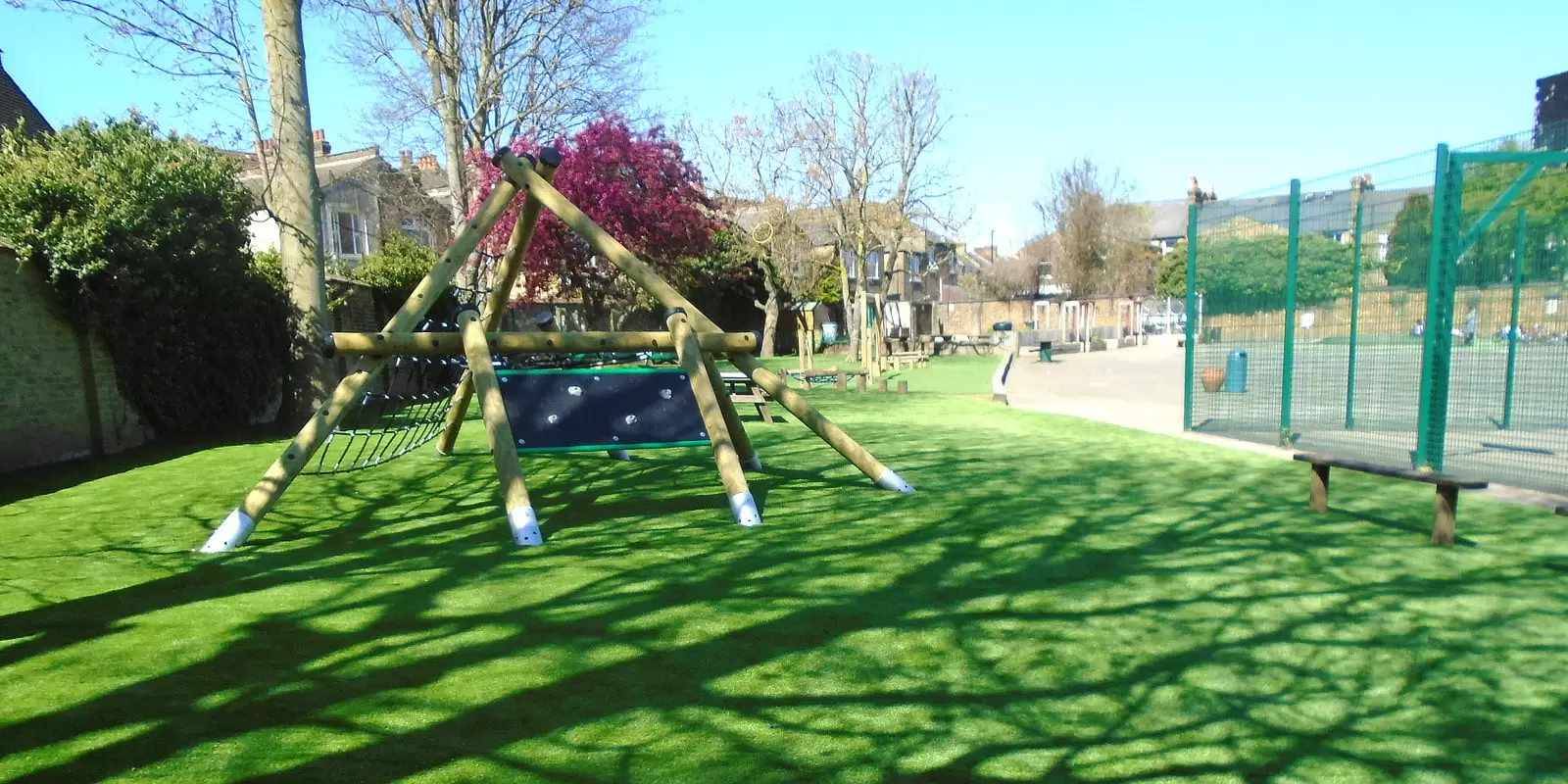
A traverse wall is a low climbing wall you move across rather than up, children work sideways along the holds, close to the ground, building grip and problem-solving with minimal fall risk.
View traverse walls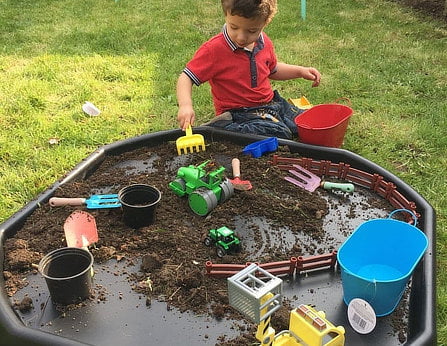
A mud kitchen is where the best early-years learning happens, a sturdy outdoor kitchen with sink, hob and worktop where children mix, pour, stir and make-believe, building language, science and fine motor skills.
View mud kitchens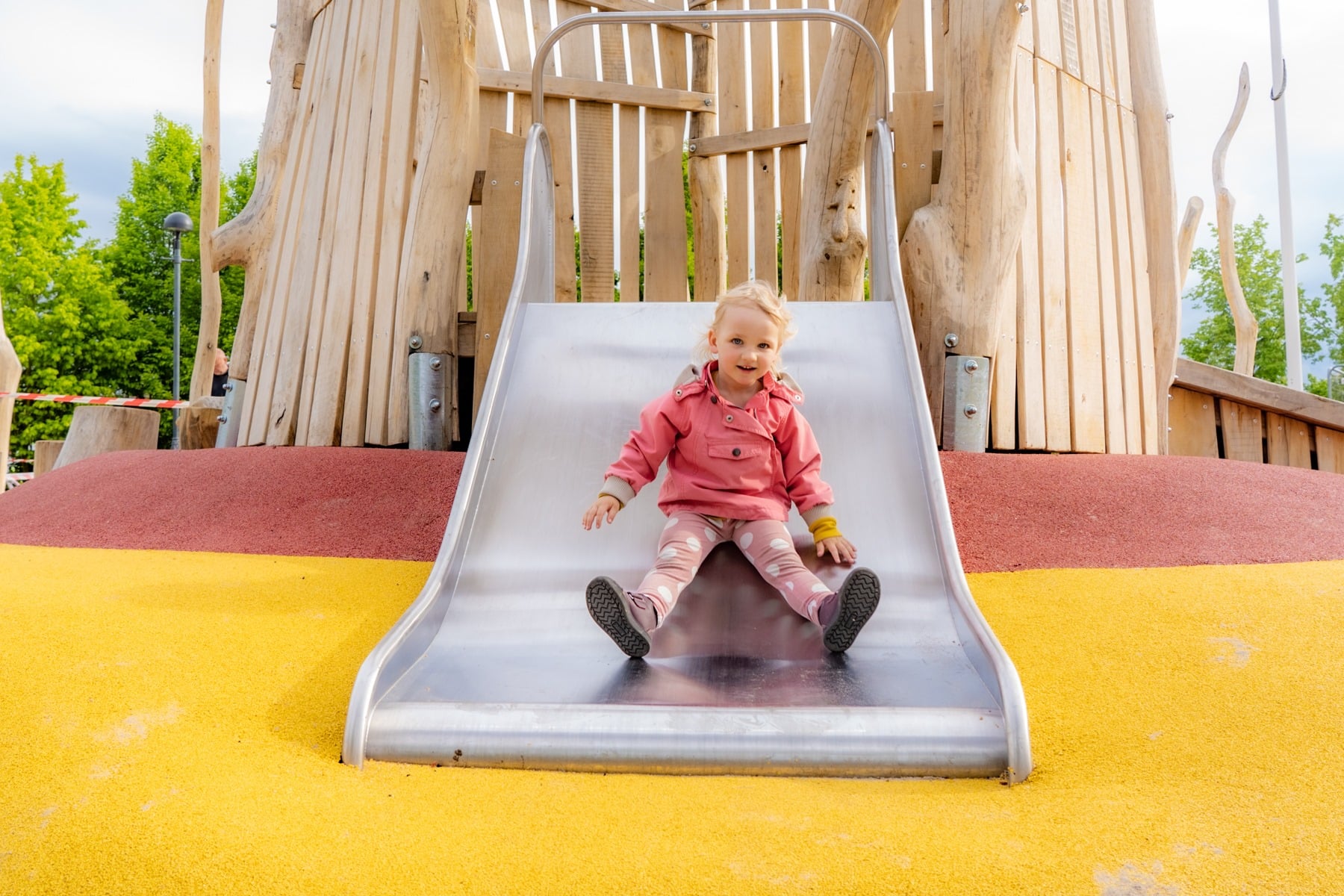
Metal playground equipment is built for the long haul, powder-coated steel frames, slides and climbers that shrug off heavy use and weather, ideal for high-traffic and public play areas.
View metal play equipmentBook a free site visit and we'll measure up, recommend the right surface and send a clear, fixed quote.