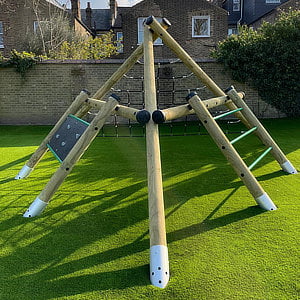
Climbing Frames
Climbing frames give children the height, challenge and problem-solving that build strength and confidence, multi-activity structures with climbers, nets, walls and slides, all tested to BS EN 1176.
View climbing framesAn aerial runway, the playground zip wire, is the biggest thrill in the play area: children grab the seat or handle and ride the cable from end to end, building grip strength and nerve.
An aerial runway, the playground zip wire, is a tensioned galvanised steel cable running 20 to 35 metres between two anchor posts, carrying a seat or grab handle that rides from a launch platform to a braked stop under gravity. It is installed to BS EN 1176-4, the cableway standard, and consistently draws the longest queue in the play area.
The ride is a system rather than a single part: a launch point, the steel cable set on a barrel tensioner, a stainless steel trolley on polyamide wheels, the seat or handle, and a braking unit at the far end that slows the rider before the stop. We match the version and run length to the age groups using it and the space the site allows.
An aerial runway works by gravity: the child launches from a raised platform and the stainless steel trolley rolls down a slightly inclined 10mm to 12mm galvanised cable to the lower end, where a spring or rubber-buffer brake absorbs the momentum. A single rider travels at a time, then the trolley returns for the next go, which is why the ride teaches queuing and turn-taking.
The cable is held under tension by a barrel tensioner that lets us re-tighten it over its life, and the incline is set so the ride is quick but the arrival is controlled. Seated versions carry a rubber button seat on a galvanised chain for younger children; standing versions use a grab handle for older, stronger pupils. Every unit installs over fall-safe surfacing to BS EN 1177 along the full run.
Aerial runways are made for primary and secondary pupils roughly aged 7 to 14, and they suit schools with a clear straight corridor of 20 metres or more to give over to the ride. The seated version fits younger primary children while the standing grab-handle version challenges older Key Stage 2 and secondary pupils, so we specify by the age groups on site.
Because the ride needs a long, clear zone with 2 metres of clearance each side of the cable, we place it early in a layout and route paths and other equipment around it. It anchors an adventurous area well alongside a play tower and climbing frames, and it earns its footprint at break and lunch by carrying a steady flow of riders.
A school aerial runway costs roughly 6,000 to 15,000 pounds installed, with a standard 20 to 25 metre seated runway sitting around the middle of that range and a longer 30 to 35 metre run or a twin-post standing version reaching the upper end. This is an indicative range to confirm at survey, not a fixed price, because the run length, the cable gauge and the surfacing along the ride all move the figure.
The main cost drivers are the length of the cable, the seat versus grab-handle version, the ground anchors and the BS EN 1177 safety surfacing that runs the full length beneath it. Surfacing is priced separately against the Critical Fall Height, and rubber mulch is often the cost-effective choice for the long run beneath a runway. For a firm number, get an aerial runway quote and we will price your exact site.
| Runway type | Typical run length | Age range | Cable gauge | Indicative installed cost | Best for |
|---|---|---|---|---|---|
| Seated aerial runway | 20 to 25m | 7 to 11 | 10mm galvanised | £6,000 to £10,000 | Primary schools, younger riders on a rubber-button seat |
| Standing grab-handle runway | 25 to 30m | 9 to 14 | 10 to 12mm galvanised | £9,000 to £13,000 | Older primary and secondary pupils wanting more challenge |
| Long-span runway | 30 to 35m | 9 to 14 | 12mm galvanised | £11,000 to £15,000+ | Large sites with a long, clear corridor for a fuller ride |
Indicative UK installed ranges to confirm against your own pricing at survey. Figures include the runway and its anchors; the BS EN 1177 safety surfacing along the run is priced separately against the Critical Fall Height.
An aerial runway is governed by BS EN 1176-4, the cableway part of the playground equipment standard, while the safety surfacing beneath it is governed by BS EN 1177, the impact-attenuation standard. The standard sets a controlled braking requirement, one rider at a time, and a safety area of roughly 4 metres wide, meaning about 2 metres of clearance to each side of the cable along the whole run.
The seat or handle must sit a set height above the surface, the ride must decelerate the rider before the end stop, and impact-absorbing surfacing must cover the run to the correct Critical Fall Height, which is around 1.7 metres on a typical 20 metre runway. We install to these, provide a post-installation inspection, and can arrange annual RPII inspection to keep the ride compliant through its life.
An aerial runway needs a straight, level corridor of 20 to 35 metres for the cable plus a clear safety zone of about 2 metres each side, built around a 10mm to 12mm galvanised steel cable, a stainless steel trolley on quiet polyamide wheels, and steel or timber anchor posts set in concrete foundations. The gauge steps up to 12mm as the run gets longer to hold tension over the greater span.
The seated version carries a rubber button seat on a galvanised chain, sometimes sheathed in a heat-resistant rubber hose, while the standing version uses a fixed grab handle. A barrel tensioner keeps the cable taut and lets us re-tension it during servicing, and the whole run sits over fall-safe surfacing. Where space is tight and a full run will not fit, a climbing frame gives comparable challenge in a smaller footprint.
An aerial runway lasts around 15 to 20 years with routine servicing, because the galvanised steel cable, stainless steel trolley and concrete-set anchor posts are heavy-duty parts built for constant outdoor use. The structure outlasts the wear parts, so the trolley wheels, brake buffer and seat are the items we replace periodically rather than the whole ride.
Cable tension, wheel wear and the brake are checked at the annual RPII inspection and re-set as needed, which is what carries the ride to the top of that range. The fall-safe surfacing beneath it typically runs 8 to 12 years and can be refreshed rather than replaced, so we maintain the play equipment and its surface together instead of defaulting to a full rebuild.
An aerial runway builds grip strength, upper-body strength and nerve, because riding the cable makes the child support and control their own weight from the launch to the braked stop. It is reliably the most sought-after item in the play area, so it pulls pupils into active outdoor play at break and lunch rather than standing around.
The single-rider design teaches turn-taking and patience as children queue for a go, which supports social development alongside the physical challenge. It carries a high play value for its footprint, works for a wide 7 to 14 age band by choosing the seated or standing version, and pairs with a play tower to anchor an adventurous zone that keeps older pupils engaged.
Commercial Play designs, supplies and installs aerial runways in-house across England and Wales to BS EN 1176-4, so one team surveys the corridor, sets the cable run and anchors, and lays the BS EN 1177 surfacing beneath as a single coordinated job. We plan the ride early in a layout and route the rest of the play area around the long, clear zone it needs.
We fit the whole play offer, so we recommend the seated or standing version, the run length and the surfacing that suit your age groups and space rather than one house product. We install the runway and its fall-safe surface together, provide the post-installation inspection, and service it through its life. Talk to us about your play area and we will tell you honestly whether your site has the room for a runway. See all play equipment.
An aerial runway needs a straight, clear corridor of 20 to 35 metres for the cable, plus a safety zone of about 2 metres each side along the whole run, giving a total safety area around 4 metres wide under BS EN 1176-4. We assess whether your site has that clear length and plan the layout around it before recommending a runway.
Indicatively, a school aerial runway costs around 6,000 to 15,000 pounds installed, with a standard 20 to 25 metre seated runway near the middle and a 30 to 35 metre or standing version at the upper end. These are market ranges to confirm at survey, as the run length, cable gauge and the safety surfacing along the ride all move the figure, and the BS EN 1177 surfacing is priced separately.
Yes, when correctly specified and installed. School aerial runways are designed to BS EN 1176-4 with a controlled braking unit, one rider at a time, and fall-safe surfacing to BS EN 1177 along the run to the correct Critical Fall Height, which is about 1.7 metres on a 20 metre runway. They receive a post-installation inspection and can be signed off by an annual RPII inspection.
Aerial runways suit pupils roughly aged 7 to 14. Seated versions with a rubber button seat suit younger primary children, while standing grab-handle versions are aimed at older primary and secondary pupils who are stronger and more able. We recommend the version and height based on the age groups using it.
An aerial runway is built around a 10mm to 12mm galvanised steel cable held on a barrel tensioner, with a stainless steel trolley on polyamide wheels and steel or timber anchor posts set in concrete foundations. Seated versions carry a rubber button seat on a galvanised chain, and the gauge steps up to 12mm on longer runs to hold cable tension.
An aerial runway runs on a slight incline so the rider travels by gravity, and a spring or rubber-buffer brake at the lower end absorbs the momentum and slows the trolley before the end stop. Only one rider travels at a time. The brake is a wear part we check and reset at the annual inspection.
Yes. A fall-safe surface to BS EN 1177 runs the full length of the ride, specified to the correct Critical Fall Height of around 1.7 metres. We install the runway and its surfacing together, and rubber mulch is often the cost-effective choice for the long run beneath a runway.
An aerial runway lasts around 15 to 20 years with routine servicing, as the galvanised cable, stainless steel trolley and concrete-set posts are heavy-duty parts. The wheels, brake buffer and seat are wear parts we replace periodically, and the fall-safe surfacing beneath typically runs 8 to 12 years and can be refreshed rather than replaced.
Only where there is a long, clear, level corridor. A runway needs 20 to 35 metres of straight run with about 2 metres of clearance each side, so a tight or irregular site may not suit one. Where the space is not there, a climbing frame or play tower gives comparable challenge in a smaller footprint, and we advise honestly at survey.
Part of our full play equipment range, explore the other surfaces below.
Climbing frames give children the height, challenge and problem-solving that build strength and confidence, multi-activity structures with climbers, nets, walls and slides, all tested to BS EN 1176.
View climbing frames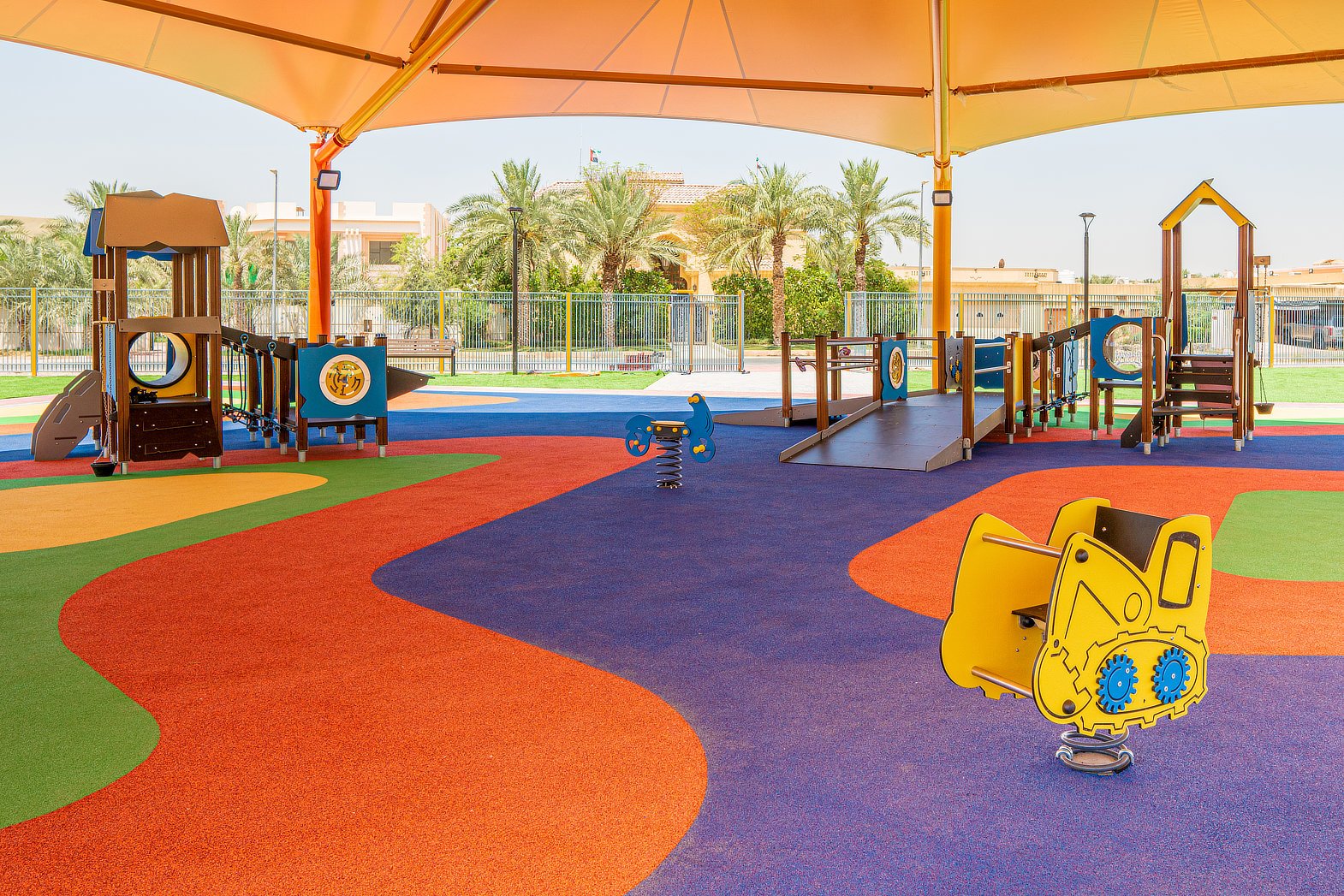
Play towers are the centrepiece of a playground, raised platforms linked by bridges, slides, climbers and dens that pack a whole adventure into one multi-play structure.
View play towers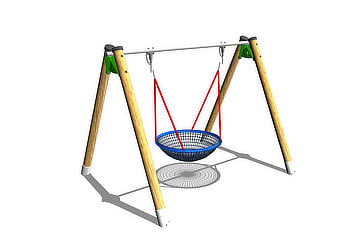
Swings, springers and spinners deliver the movement children love, the swing of a nest, the bounce of a springer and the spin of a roundabout, building balance, core strength and coordination.
View swings, springers & spinners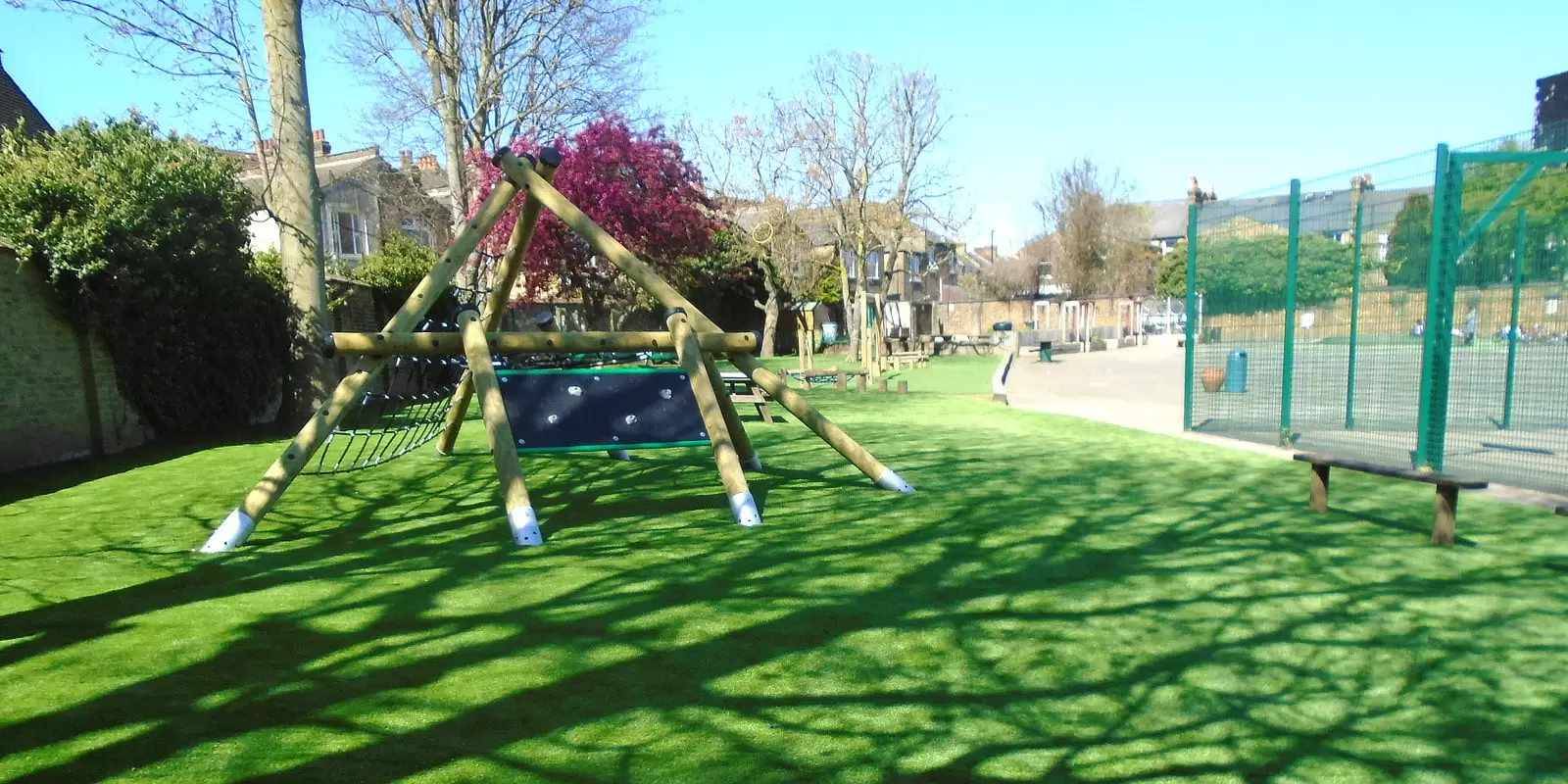
A traverse wall is a low climbing wall you move across rather than up, children work sideways along the holds, close to the ground, building grip and problem-solving with minimal fall risk.
View traverse walls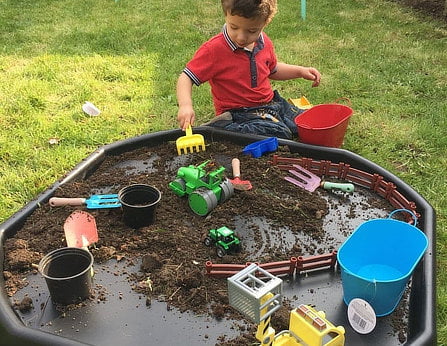
A mud kitchen is where the best early-years learning happens, a sturdy outdoor kitchen with sink, hob and worktop where children mix, pour, stir and make-believe, building language, science and fine motor skills.
View mud kitchens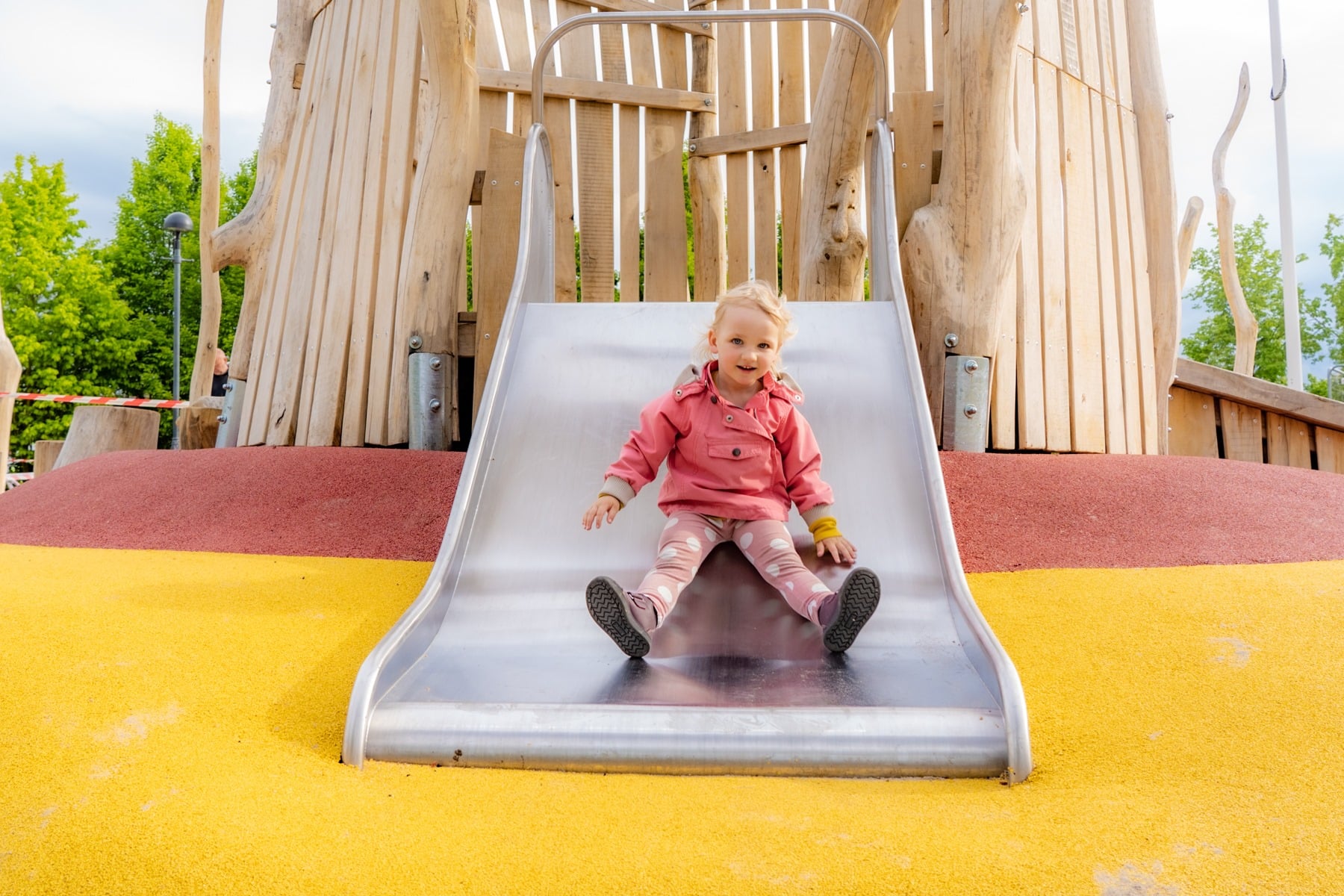
Metal playground equipment is built for the long haul, powder-coated steel frames, slides and climbers that shrug off heavy use and weather, ideal for high-traffic and public play areas.
View metal play equipmentBook a free site visit and we'll measure up, recommend the right surface and send a clear, fixed quote.