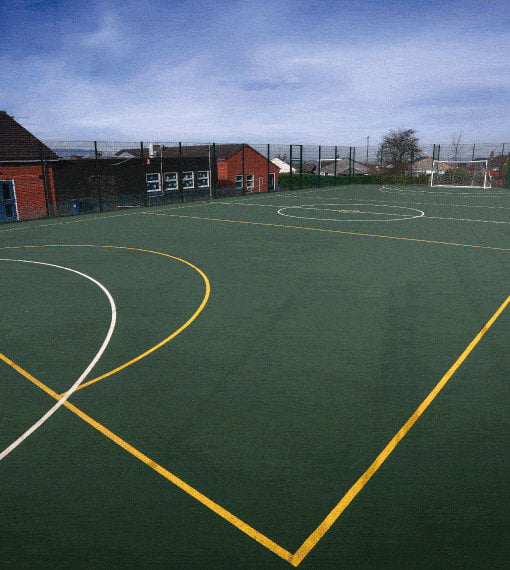
MUGA Pitches
A MUGA, Multi-Use Games Area, is a fenced, all-weather court line-marked for several sports at once, so one space hosts football, basketball, netball and tennis for PE, clubs and community hire.
View muga pitchesA running track builds athletics and the daily mile into school life, straight sprint lanes for races and timing, or a marked circuit around the field or playground that a whole class can run every day.

A running track is a marked, porous synthetic run laid in two forms: straight sprint lanes for timed races and a looped Daily Mile circuit for whole-class fitness. We surface both in polymeric wet-pour so they drain fast, hold inlaid lane and distance markings, and stay usable through a British winter.
The sprint track carries several 1.22m lanes for 60m and 80m runs, sports day and athletics practice, while the Daily Mile circuit runs about 1.5m wide around a field, playground or grounds so children run side by side every day. We build the surface, the markings and the sub-base as one job so running has a permanent home rather than a once-a-year event.
Commercial Play builds a running track as a layered system over a compacted MOT Type 1 stone sub-base, not a single pour. We excavate the line, lay a geotextile membrane and porous stone base, then bind an SBR rubber base course and a polymeric EPDM wearing course with polyurethane resin, working to BS EN 14877 for synthetic sports surfaces.
The wet-pour surface is mixed and laid by hand on site, typically about 15mm thick for a sprint track and up to 50mm for a cushioned Daily Mile circuit, then left to cure before the track reopens. Lane lines, take-off marks and distance points are inlaid into the EPDM in your school colours, so the markings are part of the surface rather than paint that wears off. We can also lay over sound existing tarmac where the base is level, which cuts the groundworks and the cost.
School running tracks suit primary and secondary settings running the Daily Mile, athletics and sports day, and each track is specified by the age group and space using it. A looped Daily Mile circuit fits EYFS, KS1 and KS2 for daily whole-class running, while straight sprint lanes suit KS2 and secondary pupils for timed 60m and 80m runs.
A Daily Mile circuit at about 1.5m wide lets a full class run together socially rather than as a race, and can wind through the grounds to keep it engaging. A sprint track gives PE lessons and clubs a consistent, grippy run for timing and technique. Both pair well with an outdoor gym or trim trail to complete a fitness offer across the site.
A polymeric wet-pour running track costs around 40 to 90 pounds per square metre installed, so a marked Daily Mile circuit or a short sprint track typically runs from a few thousand pounds up depending on length and width. These are indicative ranges to confirm at survey, not fixed prices: a painted or thermoplastic-marked route on existing tarmac sits at the lower end and a cushioned polymeric surface with inlaid lanes sits higher.
The final figure is driven by the surface type, the circuit length and width, the condition of the existing base and site access. New MOT Type 1 groundworks typically add around 18 to 30 pounds per square metre where the ground needs building up, though laying or marking over sound existing macadam saves that. For a firm number, ask us about your sports facilities and we will price your exact site.
| Track type | Typical width | Surface | Indicative cost / m² | Best for |
|---|---|---|---|---|
| Straight sprint track | 1.22m lanes, 60m to 80m long | Polymeric wet-pour, ~15mm | £45 to £90 | Sports day, timed runs, athletics practice |
| Daily Mile circuit (cushioned) | ~1.5m wide loop | Polymeric wet-pour, up to 50mm | £40 to £80 | Whole-class daily running, EYFS to KS2 |
| Daily Mile circuit (marked) | ~1.5m wide loop | Thermoplastic on sound tarmac | Confirm on survey | All-weather route where the base already holds |
Indicative UK market ranges to confirm against your own pricing at survey. Marked-route pricing depends on the existing surface and total length.
A polymeric running track is built to BS EN 14877, the standard for synthetic surfaces for outdoor sports areas, which sets the requirements for slip resistance, shock absorption and durability. Sprint lane geometry follows athletics practice, with lanes set out at 1.22m wide and races commonly marked for 60m or 80m to suit school space and age groups.
A Daily Mile circuit is a fitness route rather than a competition track, so it does not need World Athletics certification, but we still surface it to BS EN 14877 for grip and drainage and inlay clear distance markers. Where a track sits next to fall-risk play equipment, that adjacent surfacing is separately governed by BS EN 1177. We specify to these standards and can arrange independent inspection where you want the work signed off.
A school running track is sized to the space and use: sprint lanes run 1.22m wide over 60m to 80m, and a Daily Mile circuit runs about 1.5m wide as a loop that a whole class can run side by side. We surface both in porous polymeric wet-pour, an EPDM wearing course of about 6mm over an SBR base bound with polyurethane resin.
Sprint tracks are typically laid about 15mm thick for firm push-off, while a cushioned Daily Mile surface can reach 50mm of polyurethane-bound rubber granule for comfort underfoot on daily use. The porous build drains straight through into a permeable sub-base so the track sheds water and stays open in the wet, and lane lines and distance markers are inlaid in your school colours rather than painted on top.
A polymeric wet-pour running track typically lasts 8 to 15 years with routine care, with a respray or re-top usually due around the 7 to 10 year mark on a busy school track. The bound rubber base holds far longer than the wearing course, so refreshing the top layer extends the track well beyond the surface's first life.
Drainage and the sub-base do most of the work in keeping a track going: a porous surface over a compacted permeable base sheds water and resists frost damage year after year. We repair splits, worn take-off points and faded markings as they appear rather than defaulting to a full replacement, so small issues do not spread. A marked thermoplastic route on tarmac lasts several years and is quick to refresh.
A running track makes athletics and the Daily Mile a permanent, all-weather part of the timetable rather than a fair-weather activity, on a porous polymeric surface that drains straight through and stays open in winter. A marked circuit gives whole-school running a proper home every day, and inlaid lanes make sports day and timed runs consistent and fair.
The surface does three more things well: it grips reliably in the wet where grass turns slippery, it absorbs impact for comfortable daily running, and it holds inlaid distance and lane markings that do not wear off like paint. A cushioned Daily Mile surface at up to 50mm is kinder on young joints for daily use, while a firmer 15mm sprint track suits push-off and timing. Both keep children active and out of the classroom in most weathers.
Commercial Play designs, supplies and installs school running tracks in-house across England and Wales, so one team owns the job from survey to handover. We survey each site, set the sprint length, lane count and circuit route to your space and age groups, and specify the polymeric surface, thickness and MOT Type 1 sub-base to match rather than a house default.
We build the surface, inlay the markings and lay the sub-base as one continuous job, and we can lay or mark over sound existing tarmac where it saves you groundworks. We also repair and refresh worn tracks instead of stripping them out, extending the life of what you already have. Complete the fitness offer with an outdoor gym or trim trail, or see all sports facilities.
Most school tracks use porous polymeric wet-pour, an EPDM wearing course over an SBR rubber base bound with polyurethane resin and built to BS EN 14877. It drains quickly, grips reliably and stays usable through winter, with lane and distance markings inlaid into the surface rather than painted on top.
Indicatively, a polymeric wet-pour track costs around 40 to 90 pounds per square metre installed, with new MOT Type 1 groundworks adding roughly 18 to 30 pounds where the ground needs building up. A marked thermoplastic route over sound existing tarmac costs less. These are market ranges to confirm at a site survey, as length, width and access all move the figure.
Straight sprint tracks are commonly set out for 60m or 80m runs with lanes at 1.22m wide, but the length and lane count are matched to the space available and the age groups using it. Where space is tight we set out a shorter timed run rather than force a full-length track into it.
A Daily Mile circuit runs about 1.5m wide so children can run side by side socially rather than as a race, and it loops around a field, playground or the wider grounds. We route it to keep it engaging and surface it for all-weather use so the daily mile runs every day of the year.
A sprint track is typically laid about 15mm thick in polymeric wet-pour for firm push-off, while a cushioned Daily Mile surface can reach 50mm of polyurethane-bound rubber granule for comfort on daily use. The exact build is confirmed at survey against the age group and how the track will be used.
A polymeric track is built to BS EN 14877, the standard for synthetic outdoor sports surfaces covering grip, shock absorption and durability. A Daily Mile circuit is a fitness route rather than a competition track, so it does not need World Athletics certification, though we still surface it to BS EN 14877 for grip and drainage.
A polymeric wet-pour track typically lasts 8 to 15 years with routine care, with a respray or re-top usually due around the 7 to 10 year mark on a busy school track. The bound rubber base lasts longer than the wearing course, so refreshing the top layer extends the track well beyond its first life.
Yes. We can lay a cushioned polymeric loop or mark a thermoplastic circuit around a field, playground or the wider grounds, surfaced for all-weather use so the daily mile can run every day. Where the existing tarmac is sound and level we can mark straight over it, which reduces groundworks and cost.
Yes. Inlaid 1.22m lanes and a consistent, grippy polymeric surface make a straight track ideal for sports-day races and timed athletics, performing far better than grass in the wet. Distance points for 60m and 80m runs are built into the surface so timing stays consistent year to year.
Part of our full sports facilities range, explore the other surfaces below.
A MUGA, Multi-Use Games Area, is a fenced, all-weather court line-marked for several sports at once, so one space hosts football, basketball, netball and tennis for PE, clubs and community hire.
View muga pitches
Goal ends and sports walls turn any hard surface into a practice area, built-in goals, basketball hoops and rebound walls that let children shoot, pass and practise without full-court kit.
View goal ends & sports walls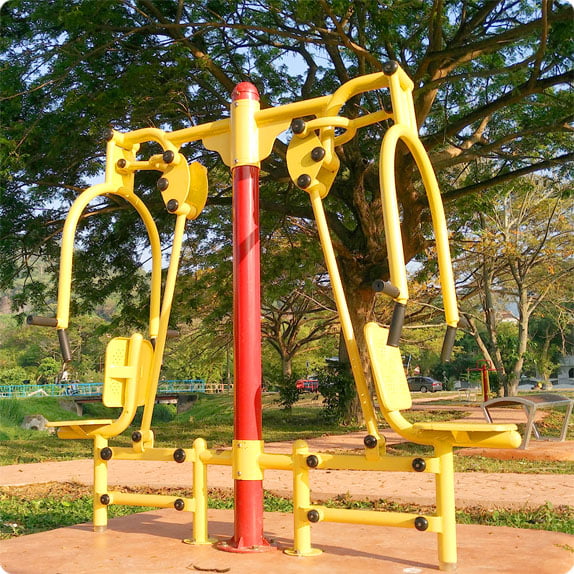
Outdoor gym equipment brings fitness into the school day, hard-wearing cross-trainers, cycles, multi-gyms and body-weight stations that build strength and stamina in the fresh air, all year round.
View outdoor gym equipment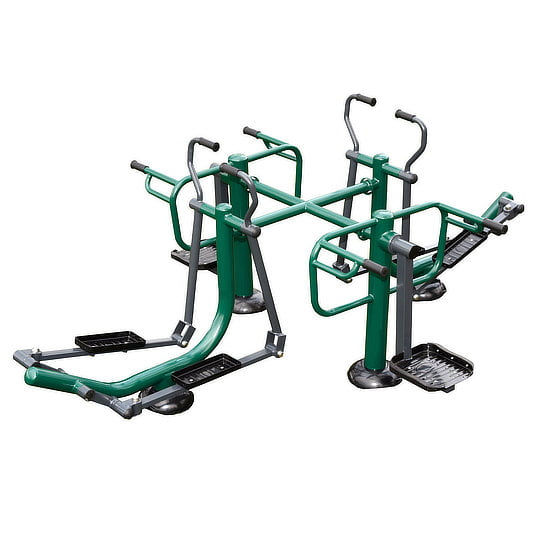
A trim trail is a route of physical challenges, balance beams, stepping logs, climbers and monkey bars, that builds fitness, balance and coordination while children think they are just playing.
View trim trails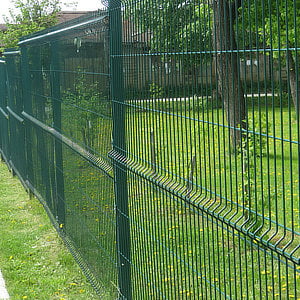
Rebound fencing keeps the game inside the court, sports-rated mesh or rebound-board fencing that stops balls escaping, keeps players safe and stands up to constant impact around MUGAs and pitches.
View muga fencingBook a free site visit and we'll measure up, recommend the right surface and send a clear, fixed quote.