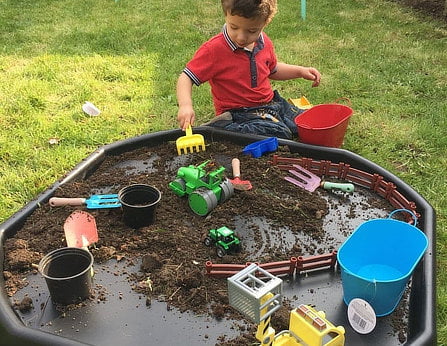
Sand & Water Play
Outdoor sand and water play lets children pour, dam, dig and channel at height-adjustable stations, turning simple materials into hands-on early science, language and cooperative play.
View sand & water playA sensory garden is a designed outdoor space that gently stimulates sight, sound, touch, smell and movement, turning planting, texture and colour into a calming place to explore.
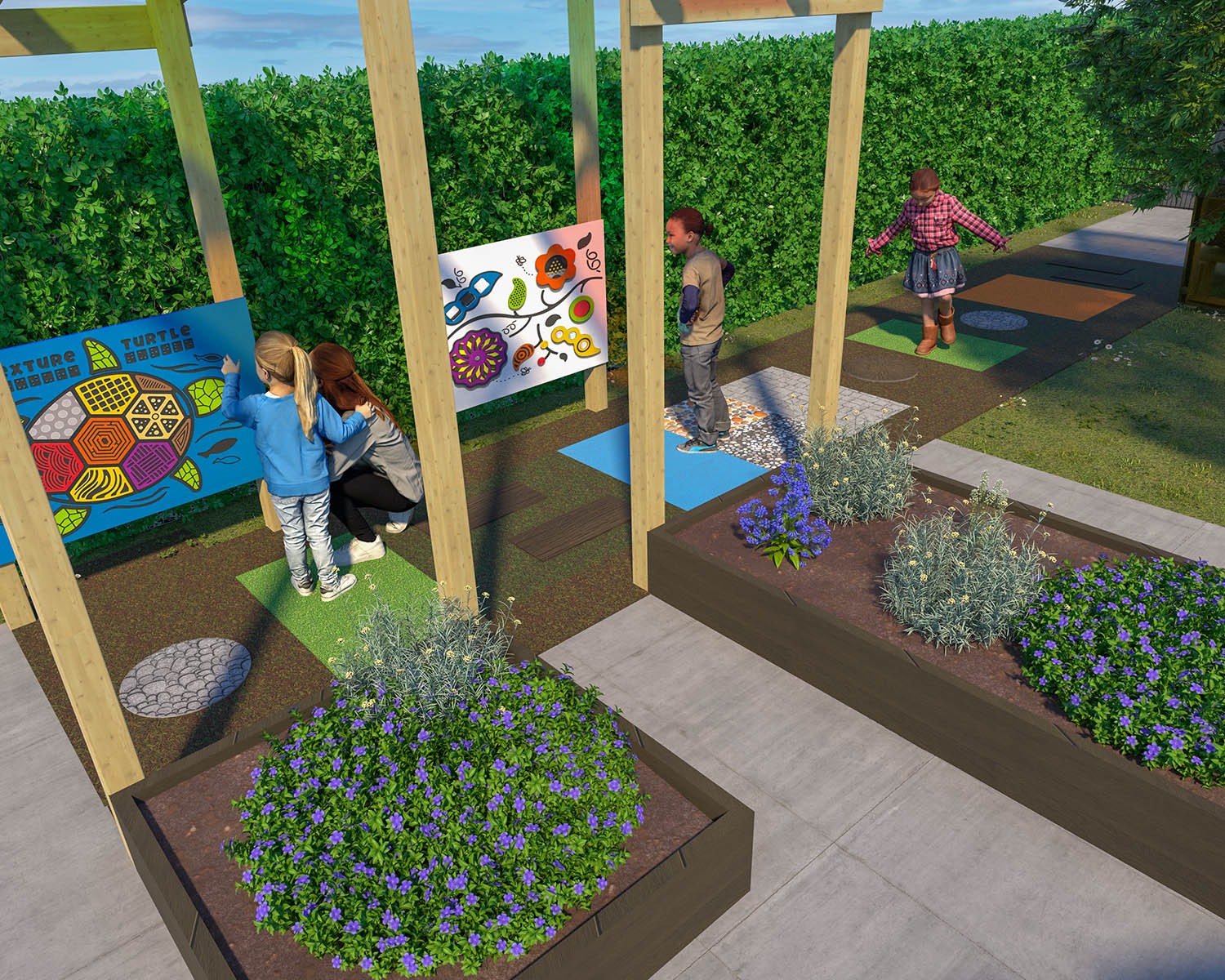
A sensory garden is a designed outdoor space that stimulates all five senses through planting, texture, colour, scent and sound, giving pupils a calm place to regulate and explore. We plan it as linked zones: a scented corner of lavender and herbs, a textured touch trail, a bright colour patch and a spot for sound from ornamental grasses and bamboo. It brings the living world within reach of every child.
For schools and SEN settings the senses are how children first make sense of the world, so a richly varied space gives neurodivergent and early years pupils a gentler alternative to busy active play. Winding paths and clear sight lines let children move at their own pace while staff supervise easily. We tie the garden to planters and growing areas and musical play so it grows into a wider sensory zone.
We design a sensory garden as distinct zones set out along accessible winding paths at least 1.2m wide, then build the raised beds, plant for four-season interest and install any sound or water features. We start with a site survey, map the quiet scented corner, the touch trail, the colour patch and the sound area, and set clear sight lines so staff can supervise across the whole space. Made-to-measure raised beds bring soil, leaves and flowers within comfortable reach.
We build the beds in treated timber or galvanised steel, fill them with a layered planting scheme, and finish paths in a firm, level surface that suits wheelchairs and buggies. Where the garden includes musical panels or play equipment we install it to BS EN 1176, and we pair the space with planters and growing areas and musical play so it works as one connected zone.
A sensory garden suits SEN schools, mainstream primaries, nurseries and early years settings that need a calm, regulating outdoor space for pupils aged 2 to 11 and beyond. SEN and neurodivergent children use it to self-regulate, reduce anxiety and reset during the school day, while early years pupils get hands-on with scent, texture and colour that busy active play rarely offers. Clear zones and quiet corners suit a wide range of needs.
Schools use the space as a calm breakout area, a nurture and intervention setting and a structured sensory learning zone, and involving pupils in tending the beds turns upkeep into a genuine learning opportunity. It works whether you have a full landscaped area or a compact corner of raised beds against a wall, and it sits naturally alongside our sensory play range.
A sensory garden costs around 5,000 to 15,000 pounds for a compact area, roughly 15,000 to 30,000 pounds for a medium space and 30,000 to 60,000 pounds or more for a full landscaped garden, which works out at about 150 to 250 pounds per square metre installed. These are indicative UK ranges to confirm at survey, not fixed prices: the number of zones, the raised-bed material, the planting scheme and any sound or water features all move the figure.
Your final cost is driven by the footprint, the groundworks for paths and beds, the maturity of the planting and site access. A compact corner of made-to-measure raised beds and textured planting against an existing wall sits at the lower end, while a fully landscaped multi-zone garden with sound features reaches the higher end. For a firm number, get a sensory garden quote and we will price your exact site.
| Sensory garden scale | Typical footprint | Indicative cost installed | What it includes | Best for |
|---|---|---|---|---|
| Compact corner | Up to about 20m² | £5,000 to £15,000 | Raised beds, textured planting, one or two zones | Small courtyards, playground edges, early years |
| Medium garden | About 20m² to 60m² | £15,000 to £30,000 | Multiple zones, winding paths, scent, touch and colour | Primary and SEN breakout spaces |
| Full landscaped garden | 60m²+ | £30,000 to £60,000+ | All five senses, sound and water features, seating | Whole-school and specialist SEN provision |
Indicative UK market ranges to confirm against your own pricing at a site survey. The zone count, planting maturity and any water or musical features move the figure.
A sensory garden is governed by BS 8300 for accessible outdoor routes and by BS EN 1176 for any musical panels or play equipment set within it. We keep paths firm, level and at least 1.2m wide with a 1.5m to 2.4m turning circle so wheelchairs and buggies move freely, and we set raised beds so soil and planting sit within comfortable reach. Where a feature counts as play equipment, we install and inspect it to BS EN 1176.
We plant to be safe as well as engaging, keeping known toxic species such as foxglove and laburnum out of reach or off the scheme entirely, and we specify hardy, low-maintenance planting so the space stays manageable. On request we arrange independent RPII or RoSPA inspection of any equipment within the garden, and we work to your own safeguarding and accessibility policies across the whole design.
Raised beds in a sensory garden are set at about 650 to 900mm high so scent sits at nose height for wheelchair users and at chin height for standing pupils, with knee clearance underneath where children pull up in a chair. A planter at 650 to 700mm brings lavender, herbs and lamb's ear within comfortable reach without bending, which is why we set the height to the group using the space rather than a single default.
We build the beds in treated timber or galvanised steel, both of which hold up outdoors for years, and we leave firm, level access of at least 1.2m around them so a wheelchair turns and reaches in on every side. Lower beds and ground-level textured planting sit alongside for younger children, so the touch trail and colour patch work for standing and seated pupils in the same visit.
A sensory garden lasts a decade or more, with treated timber raised beds giving around 10 to 15 years and galvanised steel beds lasting 20 years or more with routine seasonal care. The hard landscaping, paths and bed structures are the long-life elements, while the planting is a living layer that fills out over 2 to 3 seasons and is topped up or divided as it matures. Get the build right and the framework of the garden stands for years.
Perennial planting such as lavender, ornamental grasses and hardy herbs returns each year and thickens over time, so the garden looks fuller the longer it is in. We specify hardy, low-maintenance species to keep upkeep to routine seasonal care rather than constant work, and pupils tending the beds keep the space alive as a learning resource. We can also refresh planting and repair beds rather than start again, extending what you already have.
A sensory garden helps children calm and regulate by giving them a quiet, structured outdoor space that eases sensory overload and supports focus. It does three more things well: it brings living plants within reach through raised beds at 650 to 900mm, it welcomes wheelchair users on firm 1.2m paths, and it engages sight, sound, touch and smell in one place through layered planting. We design each zone to the pupils using it, so the space works for regulation and for learning.
For SEN and early years settings the garden becomes a calm breakout area, a nurture space and a structured sensory learning zone, giving neurodivergent pupils somewhere to reset during the school day. Scent from lavender and herbs, texture from lamb's ear and grasses, and sound from bamboo and wind features draw children who rarely get hands-on with nature. Raised, accessible beds mean the whole group plays and learns together rather than some watching from the side.
Commercial Play designs and installs sensory gardens in-house across England and Wales, so one team owns the job from site survey to handover. We map the zones to your pupils, set raised-bed heights and path widths to BS 8300 accessibility, and specify hardy, low-maintenance planting for four-season interest rather than a house template. We build the beds in treated timber or galvanised steel to last, and install any musical or play features to BS EN 1176.
Because we also fit the wider sensory offer, our design follows your site and your pupils rather than one product we happen to sell, and we can grow the garden into a full sensory zone over time with planters and growing areas, musical play and the rest of our sensory play range. Talk to us about your outdoor space and we will tell you honestly what it needs.
It is an outdoor space designed to stimulate all five senses through planting, texture, colour, scent, sound and movement. The aim is a calming, engaging place where children can explore at their own pace, which is especially valuable for SEN and early years pupils who use it to regulate and reset during the school day.
Indicatively, a compact corner is around 5,000 to 15,000 pounds, a medium garden about 15,000 to 30,000 pounds and a full landscaped multi-zone garden 30,000 to 60,000 pounds or more, roughly 150 to 250 pounds per square metre installed. These are UK market ranges to confirm at survey, as footprint, zone count, planting and any water or sound features all move the figure.
Yes. Sensory gardens are one of the most effective outdoor spaces for SEN settings, giving pupils somewhere to self-regulate, reduce anxiety and engage their senses safely. Clear zones, gentle planting, firm accessible paths and quiet corners suit a wide range of needs, and the space works as a calm breakout area, a nurture setting and a structured sensory learning zone.
Very little. A sensory garden can be a full landscaped area of 60 square metres or more, or a compact corner of raised beds and textured planting under 20 square metres against a wall or fence. We design to whatever footprint you have, so even small courtyards and playground edges work well.
We set raised beds at about 650 to 900mm high so scent sits at nose height for wheelchair users and at chin height for standing pupils, with knee clearance underneath where a child pulls up in a chair. We leave firm, level access of at least 1.2m around each bed so a wheelchair turns and reaches in from every side.
We plant for all five senses: lavender, honeysuckle and herbs such as mint, thyme and sage for scent; lamb's ear, ferns and ornamental grasses for touch; grasses and bamboo for sound in the wind; and layered colour for sight. We keep known toxic species such as foxglove and laburnum off the scheme and choose hardy, low-maintenance planting for four-season interest.
It needs routine seasonal care rather than constant work, and we specify hardy, low-maintenance perennial planting such as lavender and ornamental grasses to keep it manageable. The beds and paths are long-life hard landscaping, while the planting fills out over 2 to 3 seasons. Involving pupils in tending the beds turns upkeep into a genuine learning opportunity.
The framework lasts a decade or more, with treated timber raised beds giving around 10 to 15 years and galvanised steel beds 20 years or more with routine care. The planting is a living layer that thickens over time and is topped up or divided as it matures, and we can refresh planting and repair beds rather than start again.
Accessible routes follow BS 8300, so we keep paths firm, level and at least 1.2m wide with a 1.5m to 2.4m turning circle. Any musical panels or play equipment set within the garden are installed and inspected to BS EN 1176, and on request we arrange independent RPII or RoSPA inspection of that equipment.
Part of our full sensory play range, explore the other surfaces below.
Outdoor sand and water play lets children pour, dam, dig and channel at height-adjustable stations, turning simple materials into hands-on early science, language and cooperative play.
View sand & water play
Outdoor musical play equipment is hard-wearing tuned instruments for the playground, from chimes and drums to tubular bells, letting any child make music that sounds good with no skill needed.
View musical play
Outdoor planters and growing areas are raised beds and growing zones where children sow, tend and harvest their own plants, turning the playground into a hands-on outdoor classroom.
View planters & growing areasBook a free site visit and we'll measure up, recommend the right surface and send a clear, fixed quote.