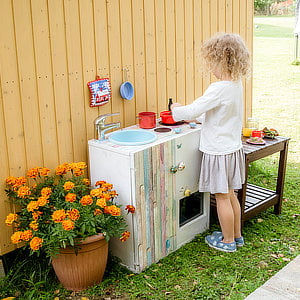
Sensory Gardens
A sensory garden is a designed outdoor space that gently stimulates sight, sound, touch, smell and movement, turning planting, texture and colour into a calming place to explore.
View sensory gardensOutdoor musical play equipment is hard-wearing tuned instruments for the playground, from chimes and drums to tubular bells, letting any child make music that sounds good with no skill needed.
Outdoor musical play equipment is a family of weatherproof tuned instruments for the playground, from chimes and tubular bells to drums, tongue drums and xylophones, manufactured to BS EN 1176. We install pieces tuned to a shared pentatonic scale, so almost any combination of notes children strike sounds tuneful rather than jarring.
The point is inclusion made simple: no musical ability is needed to take part. We supply and install sensory play instruments in anodised aluminium, powder-coated steel and hard-wearing HDPE that hold their tuning outdoors, letting every child build listening, turn-taking and confidence in a way that feels like play, not a lesson.
Outdoor musical play equipment is built from weatherproof materials chosen to hold tuning outdoors: anodised marine-grade aluminium tubes for chimes and bells, powder-coated steel frames, and hard-wearing HDPE or recycled-plastic bodies for drums, all to BS EN 1176. Freestanding units stand at ground level with no elevated platform, so the fall height stays low.
We install most instruments in one of two ways: surface-mounted onto a firm existing surface, or in-ground on concrete foundations set roughly 300mm to 500mm deep. We site the zone a little apart from quiet areas and windows, on any firm accessible base, and fix each piece so it meets the finger, head and entrapment checks of the standard. Pair it with a sensory garden to add sound to sight, touch and smell.
Outdoor musical play equipment suits children from age 2 upward, which makes it a fit for nurseries, EYFS settings, primary schools and SEN provision across England and Wales. Instruments tuned to one scale mean a two-year-old and a ten-year-old can play the same piece and both sound tuneful, so it works across mixed ages.
For SEN and inclusive settings it earns its place daily: music engages children who find words or busy play difficult, offering a calming, non-verbal way to express themselves and connect. See how it fits our wider inclusive and SEN play range, or set it within a sensory garden for a fuller sensory experience.
Individual outdoor musical instruments cost around 150 to 900 pounds each installed, and a full music zone of several pieces typically runs 2,000 to 8,000 pounds. These are indicative ranges to confirm at survey, not fixed prices: a single wall-mounted chime sits at the lower end, while a large freestanding marimba or set of tubular bells reaches the upper end.
Your final cost is driven by the number and size of instruments, the material, the mounting method and any groundworks or safety surfacing needed beneath them. Buying a coordinated collection tuned to one scale usually works out cheaper per instrument than piecing single items together. For a firm number, get a musical play quote and we will price your exact site.
| Instrument type | Typical material | Age range | Indicative cost each | Lifespan |
|---|---|---|---|---|
| Chimes and tubular bells | Anodised aluminium | 2 years upward | £150 to £600 | 10 to 15 years |
| Drums and tongue drums | HDPE / recycled plastic | 2 years upward | £200 to £700 | 8 to 12 years |
| Xylophones and metallophones | Anodised aluminium bars, steel frame | 3 years upward | £300 to £800 | 10 to 15 years |
| Marimba (large freestanding) | Aluminium bars, powder-coated steel | 3 years upward | £500 to £900 | 10 to 15 years |
Indicative UK market ranges to confirm against your own pricing at survey. Mounting method, groundworks and any safety surfacing are priced on a site survey.
Outdoor musical play equipment is governed by BS EN 1176, the playground equipment safety standard, which sets the finger, head and neck entrapment limits, the structural strength and the impact requirements every piece must meet. Because freestanding instruments have no elevated platform, their free height of fall is low, usually under 0.6m.
That low fall height means many ground-level instruments do not require impact-attenuating safety surfacing to BS EN 1177, though we assess each piece and its use zone on survey. We install to BS EN 1176 and can arrange independent RPII or RoSPA post-installation inspection where you want the job signed off. See our approach to playground inspection and maintenance.
Outdoor musical play equipment holds its tuning because the sounding parts are cut from anodised marine-grade aluminium, a material that resists corrosion and does not warp with frost, sun or rain. Each instrument is factory-tuned to a fixed pitch on a shared pentatonic scale, so the notes do not drift the way a struck-string instrument would.
We recommend siting the zone away from quiet spaces and windows, and many instruments produce mellow, resonant tones rather than harsh noise. Upkeep is low: an occasional wipe-down and a check of fixings keeps them sounding right, and there are no strings, reeds or moving tuning parts to replace. Set it within a sensory garden and pair it with sand and water play for a fuller sensory zone.
Outdoor musical play equipment typically lasts 10 to 15 years for anodised aluminium chimes and bells, and 8 to 12 years for HDPE drums, with several manufacturers backing the sounding parts with a 10-year material warranty. The tuning holds for the life of the instrument because it is set in metal, not tension.
The powder-coated steel frames and posts carry the same weatherproof finish we use across our playground equipment, shrugging off the British climate with only occasional cleaning. We service and repair worn instruments rather than default to replacement, extending the life of what you already have; see repairs and maintenance.
Outdoor musical play equipment gives every child instant success because instruments tuned to one pentatonic scale sound good on the first strike, with no skill needed. That removes the barrier of getting it wrong and makes music genuinely inclusive, which suits nurseries, primary schools and SEN settings alike.
Beyond the sound, a music zone builds four things well: it develops listening and turn-taking through simple call-and-response, it gives non-verbal children a voice, it grows confidence through real achievement, and it works outdoors all year in anodised aluminium and HDPE that stay tuneful through daily play. It adds sound to the sight, touch and smell of a wider sensory play area.
Commercial Play designs, supplies and installs outdoor musical play equipment in-house across England and Wales, so one team owns the job from survey to handover. We mix instrument types on purpose, something to strike, something resonant and a gentler tongue drum, all tuned to one scale so group play sounds harmonious however many children join in.
We fit surface-mounted and in-ground instruments to BS EN 1176, assess whether safety surfacing is needed for each use zone, and site the area so the sound is welcome rather than intrusive. We also repair and refresh what you already have instead of defaulting to replacement. Talk to us about your music area and we will tell you honestly what it needs.
No, and that is the point. Outdoor instruments are tuned to a shared pentatonic scale, so any combination of notes sounds pleasant and every child can play and succeed regardless of skill. It removes the barrier of getting it wrong and makes music genuinely inclusive.
Yes. Music engages children who find words or busy play difficult, offering a calming, non-verbal way to express themselves and connect with others. The instant, rewarding sound suits a wide range of sensory and communication needs, which is why it fits our inclusive and SEN play range.
Indicatively, single instruments cost around 150 to 900 pounds each installed, and a full music zone of several pieces runs about 2,000 to 8,000 pounds. A coordinated collection tuned to one scale usually works out cheaper per instrument. These are market ranges to confirm at a site survey, as material, mounting and groundworks all move the figure.
The sounding parts are usually anodised marine-grade aluminium for chimes, bells and xylophone bars, with powder-coated steel frames and hard-wearing HDPE or recycled-plastic drum bodies. These materials resist corrosion and hold their tuning outdoors, which is how the instruments stay tuneful through the British climate for years.
Often not. Freestanding ground-level instruments have no elevated platform, so their free height of fall is low, usually under 0.6m, which is below the point at which impact-attenuating surfacing to BS EN 1177 is required. We assess each piece and its use zone on survey and specify surfacing only where a particular instrument calls for it.
They need not. We recommend siting the music area away from quiet spaces and windows, and many instruments produce mellow, resonant tones rather than harsh noise. Thoughtful placement keeps the sound a welcome part of the playground rather than a distraction.
Yes. The tuning is set in anodised aluminium at the factory, not held under tension, so it does not drift. Chimes and bells typically last 10 to 15 years and HDPE drums 8 to 12 years, with several makers backing the sounding parts with a 10-year material warranty. They need only occasional cleaning and a check of fixings.
We install instruments either surface-mounted onto a firm existing base or in-ground on concrete foundations set roughly 300mm to 500mm deep, all to BS EN 1176. We site the zone on any firm accessible surface, a little apart from quiet areas, and can arrange independent RPII or RoSPA post-installation inspection where you want it signed off.
It suits children from about age 2 upward, which makes it a fit for nurseries, EYFS settings, primary schools and SEN provision. Because instruments are tuned to one scale, mixed ages can play the same piece together and both sound tuneful, so a single zone works for the whole school.
Part of our full sensory play range, explore the other surfaces below.
A sensory garden is a designed outdoor space that gently stimulates sight, sound, touch, smell and movement, turning planting, texture and colour into a calming place to explore.
View sensory gardens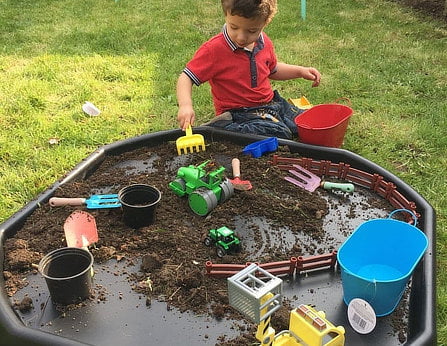
Outdoor sand and water play lets children pour, dam, dig and channel at height-adjustable stations, turning simple materials into hands-on early science, language and cooperative play.
View sand & water play
Outdoor planters and growing areas are raised beds and growing zones where children sow, tend and harvest their own plants, turning the playground into a hands-on outdoor classroom.
View planters & growing areasBook a free site visit and we'll measure up, recommend the right surface and send a clear, fixed quote.