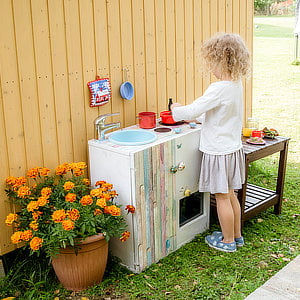
Sensory Gardens
A sensory garden is a designed outdoor space that gently stimulates sight, sound, touch, smell and movement, turning planting, texture and colour into a calming place to explore.
View sensory gardensOutdoor sand and water play lets children pour, dam, dig and channel at height-adjustable stations, turning simple materials into hands-on early science, language and cooperative play.
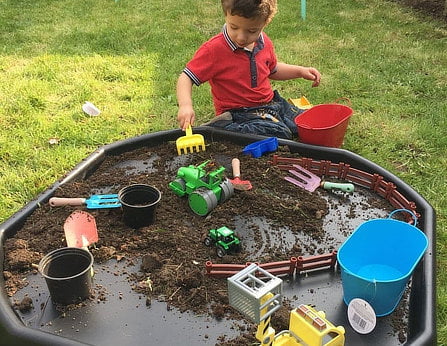
Outdoor sand and water play is open-ended playground equipment where children pour, dam, dig and channel natural materials at height-adjustable stations, designed and installed to BS EN 1176. We build it as a group of stations: water channels, pumps and adjustable dams alongside sand tables and covered digging areas. There is no fixed goal, so children experiment freely with flow, weight and cause and effect.
For schools and nurseries this is some of the richest early learning there is. Filling, pouring and damming build fine-motor control and early science, while sharing a channel or table draws children into language, negotiation and cooperative play. It pairs naturally with a sensory garden to round out a full sensory offer.
Outdoor sand and water play works through hand pumps, channels and adjustable dams that let children lift, direct and stop the water themselves, learning cause and effect first-hand. A child works a pump to raise water, sends it down a run of channels, then drops in a dam to pool or divert the flow. The same logic applies to sand: they dig, mould and move it between trays and a covered pit.
Because every action produces an immediate, visible result, the play holds attention for long, focused stretches. The repetitive pour-and-fill rhythm also calms and absorbs children, which is why the equipment suits SEN and EYFS settings as much as a mainstream nursery. Two or three children can work one station at once, so the flow of water becomes a shared task rather than a solo one.
Outdoor sand and water play is made from weatherproof materials, typically HDPE panels, stainless-steel trays and pressure-treated or hardwood timber frames, built to withstand daily use and the British climate. HDPE is UV-stable, non-toxic and easy to clean, while stainless-steel trays resist rust in constant contact with water. We fix each station on a firm, free-draining base and set the drainage so water runs away cleanly.
We install every station level and plumb, plan the drainage from the start so the surface stays safe underfoot, and site the area on or beside a free-draining surface such as playground surfacing so mess stays manageable. Where a station sits within a fall zone we specify surfacing to the relevant safety standard for a safe, hard-wearing finish.
Outdoor sand and water play is designed for EYFS and KS1 children, roughly ages 2 to 7, and works equally well for older primary pupils in sensory or SEND settings. We size the station tops to your age group and include at least one wheelchair-accessible station with clear knee room, so a child can pull right up and reach into the water or sand.
This makes it a strong fit for nurseries, infant and primary schools, and inclusive settings. Height-adjustable channels and tables bring the play within reach of every child, so the whole group plays together rather than some watching from the side. It sits well alongside a sensory garden and the wider inclusive and SEN play range.
Outdoor sand and water play costs around 70 to 3,000 pounds per station installed, with a single dual sand-and-water tray station from roughly 500 pounds and a full channelling and pumping system reaching 3,000 pounds or more. These are indicative UK market ranges to confirm at survey, not fixed prices: a simple water tray or guttering stand sits at the lower end, while a multi-station water wall with pumps and dams reaches the top.
Your final cost is driven by the number of stations, the materials, height-adjustability, any wheelchair-accessible station and the groundworks needed for drainage and a firm base. Adding surfacing to the fall zone moves the figure again. For a firm number, get a sand and water play quote and we will price your exact site.
| Station type | Typical material | Age range | Indicative cost installed | Lifespan |
|---|---|---|---|---|
| Water tray / guttering stand | HDPE, stainless-steel tray | 2 to 7 | £70 to £250 | 8 to 15 years |
| Dual sand and water station | HDPE, timber frame | 2 to 7 | £500 to £900 | 8 to 15 years |
| Height-adjustable channel station | HDPE, stainless steel | 2 to 11 | £900 to £1,800 | 8 to 15 years |
| Water wall / channelling system | HDPE, timber, pumps | 3 to 11 | £1,800 to £3,000+ | 8 to 15 years |
| Covered sand pit | Treated timber, marine ply | 2 to 7 | £400 to £1,200 | 10 to 15 years |
Indicative UK market ranges to confirm against your own pricing at survey. Materials, station count, height-adjustability and drainage groundworks all move the figure.
Outdoor sand and water play is designed, manufactured and installed to BS EN 1176, the European standard series for public playground equipment. BS EN 1176 governs the design, structural strength, entrapment gaps and installation of the stations, so a child cannot trap a hand or head and the frames hold up under daily use. Where a station carries any free height of fall, the surfacing below it must meet BS EN 1177, the impact-attenuation standard.
We build to both standards and can arrange independent RPII or RoSPA inspection where you want the installation signed off. Post-installation, we recommend routine operational and annual inspections in line with BS EN 1176 Part 7, the same regime that governs the rest of your inclusive and SEN play equipment.
Outdoor sand and water play should be specified in HDPE, stainless steel and treated or marine-grade timber, with height-adjustable tops set between roughly 400mm and 650mm to suit your age group. HDPE panels are UV-stable, non-toxic and recyclable; stainless-steel trays resist corrosion; and marine ply or pressure-treated timber holds up in constant damp. We include a covered sand area so the sand can be kept clean and dry when not in use.
Look for hand pumps, a run of channels and at least two adjustable dams so children can change how the water moves, plus one wheelchair-accessible station with clear knee room. Built-in drainage and a free-draining base keep the surface safe underfoot. Custom station heights and layouts are made-to-measure to your space rather than a fixed catalogue size.
Outdoor sand and water play typically lasts 8 to 15 years with routine care, with HDPE and stainless-steel components at the upper end and timber-framed stations depending on the timber grade and upkeep. Marine ply and pressure-treated timber hold up well outdoors, though covering the sand pit when not in use and sealing any cut timber edges extend the life considerably.
Maintenance is light: we recommend clearing debris, checking pumps and moving parts, and covering the sand between sessions. We repair and refresh worn stations rather than rip and replace where the frame is sound, extending the life of what you already have. Kept clean and covered, a hard-wearing HDPE station stays serviceable well past a decade of daily play.
Outdoor sand and water play builds fine-motor control, early scientific thinking and cause-and-effect understanding as children pour, dam and channel at the stations. It does three more things well: the pour-and-fill rhythm calms and holds attention, sharing a channel builds language and turn-taking, and height-adjustable stations bring the play within reach of wheelchair users too.
Filling and pouring develop the pincer grip and hand strength that feed into writing, while damming and diverting water teach flow, weight and consequence, some of the earliest science a child meets. Because children play side by side at one station, it draws out talk, negotiation and cooperative play across the group. Sited on a free-draining surface with planned drainage, the mess stays manageable and the area stays safe underfoot, and it rounds out the wider sensory play range.
Commercial Play designs, supplies and installs outdoor sand and water play in-house across England and Wales, so one team owns the job from survey to handover. We survey each site, plan the drainage from the start, and specify the stations, materials and heights to suit your age group and space rather than a fixed catalogue default.
We build every station to BS EN 1176 and specify the surfacing below to BS EN 1177 where it is needed, and we include a wheelchair-accessible station as standard so the whole group plays together. We also repair and refresh worn stations instead of defaulting to full replacement. Talk to us about your play area and we will tell you honestly what it needs.
It builds fine-motor control, early scientific thinking and cause-and-effect understanding as children pour, dam and channel water and dig sand. Because they play side by side, it also develops language, sharing and cooperative play, making it valuable right across the EYFS and KS1 curriculum for children aged roughly 2 to 7.
Indicatively, a station runs from around 70 pounds for a simple water tray or guttering stand up to 3,000 pounds or more for a full channelling and pumping system, with a dual sand-and-water station around 500 to 900 pounds. These are UK market ranges to confirm at survey, as station count, materials, height-adjustability and drainage groundworks all move the figure.
No, not with the right setup. We plan drainage from the start so water runs away cleanly and site stations on or beside a free-draining surface, which keeps mess contained and the area safe underfoot. Sand areas are covered when not in use so the sand stays clean and dry.
Yes. We include at least one height-adjustable, wheelchair-accessible station with clear knee room, so a child can pull right up and reach into the water or sand. Tops adjust between roughly 400mm and 650mm, which means the whole group plays together rather than some watching from the side.
Outdoor sand and water play is built from weatherproof materials: HDPE panels, stainless-steel trays and pressure-treated or marine-grade timber frames. HDPE is UV-stable, non-toxic and easy to clean, stainless steel resists rust in constant contact with water, and treated timber holds up in the damp, so the stations withstand daily use and the British climate.
Outdoor sand and water play is designed, made and installed to BS EN 1176, the standard for public playground equipment, which governs structural strength, entrapment gaps and installation. Where a station carries any free height of fall, the surfacing below meets BS EN 1177, and we can arrange independent RPII or RoSPA inspection to sign the installation off.
With routine care, outdoor sand and water play typically lasts 8 to 15 years, with HDPE and stainless-steel components at the upper end and timber-framed stations depending on the grade and upkeep. Covering the sand pit when not in use and sealing cut timber edges extends the life, and we repair worn stations rather than replace a sound frame.
Outdoor sand and water play suits EYFS and KS1 children, roughly ages 2 to 7, and works well for older primary pupils in sensory or SEND settings. We size the station tops to your age group and can set height-adjustable stations to bring the play within reach of children of different ages and abilities.
Yes. We plan the drainage from the start so water runs away cleanly, and where a station sits within a fall zone we specify and install the playground surfacing to the relevant BS EN 1177 fall height. One team handles the survey, groundworks, stations and surfacing so the area is safe and serviceable from handover.
Part of our full sensory play range, explore the other surfaces below.
A sensory garden is a designed outdoor space that gently stimulates sight, sound, touch, smell and movement, turning planting, texture and colour into a calming place to explore.
View sensory gardens
Outdoor musical play equipment is hard-wearing tuned instruments for the playground, from chimes and drums to tubular bells, letting any child make music that sounds good with no skill needed.
View musical play
Outdoor planters and growing areas are raised beds and growing zones where children sow, tend and harvest their own plants, turning the playground into a hands-on outdoor classroom.
View planters & growing areasBook a free site visit and we'll measure up, recommend the right surface and send a clear, fixed quote.